
Uncover History’s Secrets with Daily Updates!
Daily News Entertainment
  • Home
  • History
  • Biographies
  • Eras
  • Regions
  • Timeline
No Result
View All Result
History Ours
  • Home
  • History
  • Biographies
  • Eras
  • Regions
  • Timeline
No Result
View All Result
History Ours
No Result
View All Result
Home History

Mapping Memory: Everyday Landscapes and Local Narratives

in History
Mapping Memory: Everyday Landscapes and Local Narratives

Introduction

Every town and neighborhood holds layers of memory in streets, storefronts, parks, and backyards. These ordinary places accumulate stories through daily routines, celebrations, and quiet losses that rarely make it into formal histories. Paying attention to the textures of everyday landscapes reveals how residents remember, forget, and reframe the past across generations. This article explores practical ways communities read, record, and preserve those local narratives for a richer public history.

Reading the Landscape

Landscape reading is a method that treats physical environments as documents of human experience, where architecture, street patterns, and public signage offer clues to changing social life. By noting patterns such as reused materials, altered facades, or persistent pocket parks, researchers and residents can trace economic shifts and cultural continuities without relying solely on written records. This approach encourages observation, interviews, and mapping exercises that prioritize ordinary vantage points over monumental accounts. It is especially useful where archival sources are limited or biased.

As a short practice, volunteers can walk a single block together and record five features that suggest past uses or events. These small, focused projects build collective attention and often surface unexpected connections between people and places.

Oral Memory and Everyday Places

Oral history remains a central tool for recovering memories embedded in everyday sites, capturing personal narratives that reveal what a place meant at particular moments. Conversations with longtime residents often link domestic spaces to broader social change, such as migration, work patterns, or local rituals, creating a vivid counterpoint to official accounts. Collecting these testimonies requires ethical listening and local trust, ensuring contributors shape how their stories are used. Combining oral accounts with landscape observations deepens interpretation and highlights contested memories.

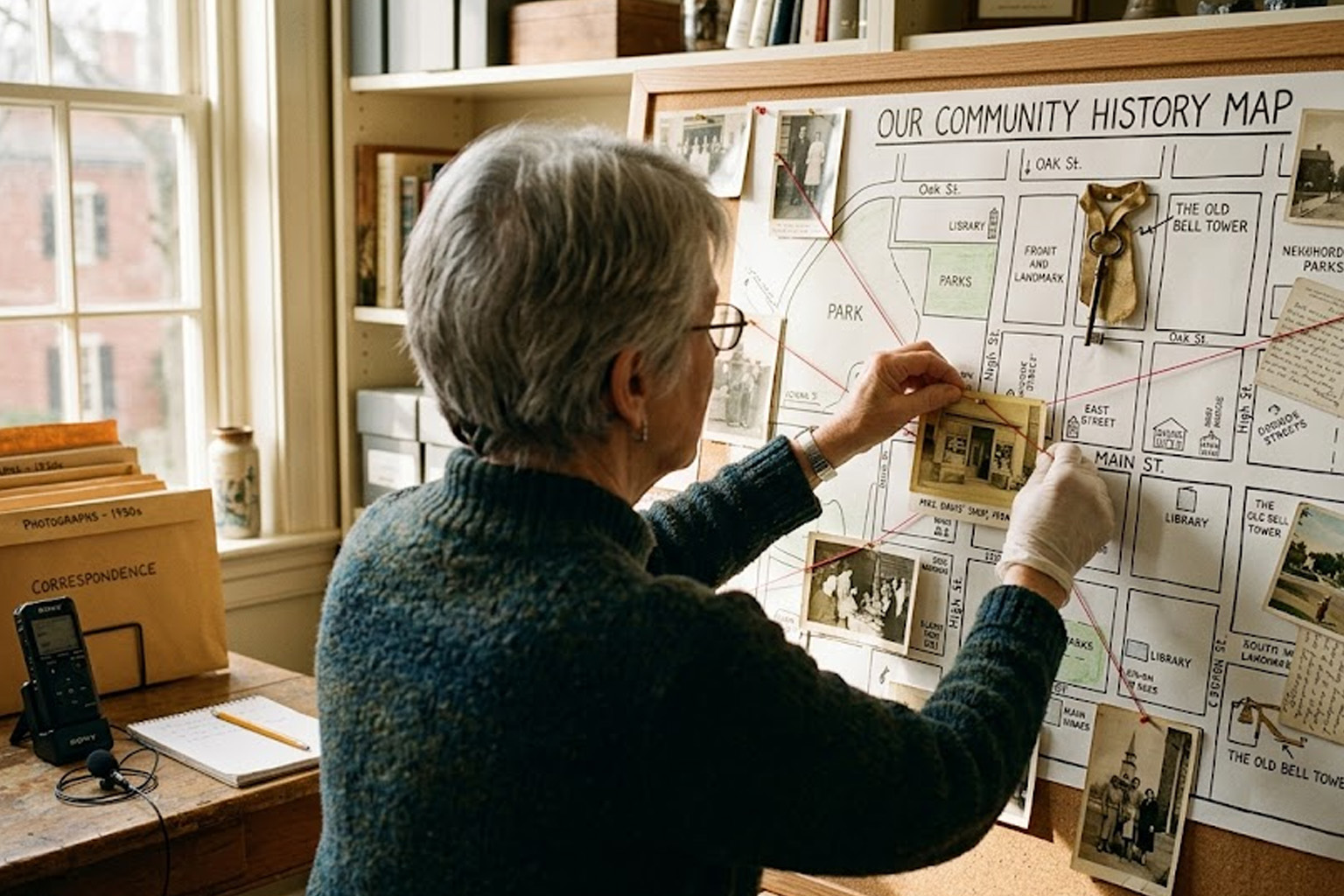
Community-led interviews can be complemented by audio walking tours or recorded neighborhood maps that pair voices with exact locations. These formats make memory spatially legible and accessible to wider audiences.

Preserving Layers in Local Archives

Small museums, libraries, and neighborhood archives play a crucial role in preserving everyday history by accepting donations of ordinary objects, photographs, and ephemera that formal repositories might overlook. Cataloging materials with contextual notes from donors enriches their research value and helps future users understand how items functioned in daily life. Digital tools now allow modest projects to create searchable collections that connect artifacts to oral testimonies and mapped places. Collaborative stewardship encourages local ownership and ongoing contribution.

Simple exhibitions or pop-up displays in community centers can translate archival work into public engagement, inviting residents to reflect on what matters to them about shared places.

Conclusion

Everyday landscapes are living archives that reveal layered, contested local histories. By combining landscape reading, oral memory, and small-scale archiving, communities preserve richer stories of place. These practices make public history more inclusive and resilient.

Previous Post

Practical Frameworks for Defining Historical Eras

Next Post

Corners of Memory: Local Sites and Living Histories

Related Posts

How the Crystal Palace Turned Glass and Iron into a Modern Stage
History

How the Crystal Palace Turned Glass and Iron into a Modern Stage

September 15, 2026
Anne Bonny: The Pirate Who Broke Rules and Expectations
History

Anne Bonny: The Pirate Who Broke Rules and Expectations

September 15, 2026
Mary Anning and the Coast That Revealed Lost Worlds
History

Mary Anning and the Coast That Revealed Lost Worlds

September 15, 2026
When Mount Pelée Erased Saint-Pierre, 1902
History

When Mount Pelée Erased Saint-Pierre, 1902

September 15, 2026
Next Post
Corners of Memory: Local Sites and Living Histories

Corners of Memory: Local Sites and Living Histories

Search..

No Result
View All Result

Recent Articles

The Disguise That Broke Chains: Ellen and William Craft

The Disguise That Broke Chains: Ellen and William Craft

September 15, 2026
Bass Reeves: The Marshal Who Hunted Outlaws in Indian Territory

Bass Reeves: The Marshal Who Hunted Outlaws in Indian Territory

September 15, 2026
How the Crystal Palace Turned Glass and Iron into a Modern Stage

How the Crystal Palace Turned Glass and Iron into a Modern Stage

September 15, 2026
Anne Bonny: The Pirate Who Broke Rules and Expectations

Anne Bonny: The Pirate Who Broke Rules and Expectations

September 15, 2026
How Haiti Broke Its Chains: A 1791–1804 Timeline

How Haiti Broke Its Chains: A 1791–1804 Timeline

September 15, 2026

Subscribe Us

By clicking submit, I authorize History Ours and its affiliated companies to: (1) use, sell, and share my information for marketing purposes, including cross-context behavioral advertising, as described in our Terms of Service and Privacy Policy, (2) supplement the information that I provide with additional information lawfully obtained from other sources, like demographic data from public sources, interests inferred from web page views, or other data relevant to what might interest me, like past purchase or location data, (3) contact me or enable others to contact me by email with offers for goods and services from any category at the email address provided, and (4) retain my information while I am engaging with marketing messages that I receive and for a reasonable amount of time thereafter. I understand I can opt out at any time through an email that I receive, or by clicking here

Subscribe To Our Newsletter

By clicking submit, I authorize History Ours and its affiliated companies to: (1) use, sell, and share my information for marketing purposes, including cross-context behavioral advertising, as described in our Terms of Service and Privacy Policy, (2) supplement the information that I provide with additional information lawfully obtained from other sources, like demographic data from public sources, interests inferred from web page views, or other data relevant to what might interest me, like past purchase or location data, (3) contact me or enable others to contact me by email with offers for goods and services from any category at the email address provided, and (4) retain my information while I am engaging with marketing messages that I receive and for a reasonable amount of time thereafter. I understand I can opt out at any time through an email that I receive, or by clicking here.

© 2026 History Ours | All Rights Reserved

  • Contact Us
  • Privacy Policy
  • Terms of Service
  • Unsubscribe
  • Privacy Choices
  • Contact Us
  • Privacy Policy
  • Terms of Service
  • Unsubscribe
  • Privacy Choices

© 2026 History Ours | All Rights Reserved

No Result
View All Result
  • Home
  • History
  • Biographies
  • Eras
  • Regions
  • Timeline

© 2026 History Ours | All Rights Reserved

Skip to content
Open toolbar Accessibility Tools

Accessibility Tools

  • Increase TextIncrease Text
  • Decrease TextDecrease Text
  • GrayscaleGrayscale
  • High ContrastHigh Contrast
  • Negative ContrastNegative Contrast
  • Light BackgroundLight Background
  • Links UnderlineLinks Underline
  • Readable FontReadable Font
  • Reset Reset