

Uncover History’s Secrets with Daily Updates!
Daily News Entertainment
  • Home
  • History
  • Biographies
  • Eras
  • Regions
  • Timeline
No Result
View All Result
History Ours
  • Home
  • History
  • Biographies
  • Eras
  • Regions
  • Timeline
No Result
View All Result
History Ours
No Result
View All Result
Home History

Thresholds and Transitions: Home-Work Boundaries in Market Towns

in History
Thresholds and Transitions: Home-Work Boundaries in Market Towns

In many historic market towns, the line between household and workplace was porous rather than fixed. Families, apprentices, and small-scale producers lived where they labored, turning doorways and front rooms into multifunctional zones. Those thresholds mediated commercial exchange, social interaction, and privacy in ways that shaped daily life and civic order. Exploring these liminal spaces reveals how architecture, routine, and social expectation combined to organize work and home.

As we look at surviving buildings, account books, and legal records, a pattern emerges: thresholds were not simply physical edges but negotiated places that structured economic relationships and community norms. Understanding them offers a richer sense of how ordinary people balanced livelihood, reputation, and household care.

Thresholds as Economic Spaces

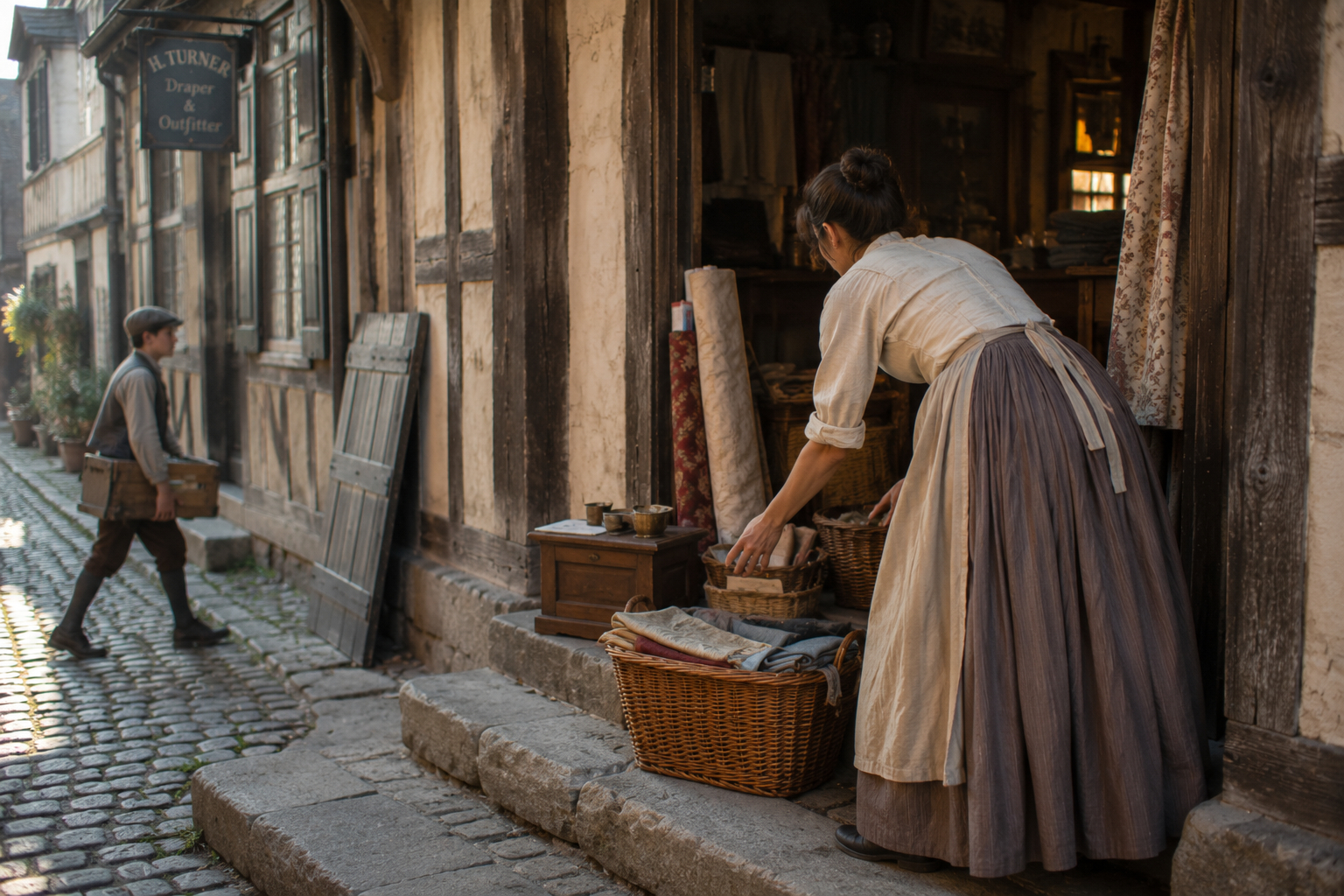
Doors, stoops, and shopfronts in small towns served as active sites of exchange where goods and information passed between private and public spheres. Shopkeepers displayed wares on thresholds to attract customers while retaining immediate access to the home beyond, a design that conserved space and lowered overheads for household enterprises. Courtyards and shared alleys became staging grounds for deliveries and for temporary workshops where artisans could extend production into communal zones. These spatial arrangements made economic activity visible and bound neighbors into reciprocal obligations and reputational economies.

At the same time, thresholds helped regulate access: shutters, curtains, and street-facing counters signaled when a household welcomed trade and when it sought privacy. This signaling was as important socially as it was commercially.

Negotiating Time: Routines and Responsibilities

Daily rhythms in market towns revolved around opening hours, market days, and domestic chores, creating overlapping timetables that households had to balance. Women often coordinated care and production, moving between childcare, meal preparation, and spinning or sewing that generated income. Apprentices and kin contributed labor in exchange for room and board, blurring employer-employee distinctions within the household. These temporal negotiations shaped social roles and influenced how households presented themselves to the street.

Local regulations and customary practices further structured time by setting limits on noise, street vending, and the display of goods, reinforcing community expectations about acceptable behavior at the home-work boundary.

Material Culture and Visible Boundaries

Objects left at thresholds—signboards, benches, baskets, and tools—functioned as material cues about a household’s activities and status. Careful placement of objects could invite patrons, advertise services, or mark territory within crowded streets. Interior arrangements, like a front room reserved for customers, created semi-public spaces that protected private family life while enabling commerce. Even minor architectural details, such as a wide lintel or a raised doorstep, communicated a household’s capacity to host trade and traffic.

Over time these material practices became embedded in local identity, shaping how residents recognized the town’s commercial character and how newcomers learned to navigate social expectations.

Conclusion

Examining thresholds in historic market towns reveals a nuanced choreography of space, time, and social practice. These liminal zones enabled households to sustain livelihoods while managing privacy and reputation. Appreciating their role deepens our understanding of everyday urban life in earlier periods.


Previous Post

Windows, Wells, and Walkways: Material Life in Market Towns

Next Post

Reading Eras Through Everyday Lives and Structures

Related Posts

Anne Bonny: The Pirate Who Broke Rules and Expectations
History

Anne Bonny: The Pirate Who Broke Rules and Expectations

September 15, 2026
How the Crystal Palace Turned Glass and Iron into a Modern Stage
History

How the Crystal Palace Turned Glass and Iron into a Modern Stage

September 15, 2026
Mary Anning and the Coast That Revealed Lost Worlds
History

Mary Anning and the Coast That Revealed Lost Worlds

September 15, 2026
When Mount Pelée Erased Saint-Pierre, 1902
History

When Mount Pelée Erased Saint-Pierre, 1902

September 15, 2026
Next Post
Reading Eras Through Everyday Lives and Structures

Reading Eras Through Everyday Lives and Structures

Search..

No Result
View All Result

Recent Articles

The Disguise That Broke Chains: Ellen and William Craft

The Disguise That Broke Chains: Ellen and William Craft

September 15, 2026
Bass Reeves: The Marshal Who Hunted Outlaws in Indian Territory

Bass Reeves: The Marshal Who Hunted Outlaws in Indian Territory

September 15, 2026
How the Crystal Palace Turned Glass and Iron into a Modern Stage

How the Crystal Palace Turned Glass and Iron into a Modern Stage

September 15, 2026
Anne Bonny: The Pirate Who Broke Rules and Expectations

Anne Bonny: The Pirate Who Broke Rules and Expectations

September 15, 2026
How Haiti Broke Its Chains: A 1791–1804 Timeline

How Haiti Broke Its Chains: A 1791–1804 Timeline

September 15, 2026

Subscribe Us

By clicking submit, I authorize History Ours and its affiliated companies to: (1) use, sell, and share my information for marketing purposes, including cross-context behavioral advertising, as described in our Terms of Service and Privacy Policy, (2) supplement the information that I provide with additional information lawfully obtained from other sources, like demographic data from public sources, interests inferred from web page views, or other data relevant to what might interest me, like past purchase or location data, (3) contact me or enable others to contact me by email with offers for goods and services from any category at the email address provided, and (4) retain my information while I am engaging with marketing messages that I receive and for a reasonable amount of time thereafter. I understand I can opt out at any time through an email that I receive, or by clicking here

Subscribe To Our Newsletter

By clicking submit, I authorize History Ours and its affiliated companies to: (1) use, sell, and share my information for marketing purposes, including cross-context behavioral advertising, as described in our Terms of Service and Privacy Policy, (2) supplement the information that I provide with additional information lawfully obtained from other sources, like demographic data from public sources, interests inferred from web page views, or other data relevant to what might interest me, like past purchase or location data, (3) contact me or enable others to contact me by email with offers for goods and services from any category at the email address provided, and (4) retain my information while I am engaging with marketing messages that I receive and for a reasonable amount of time thereafter. I understand I can opt out at any time through an email that I receive, or by clicking here.

© 2026 History Ours | All Rights Reserved

  • Contact Us
  • Privacy Policy
  • Terms of Service
  • Unsubscribe
  • Privacy Choices
  • Contact Us
  • Privacy Policy
  • Terms of Service
  • Unsubscribe
  • Privacy Choices

© 2026 History Ours | All Rights Reserved

No Result
View All Result
  • Home
  • History
  • Biographies
  • Eras
  • Regions
  • Timeline

© 2026 History Ours | All Rights Reserved

Skip to content
Open toolbar Accessibility Tools

Accessibility Tools

  • Increase TextIncrease Text
  • Decrease TextDecrease Text
  • GrayscaleGrayscale
  • High ContrastHigh Contrast
  • Negative ContrastNegative Contrast
  • Light BackgroundLight Background
  • Links UnderlineLinks Underline
  • Readable FontReadable Font
  • Reset Reset