
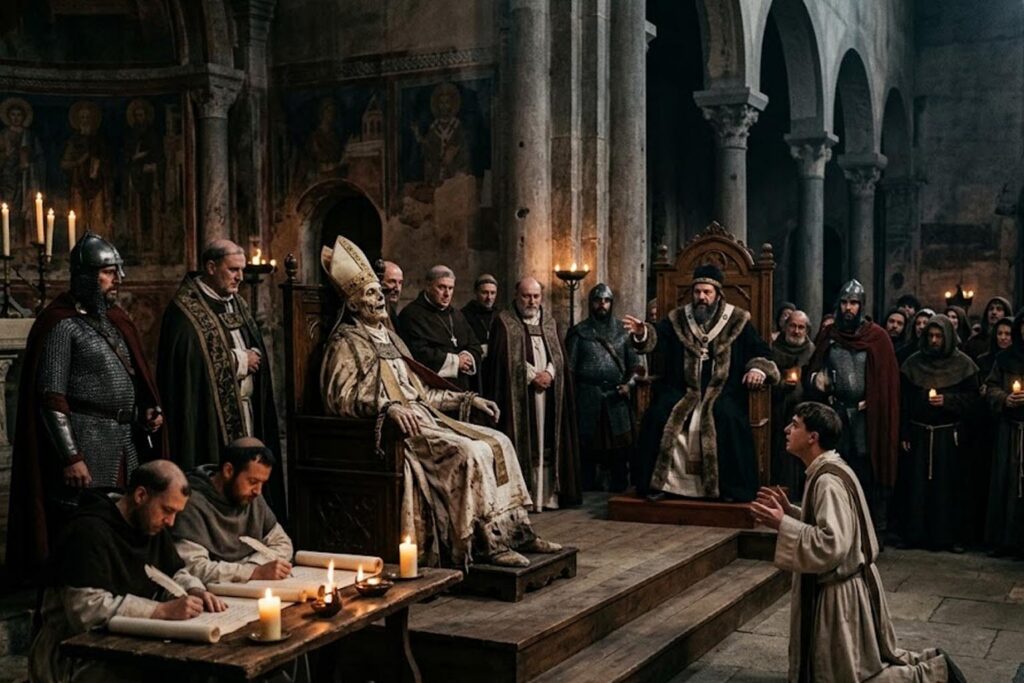
A macabre courtroom in medieval Rome
In January 897 one of the stranger episodes of papal history took place in Rome. The corpse of Pope Formosus, who had died less than a year earlier, was exhumed, dressed in papal vestments, set upon a throne and formally put on trial. Known ever since as the Cadaver Synod, the spectacle reads like a cautionary tale about politics, revenge and the fragility of institutions when factional rivalries run wild.
Why a dead pope faced accusation
The background was bitterly political. The late ninth-century papacy was entangled with competing Roman noble families and the fading Carolingian influence over Italy. Formosus had made enemies: he accepted the imperial crown from a foreign ruler and had supported bishops whose opponents later sought to undo their appointments. Those disputes did not end with his death. His successor, Pope Stephen VI, came from a party determined to declare Formosus’s acts invalid and, by extension, to strip his allies of authority.
The spectacle and its sentences
Medieval accounts describe the corpse propped up in a judicial setting, a deacon appointed to answer for the dead man’s defense. The charges focused less on theology than on canonical irregularities: allegedly obtaining episcopal office improperly and violating rules about transferring sees. The court pronounced a guilty verdict. Formosus’s papal ordinations were declared null, his corpse was stripped of its vestments, and tradition holds that the three fingers used for blessing were cut from the body. Some narratives say the corpse was then thrown into the Tiber; others report it was buried and later reburied. Whatever the exact sequence, the message was clear: political enemies could reach beyond the grave.
Aftermath: revolt and reversal
The Cadaver Synod shocked contemporaries and sent Rome into turmoil. Public outrage and factional backlash quickly followed; Stephen VI himself was imprisoned and met a violent end within months. Subsequent popes moved to reverse the Synod’s decisions, restore the reputations and ordinations of Formosus, and put distance between the curia and such theatrical acts. The episode left a stain on the papacy and became a vivid example of how profoundly political struggles could distort religious rites.
Conclusion
The Cadaver Synod survives in memory because it so thoroughly upended expectations about dignity, justice and death. It is not just a grotesque anecdote; it tells you something about late ninth-century Rome—about fragile authority, personal vendettas, and the lengths to which factions would go to delegitimize rivals. Centuries later, the image of a pope on trial from his tomb still feels like a warning: institutions rest on fragile human practices, and when those practices are seized for revenge the consequences can be bizarre and enduring.