

Uncover History’s Secrets with Daily Updates!
Daily News Entertainment
  • Home
  • History
  • Biographies
  • Eras
  • Regions
  • Timeline
No Result
View All Result
History Ours
  • Home
  • History
  • Biographies
  • Eras
  • Regions
  • Timeline
No Result
View All Result
History Ours
No Result
View All Result

Bahis vergilendirmesi Türkiye’de devlet kontrolündedir, ancak yeni açılan casino siteleri gibi uluslararası sitelerde oyuncular kendi kazançlarını yönetir.

Home History

Weaving Social Life in Preindustrial Market Towns

in History
Weaving Social Life in Preindustrial Market Towns

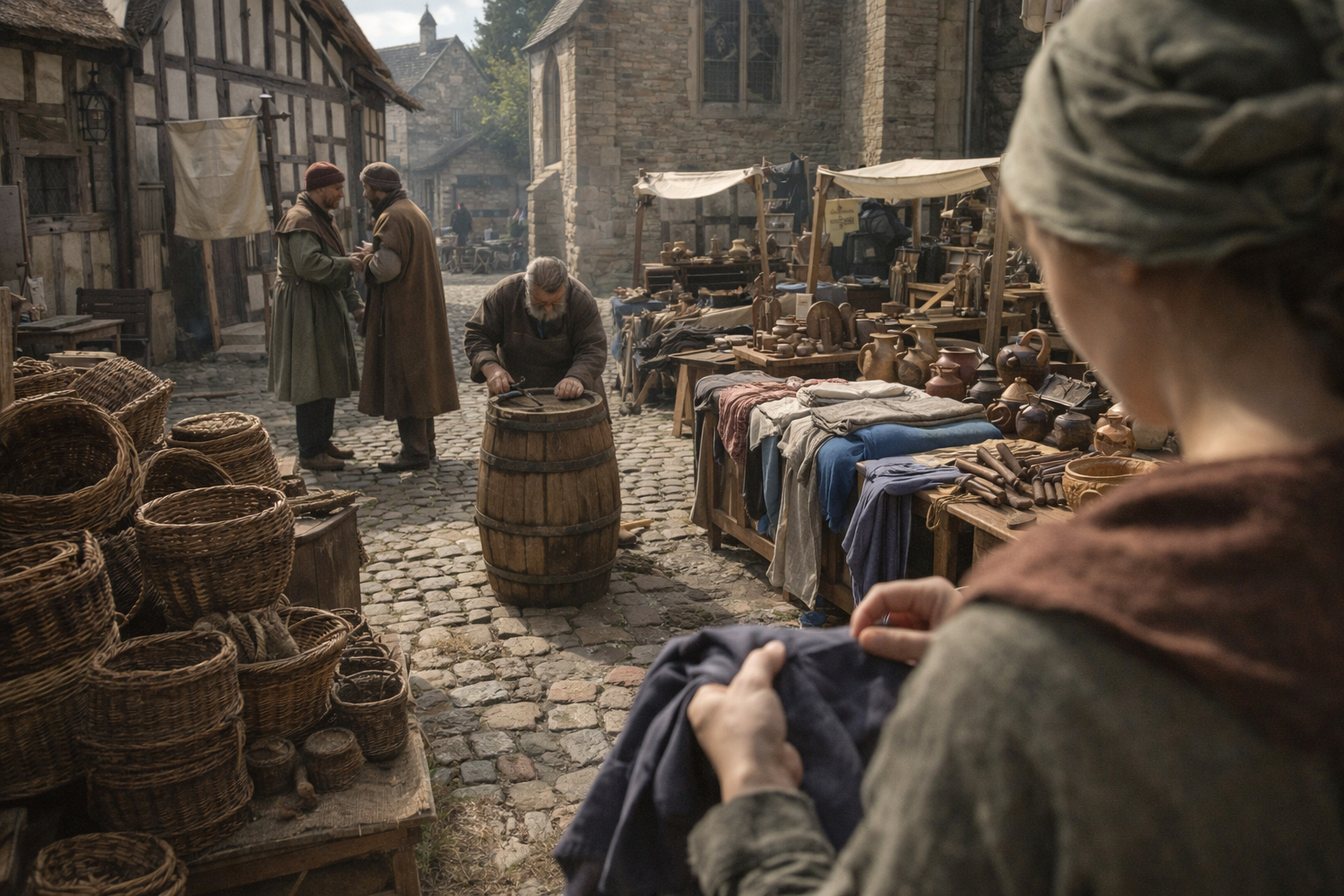
Market towns were more than places of commerce; they were the settings of social life, shaped by patterns of work, habit, and exchange. Daily interactions at stalls, inns, and parish churches created rhythms that structured neighborhoods and identities. Studying these rhythms reveals how people navigated status, obligation, and opportunity in close-knit communities. This article explores the social mechanisms that sustained life in small market towns and the material traces they left behind.

Understanding these dynamics helps historians connect material evidence to lived experience. The following sections unpack networks, routines, spatial practices, and memory.

Social Networks and Everyday Exchange

In market towns, social networks often overlapped with economic ties: customers became neighbors, apprentices became kin by marriage, and credit relations bound households to traders. These ties circulated goods and information, and they regulated reputation through reciprocal obligations. Market days intensified encounters, bringing together residents and itinerant traders who negotiated prices, gossip, and social standing. Informal institutions—churchwardens, guilds, and household heads—translated personal relationships into local governance.

These networks were adaptive, enabling communities to absorb shocks and to coordinate festivals and work. They mattered as much for social solidarity as for economic survival.

Work, Time, and Daily Rhythm

Work in market towns blended domestic production, craft labor, and seasonal commerce, producing distinctive daily and annual timetables. Artisans regulated their hours around market schedules, while household chores and child-rearing interwove with selling and buying. Seasonal fairs and harvest cycles punctuated the year, reshaping labor demands and leisure opportunities for different groups. Time discipline was negotiated, not imposed, and flexibility was a resource in uncertain economies.

Consequently, patterns of work reveal how households balanced subsistence, credit, and social obligations. They also shaped gendered divisions of labor and access to public space.

Spatial Layout and Public Encounters

Towns developed spatial logics that channeled encounters: market squares, alleys, inns, and parish spaces hosted predictable forms of interaction. Proximity mattered—residents of adjacent streets shared more trust and mutual aid, while traders at the market formed transient alliances. Public architecture and street patterns guided movement and visibility, affecting who could speak, trade, or muster support. Regulations over stall placement, noise, and lighting reflected attempts to order social life.

Examining maps and property records uncovers how material arrangements shaped daily behavior and social hierarchies. Space was both a resource and a constraint for residents.

Material Culture, Memory, and Local Identity

Objects and built environments kept memory alive: signboards, workshop tools, household ceramics, and monuments encoded practices and histories. These artifacts testify to tastes, status, and continuity across generations, while repairs and reuse reveal adaptability. Rituals connected to market life—annual fairs, processions, or commemorations—reinforced communal identity and transmitted norms. Material traces help historians reconstruct what ordinary life felt like.

By reading objects alongside documents, it is possible to recover layered experiences of belonging and change. Memory anchored communities even as markets evolved.

Conclusion

Market towns were complex social organisms where exchange, neighborhood ties, and material culture intersected. Their everyday rhythms balanced continuity and change, shaping identities through repeated practices. Studying these patterns illuminates how ordinary people made sense of their world and sustained communal life.


Previous Post

A Curator’s Guide to Sequencing Events for Public Display

Next Post

The Soundscape of Historic Towns: Work, Worship, and Play

Related Posts

The Soundscape of Historic Towns: Work, Worship, and Play
History

The Soundscape of Historic Towns: Work, Worship, and Play

April 2, 2026
Notices, Gossip, and Gesture Around the Market Cross
History

Notices, Gossip, and Gesture Around the Market Cross

March 28, 2026
Notices, Gossip, and Gesture Around the Market Cross
History

Postal Routes and Rumor: Information Flow in Historic Towns

March 28, 2026
Hidden Infrastructure of Market Towns and Everyday Life
History

Hidden Infrastructure of Market Towns and Everyday Life

March 23, 2026
Next Post
The Soundscape of Historic Towns: Work, Worship, and Play

The Soundscape of Historic Towns: Work, Worship, and Play

Search..

No Result
View All Result

Recent Articles

Making Complex Lives Accessible Through Careful Biography

Making Complex Lives Accessible Through Careful Biography

April 3, 2026
Anchoring Lives: Techniques for Trustworthy Biography Writing

Anchoring Lives: Techniques for Trustworthy Biography Writing

April 3, 2026
The Soundscape of Historic Towns: Work, Worship, and Play

The Soundscape of Historic Towns: Work, Worship, and Play

April 2, 2026
Weaving Social Life in Preindustrial Market Towns

Weaving Social Life in Preindustrial Market Towns

April 2, 2026
A Curator’s Guide to Sequencing Events for Public Display

A Curator’s Guide to Sequencing Events for Public Display

April 1, 2026

Subscribe Us

By clicking submit, I authorize History Ours and its affiliated companies to: (1) use, sell, and share my information for marketing purposes, including cross-context behavioral advertising, as described in our Terms of Service and Privacy Policy, (2) supplement the information that I provide with additional information lawfully obtained from other sources, like demographic data from public sources, interests inferred from web page views, or other data relevant to what might interest me, like past purchase or location data, (3) contact me or enable others to contact me by email with offers for goods and services from any category at the email address provided, and (4) retain my information while I am engaging with marketing messages that I receive and for a reasonable amount of time thereafter. I understand I can opt out at any time through an email that I receive, or by clicking here

Subscribe To Our Newsletter

By clicking submit, I authorize History Ours and its affiliated companies to: (1) use, sell, and share my information for marketing purposes, including cross-context behavioral advertising, as described in our Terms of Service and Privacy Policy, (2) supplement the information that I provide with additional information lawfully obtained from other sources, like demographic data from public sources, interests inferred from web page views, or other data relevant to what might interest me, like past purchase or location data, (3) contact me or enable others to contact me by email with offers for goods and services from any category at the email address provided, and (4) retain my information while I am engaging with marketing messages that I receive and for a reasonable amount of time thereafter. I understand I can opt out at any time through an email that I receive, or by clicking here.

© 2026 History Ours | All Rights Reserved

  • Contact Us
  • Privacy Policy
  • Terms of Service
  • Unsubscribe
  • Privacy Choices
  • Contact Us
  • Privacy Policy
  • Terms of Service
  • Unsubscribe
  • Privacy Choices

© 2026 History Ours | All Rights Reserved

No Result
View All Result
  • Home
  • History
  • Biographies
  • Eras
  • Regions
  • Timeline

© 2026 History Ours | All Rights Reserved

Skip to content
Open toolbar Accessibility Tools

Accessibility Tools

  • Increase TextIncrease Text
  • Decrease TextDecrease Text
  • GrayscaleGrayscale
  • High ContrastHigh Contrast
  • Negative ContrastNegative Contrast
  • Light BackgroundLight Background
  • Links UnderlineLinks Underline
  • Readable FontReadable Font
  • Reset Reset