
Uncover History’s Secrets with Daily Updates!
Daily News Entertainment
  • Home
  • History
  • Biographies
  • Eras
  • Regions
  • Timeline
No Result
View All Result
History Ours
  • Home
  • History
  • Biographies
  • Eras
  • Regions
  • Timeline
No Result
View All Result
History Ours
No Result
View All Result
Home Biographies

Anchoring Lives: Techniques for Trustworthy Biography Writing

in Biographies
Anchoring Lives: Techniques for Trustworthy Biography Writing

Good biography balances factual precision with narrative insight.
Researchers often confront incomplete archives, conflicting testimonies, or brief mentions that resist neat storytelling.
This article outlines practical techniques to anchor a life in evidence while preserving complexity and dignity.
These steps help writers, historians, and students construct biographies that are both careful and engaging.

Begin with a methodical approach to sources and be explicit about limits of the record.

Research Foundations

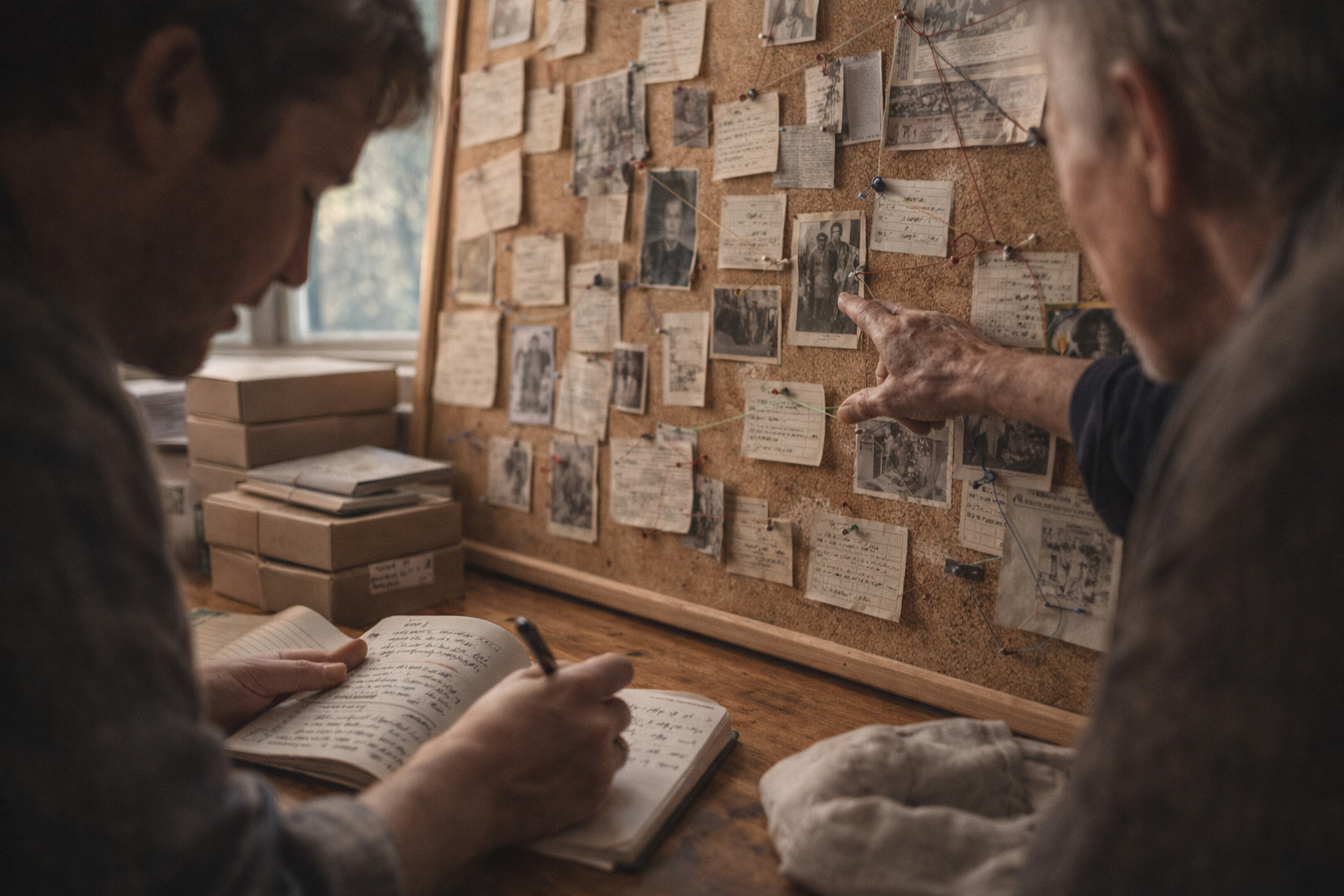
Begin by mapping sources: primary documents, contemporaneous newspapers, institutional records, and oral histories each contribute different strengths and biases. Cross-checking facts across independent materials reduces the risk of repeating errors or relying on a single contested account. Contextual sources—local histories, economic data, and cultural studies—help situate choices and constraints that shaped a subject’s life. Maintain clear citations and a research log to track provenance and uncertainty.

Solid foundations make narrative claims verifiable and leave room for future revision.

Interpreting Gaps

Silences in the record are informative but ambiguous; treat gaps as questions, not evidence of intent. Use informed inference guided by context: what were typical patterns for people in similar positions, and where did this life diverge? Distinguish clearly between documented fact, reasonable inference, and speculative imagination within the text. Transparent framing helps readers evaluate how conclusions were reached.

Careful interpretation preserves credibility and invites readers into the investigative process.

Ethical Considerations

Biography is an ethical practice as much as an intellectual one; subjects and their descendants deserve respect. Avoid sensationalizing tragedies or reducing complex motivations to single explanations. When dealing with vulnerable populations or contested reputations, weigh potential harm and prioritize dignity. Where possible, seek perspectives from communities connected to the subject to broaden understanding.

An ethical posture builds trust with readers and with communities represented in the narrative.

Practical Techniques

Apply practical techniques that strengthen reliability: keep a running timeline, annotate uncertainties, and preserve original language in quotations to avoid paraphrase drift. Use narrative devices sparingly and only when supported by evidence, and signal conjecture explicitly to avoid misleading the reader. Employ visual aids like timelines or source tables in supplementary material to help readers follow complex evidence. Adopt an editorial checklist to verify dates, names, and contextual claims before publication.

  • Maintain a research diary noting dead ends and tentative leads.
  • Cross-reference oral histories with documentary evidence whenever possible.
  • Use appendices to present source disputes or alternative interpretations.

These practical steps enhance transparency and make a biography more useful for scholars and general readers alike.

Conclusion

Trustworthy biography anchors interpretation in documented evidence and clear reasoning.
Respect for subjects and transparent handling of uncertainty strengthen the work’s credibility.
Thoughtful methods enable writers to tell fuller, more responsible life stories.
Previous Post

The Soundscape of Historic Towns: Work, Worship, and Play

Next Post

Making Complex Lives Accessible Through Careful Biography

Related Posts

The Disguise That Broke Chains: Ellen and William Craft
Biographies

The Disguise That Broke Chains: Ellen and William Craft

September 15, 2026
Bass Reeves: The Marshal Who Hunted Outlaws in Indian Territory
Biographies

Bass Reeves: The Marshal Who Hunted Outlaws in Indian Territory

September 15, 2026
Ellen Craft: Passing as a Planter to Secure Freedom
Biographies

Ellen Craft: Passing as a Planter to Secure Freedom

September 15, 2026
Chien‑Shiung Wu: The Physicist Who Proved Parity’s Failure
Biographies

Chien‑Shiung Wu: The Physicist Who Proved Parity’s Failure

September 15, 2026
Next Post
Making Complex Lives Accessible Through Careful Biography

Making Complex Lives Accessible Through Careful Biography

Search..

No Result
View All Result

Recent Articles

The Disguise That Broke Chains: Ellen and William Craft

The Disguise That Broke Chains: Ellen and William Craft

September 15, 2026
Bass Reeves: The Marshal Who Hunted Outlaws in Indian Territory

Bass Reeves: The Marshal Who Hunted Outlaws in Indian Territory

September 15, 2026
How the Crystal Palace Turned Glass and Iron into a Modern Stage

How the Crystal Palace Turned Glass and Iron into a Modern Stage

September 15, 2026
Anne Bonny: The Pirate Who Broke Rules and Expectations

Anne Bonny: The Pirate Who Broke Rules and Expectations

September 15, 2026
How Haiti Broke Its Chains: A 1791–1804 Timeline

How Haiti Broke Its Chains: A 1791–1804 Timeline

September 15, 2026

Subscribe Us

By clicking submit, I authorize History Ours and its affiliated companies to: (1) use, sell, and share my information for marketing purposes, including cross-context behavioral advertising, as described in our Terms of Service and Privacy Policy, (2) supplement the information that I provide with additional information lawfully obtained from other sources, like demographic data from public sources, interests inferred from web page views, or other data relevant to what might interest me, like past purchase or location data, (3) contact me or enable others to contact me by email with offers for goods and services from any category at the email address provided, and (4) retain my information while I am engaging with marketing messages that I receive and for a reasonable amount of time thereafter. I understand I can opt out at any time through an email that I receive, or by clicking here

Subscribe To Our Newsletter

By clicking submit, I authorize History Ours and its affiliated companies to: (1) use, sell, and share my information for marketing purposes, including cross-context behavioral advertising, as described in our Terms of Service and Privacy Policy, (2) supplement the information that I provide with additional information lawfully obtained from other sources, like demographic data from public sources, interests inferred from web page views, or other data relevant to what might interest me, like past purchase or location data, (3) contact me or enable others to contact me by email with offers for goods and services from any category at the email address provided, and (4) retain my information while I am engaging with marketing messages that I receive and for a reasonable amount of time thereafter. I understand I can opt out at any time through an email that I receive, or by clicking here.

© 2026 History Ours | All Rights Reserved

  • Contact Us
  • Privacy Policy
  • Terms of Service
  • Unsubscribe
  • Privacy Choices
  • Contact Us
  • Privacy Policy
  • Terms of Service
  • Unsubscribe
  • Privacy Choices

© 2026 History Ours | All Rights Reserved

No Result
View All Result
  • Home
  • History
  • Biographies
  • Eras
  • Regions
  • Timeline

© 2026 History Ours | All Rights Reserved

Skip to content
Open toolbar Accessibility Tools

Accessibility Tools

  • Increase TextIncrease Text
  • Decrease TextDecrease Text
  • GrayscaleGrayscale
  • High ContrastHigh Contrast
  • Negative ContrastNegative Contrast
  • Light BackgroundLight Background
  • Links UnderlineLinks Underline
  • Readable FontReadable Font
  • Reset Reset