

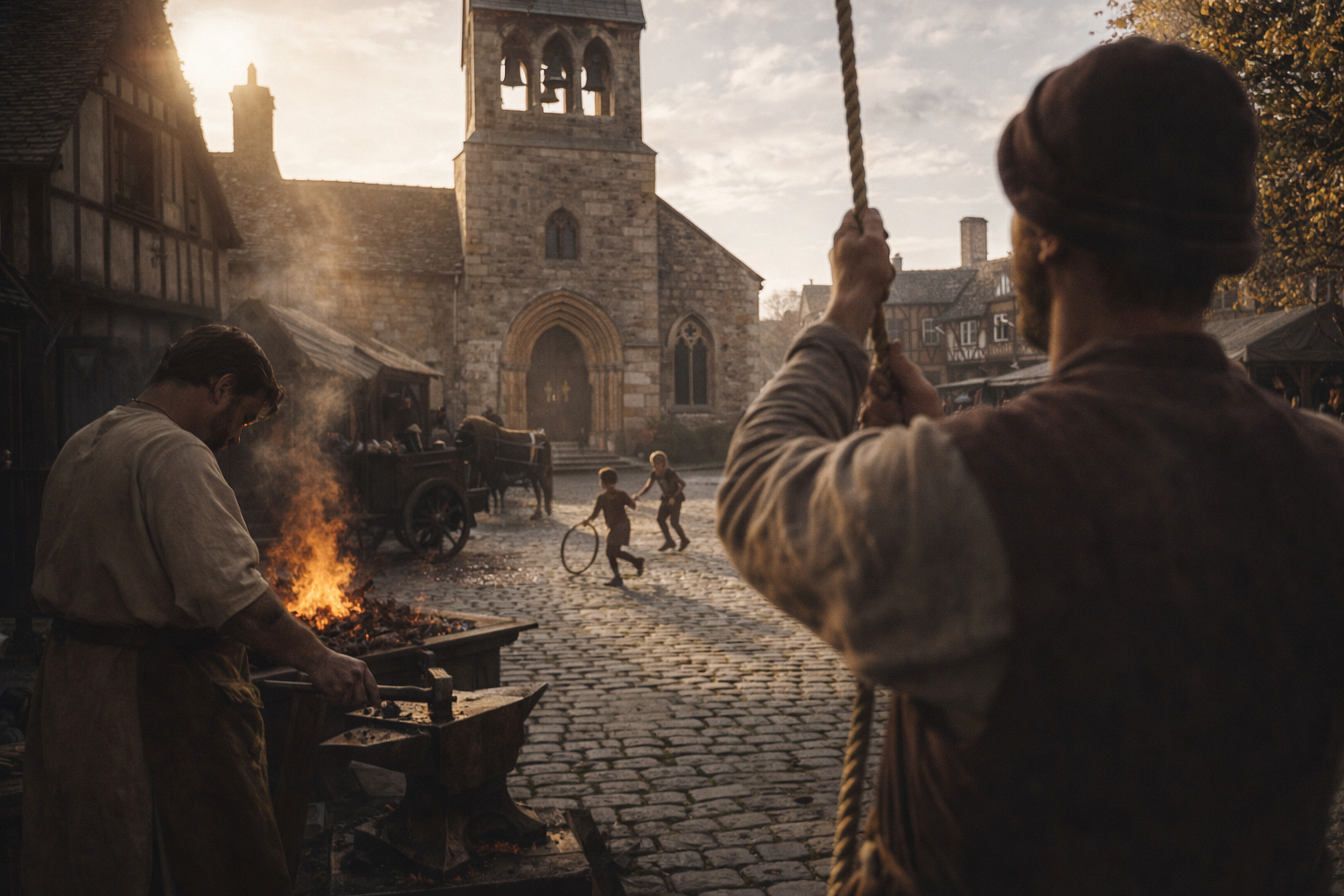
Historic towns were never silent places; their sonic environment shaped social life and routines. Everyday activities produced a layered soundscape that residents learned to read and respond to. From market calls to church bells, sounds marked time, status, and obligation. Listening closely reveals how communities organized work, faith, and leisure.
Sound and Social Order
Acoustic signals often reinforced social hierarchies and civic authority in town spaces. Bells and horns regulated opening hours, summoned laborers, and announced curfews, while official proclamations relied on loud public speech to reach broad audiences. The placement of production sites and public buildings meant certain noises were directed to particular streets and neighborhoods. Understanding who made noise, and where, helps explain how towns managed order and communication.
Audible markers were therefore more than background; they were instruments of governance. Neighbors and officials both used sound to set expectations and boundaries.
Work Rhythms and Audible Labor
The cadence of daily labor created distinct acoustic patterns that structured communal time. Workshops, smithies, mills, and tanneries each produced characteristic noises that signaled the type and intensity of local industry. Street vendors and porters added transient calls and footsteps that announced arrivals and departures. These sonic cues allowed residents to orient themselves within overlapping shifts of activity throughout the day.
- Work sounds like hammering, grinding, and wheel creaks marked production zones.
- Vendors used rhythmic calls to differentiate goods and attract buyers.
- Animal noises and carts punctuated transport and logistics sounds.
Together, these elements created a practical soundtrack for everyday coordination. People learned routines by ear as much as by sight.
Sacred Sounds and Everyday Ritual
Religious institutions shaped town soundscapes through ritualized noise that ordered both worship and public life. Church bells, chant, and processional music defined liturgical time and asserted communal identity. In many places, the timing of services and festivals structured work pauses and market schedules. Sacred sounds thus mediated private devotion and collective gatherings in audible ways.
Even outside formal worship, spiritual acoustics influenced norms around silence, celebration, and mourning. These practices helped bind communities across social divides.
Leisure, Noise, and Public Life
Recreational sounds—music, street performances, and children playing—animated shared places and fostered informal sociability. Taverns and fairs produced convivial noise that contrasted with the regulated sounds of work and worship. Public entertainments could also signal seasonal changes or special occasions, reinforcing a sense of belonging. The coexistence of leisure sounds with everyday labor illustrates the multiplicity of urban life.
Noise was therefore not simply nuisance; it was an expression of communal rhythm and cultural life. Listening to these layers helps historians reconstruct lived experience.
Conclusion
Historic town soundscapes provide a vital lens onto past social organization and daily routines.
By tracing audible patterns we recover how people coordinated work, worship, and play.
Attention to sound reveals the rhythms that shaped communal life and memory.