Uncover History’s Secrets with Daily Updates!
Daily News Entertainment
  • Home
  • History
  • Biographies
  • Eras
  • Regions
  • Timeline
No Result
View All Result
History Ours
  • Home
  • History
  • Biographies
  • Eras
  • Regions
  • Timeline
No Result
View All Result
History Ours
No Result
View All Result

Bahis vergilendirmesi Türkiye’de devlet kontrolündedir, ancak yeni açılan casino siteleri gibi uluslararası sitelerde oyuncular kendi kazançlarını yönetir.

Spor tutkunları için yüksek oranlar Bettilt giriş kısmında bulunuyor.

Kullanıcı yorumlarında pozitif değerlendirmeler alan pin co güvenilirliğini kanıtladı.

Home Regions

The Mongol Empire: Unity Through Conquest

in Regions
The Mongol Empire: Unity Through Conquest

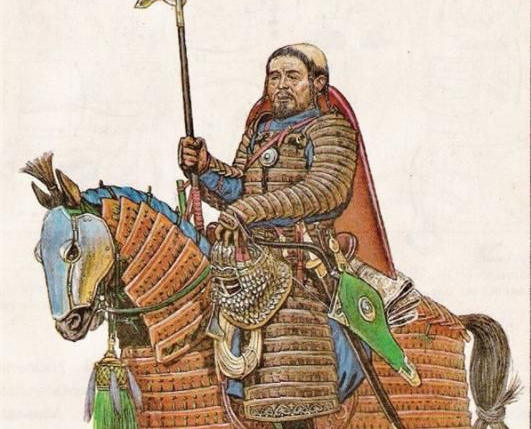
The Mongol Empire stands as one of history’s most striking examples of rapid expansion and unification. Rising from the vast steppes of Central Asia, it connected distant regions under a single political and military framework in a remarkably short time. While its conquests were often brutal, the empire also forged unprecedented links between cultures, economies, and ideas. Unity, in this context, was achieved through force—but sustained through administration, tolerance, and exchange. Understanding the Mongol Empire requires seeing both its destructive power and its integrative legacy.

From Fragmented Tribes to a Unified Force

Before the empire’s rise, the Mongols were divided into rival clans. Leadership transformed when these groups were unified under a single command structure, emphasizing loyalty, merit, and discipline. This cohesion created a highly mobile and coordinated military force. Unity among the Mongols themselves was the foundation that enabled their outward expansion, turning internal consolidation into external dominance.

Conquest as a Tool of Integration

Mongol conquests were swift and strategic, relying on speed, intelligence, and psychological warfare. Cities that resisted faced severe consequences, while those that submitted were often spared and incorporated. This approach encouraged rapid capitulation, minimizing prolonged conflict. Through conquest, vast territories were brought under a common authority, creating political unity across continents that had rarely interacted so directly.

Governance, Trade, and Cultural Exchange

Despite their reputation as conquerors, the Mongols proved adept administrators. They preserved local governance structures, promoted religious tolerance, and standardized laws and taxation. Secure trade routes allowed merchants, scholars, and diplomats to travel safely across Eurasia. This connectivity facilitated the exchange of goods, technologies, and ideas, binding diverse regions together through economic and cultural ties.

Communication and Control Across Distance

Maintaining unity across immense distances required innovation. The empire developed efficient communication networks that allowed orders, information, and resources to move quickly. This system strengthened central control while enabling regional flexibility. Unity was not enforced by constant presence alone, but by systems that kept the empire responsive and cohesive.

Legacy of a Connected World

The Mongol Empire reshaped global history by linking East and West more directly than ever before. While its rise was marked by violence, its long-term impact included increased trade, knowledge transfer, and cross-cultural contact. The unity achieved through conquest laid groundwork for a more interconnected world.

Conclusion

The Mongol Empire achieved unity through conquest, transforming fragmented regions into a vast, interconnected realm. Its power rested not only on military might, but on systems that sustained cohesion across cultures and distances. The empire’s legacy endures as a reminder that even the harshest unifications can leave lasting global connections.


Previous Post

The Renaissance Reborn: Cultural and Scientific Flourishing

Next Post

The Caribbean: Colonialism, Culture, and Freedom

Related Posts

Patterns of Place: How Landscapes Record Regional Change
Regions

Patterns of Place: How Landscapes Record Regional Change

January 30, 2026
Past Boundaries and Everyday Places: Reading Regional Memory
Regions

Past Boundaries and Everyday Places: Reading Regional Memory

January 30, 2026
Negotiating Place: Regional Narratives in Historical Landscapes
Regions

Negotiating Place: Regional Narratives in Historical Landscapes

January 25, 2026
Mapping Historical Regions: Understanding Borders and Continuities
Regions

Mapping Historical Regions: Understanding Borders and Continuities

January 25, 2026
Next Post
The Caribbean: Colonialism, Culture, and Freedom

The Caribbean: Colonialism, Culture, and Freedom

Search..

No Result
View All Result

Recent Articles

Institutions and Daily Routines That Shaped Historical Eras

Institutions and Daily Routines That Shaped Historical Eras

February 3, 2026
Mapping Social Change Through Historical Periods

Mapping Social Change Through Historical Periods

February 3, 2026

User Interface , Pilotage , And Warhead Speed . New Zealand territory Get Free Bonus

February 3, 2026

Registrera Spelarcommunity Engagemang · inom Sverige Win Big Today

February 3, 2026

Hur Man Dycka Typiska Misstag I Webbaserat Roulettevadslagning svenska marknaden Bet Now

February 3, 2026

Subscribe Us

By clicking submit, I authorize History Ours and its affiliated companies to: (1) use, sell, and share my information for marketing purposes, including cross-context behavioral advertising, as described in our Terms of Service and Privacy Policy, (2) supplement the information that I provide with additional information lawfully obtained from other sources, like demographic data from public sources, interests inferred from web page views, or other data relevant to what might interest me, like past purchase or location data, (3) contact me or enable others to contact me by email with offers for goods and services from any category at the email address provided, and (4) retain my information while I am engaging with marketing messages that I receive and for a reasonable amount of time thereafter. I understand I can opt out at any time through an email that I receive, or by clicking here

Subscribe To Our Newsletter

By clicking submit, I authorize History Ours and its affiliated companies to: (1) use, sell, and share my information for marketing purposes, including cross-context behavioral advertising, as described in our Terms of Service and Privacy Policy, (2) supplement the information that I provide with additional information lawfully obtained from other sources, like demographic data from public sources, interests inferred from web page views, or other data relevant to what might interest me, like past purchase or location data, (3) contact me or enable others to contact me by email with offers for goods and services from any category at the email address provided, and (4) retain my information while I am engaging with marketing messages that I receive and for a reasonable amount of time thereafter. I understand I can opt out at any time through an email that I receive, or by clicking here.

© 2026 History Ours | All Rights Reserved

  • Contact Us
  • Privacy Policy
  • Terms of Service
  • Unsubscribe
  • Privacy Choices
  • Contact Us
  • Privacy Policy
  • Terms of Service
  • Unsubscribe
  • Privacy Choices

© 2026 History Ours | All Rights Reserved

No Result
View All Result
  • Home
  • History
  • Biographies
  • Eras
  • Regions
  • Timeline

© 2026 History Ours | All Rights Reserved

Skip to content
Open toolbar Accessibility Tools

Accessibility Tools

  • Increase TextIncrease Text
  • Decrease TextDecrease Text
  • GrayscaleGrayscale
  • High ContrastHigh Contrast
  • Negative ContrastNegative Contrast
  • Light BackgroundLight Background
  • Links UnderlineLinks Underline
  • Readable FontReadable Font
  • Reset Reset