
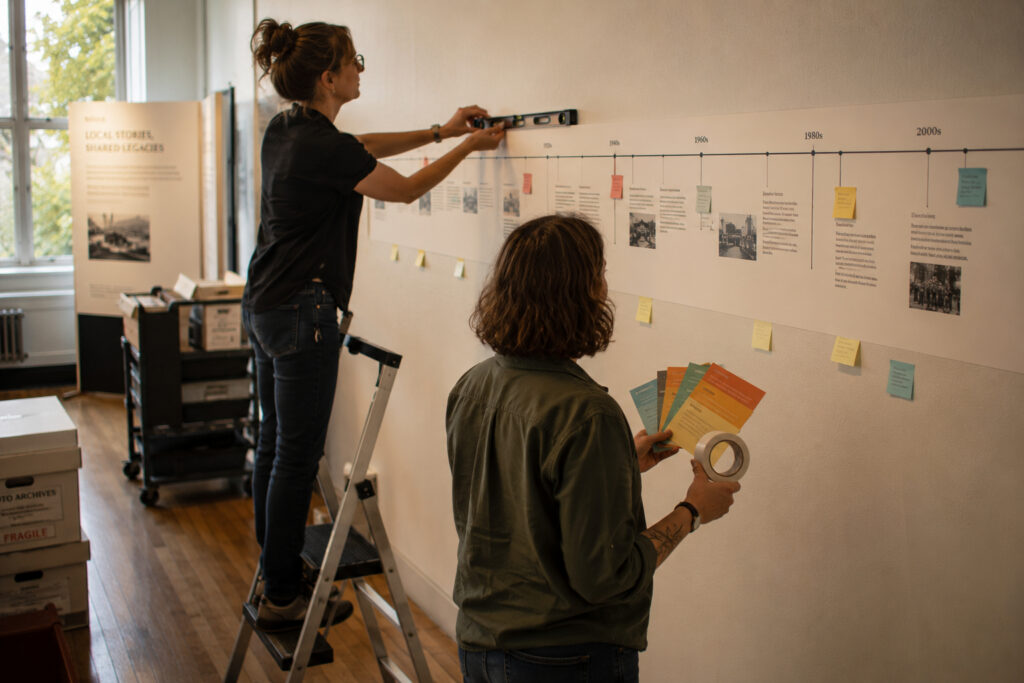
Effective public history timelines turn dates into meaningful stories that guide visitors through change and continuity. Good timelines begin with a clear purpose and audience, which shape choices of scope, scale, and presentation. They balance factual accuracy with readable narrative flow so that both casual viewers and curious researchers can find value. This article outlines practical steps to plan, design, and test timelines that communicate context without overwhelming readers.
These guidelines work for digital displays, exhibition panels, or printed timelines and are adaptable to thematic or chronological projects. They emphasize clarity, verification, and accessibility as core goals.
Define Purpose, Audience, and Scope
Start by asking what question the timeline should answer and who will use it: students, local visitors, or general readers. Define the chronological span and the level of granularity—decades, years, or specific days—based on that purpose. Limiting scope helps avoid clutter and lets you select representative events that support your narrative. Keep the central argument or theme visible to ensure each entry contributes to the overall story.
Document these decisions in a project brief so contributors can make consistent choices during research and design.
Select Events, Sources, and Context
Choose events that illuminate patterns, turning points, and everyday continuities, not just headline moments. Prioritize primary sources and reputable secondary accounts, and record citations clearly for each entry. Provide brief contextual notes that explain significance rather than just stating dates and names. Where appropriate, include multiple perspectives to avoid a single, simplistic narrative.
Create a simple metadata system—date, source, significance—to keep entries consistent and verifiable.
Design Visual Hierarchy and Layout
Use visual hierarchy to guide attention: anchor points for major events, secondary markers for related developments, and different shapes or colors for thematic strands. Keep typography legible and maintain consistent spacing so viewers can track chronology without confusion. Consider interactive or layered displays for complex subjects, allowing users to toggle themes or zoom into time ranges. Maintain clear color-contrast and readable font sizes for accessibility.
Legend and scale markers help users interpret symbols and temporal distances quickly.
Test, Revise, and Document
Prototype the timeline and test it with representative users to identify confusing labels, pacing issues, or missing context. Collect feedback on readability and perceived bias, and revise entries or design elements accordingly. Keep an editable source file and a changelog so future updates remain traceable and transparent. Finalize a citation list and short guidance for users on how to interpret the timeline’s choices.
Iteration ensures the timeline stays accurate, accessible, and aligned with its intended purpose.
Conclusion
Clear public history timelines combine purposeful scope, careful sourcing, and thoughtful visual hierarchy to communicate meaning. Testing and documentation preserve both accuracy and usability over time. Applied consistently, these principles make timelines useful tools for education and public engagement.