Uncover History’s Secrets with Daily Updates!
Daily News Entertainment
  • Home
  • History
  • Biographies
  • Eras
  • Regions
  • Timeline
No Result
View All Result
History Ours
  • Home
  • History
  • Biographies
  • Eras
  • Regions
  • Timeline
No Result
View All Result
History Ours
No Result
View All Result
Home Timeline

Practical Strategies for Building Historical Timelines

in Timeline
Practical Strategies for Building Historical Timelines

Introduction

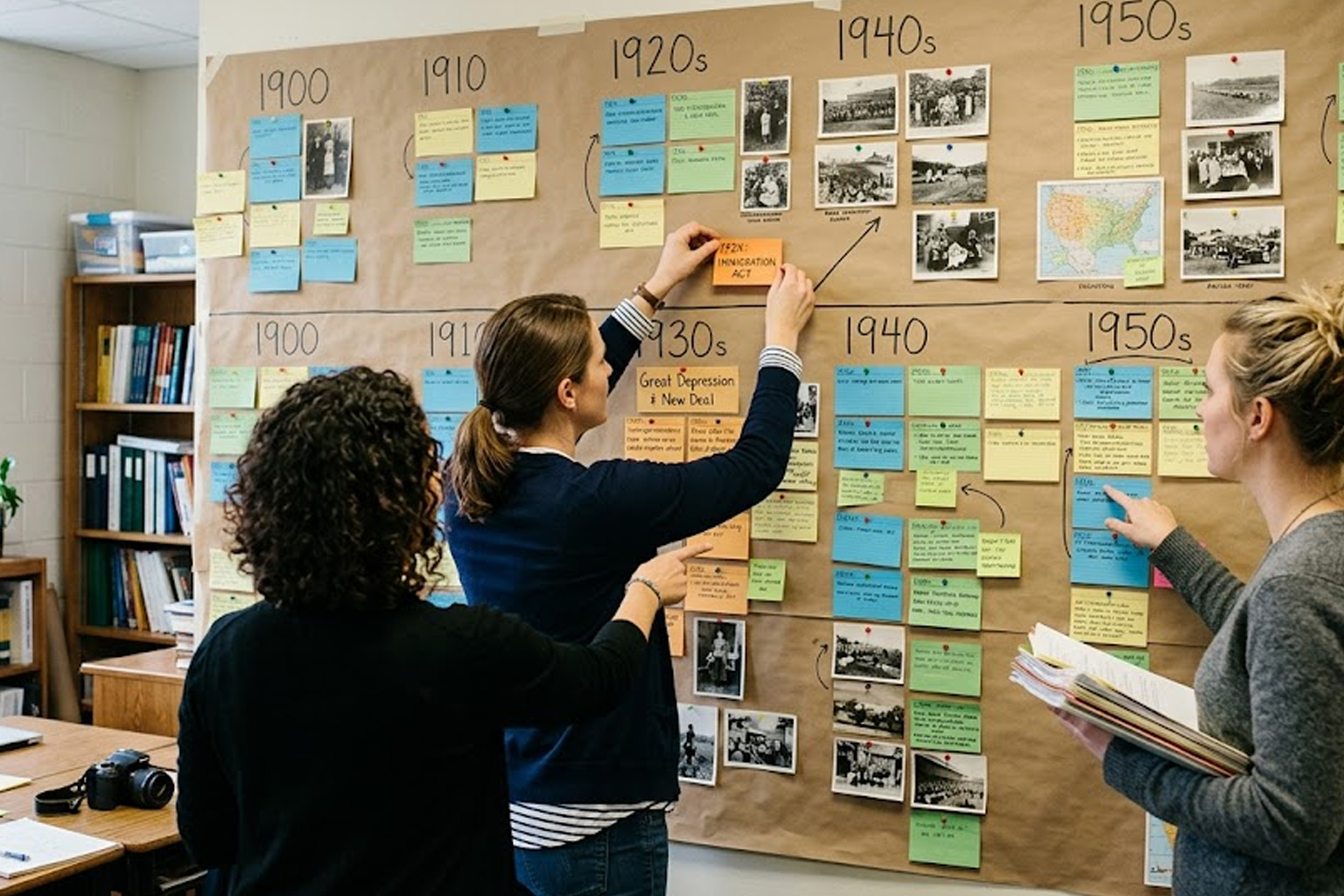
Timelines are powerful tools for organizing historical information and revealing patterns across time. A well-crafted timeline helps readers connect events, causes, and consequences without overwhelming detail. This article outlines practical strategies for planning, designing, and maintaining timelines that are both informative and accessible. These approaches suit educators, curators, and hobby historians looking to present clearer narratives.

Planning your timeline

Begin by defining the purpose and audience of a timeline to determine scope and tone. Decide whether the aim is to show broad trends, trace a sequence of decisions, or compare parallel developments. Selecting a clear focal question prevents timelines from becoming mere date lists. Early planning also guides source selection and the level of detail required.

Sketch a rough sequence of major events and milestones before designing visuals. This preparatory step uncovers gaps and helps prioritize content that supports your narrative goals.

Choosing scale and granularity

Select an appropriate temporal scale to balance context with readability; decades, years, or even days may be suitable depending on the subject. Granularity affects interpretation: coarse views can obscure causality, fine ones overload users. Group related events into categories or layers so viewers can parse information incrementally. Consider offering alternate zoom levels or linked views when presenting large spans.

Be explicit about the time units and any compressions or omissions to avoid misleading impressions. Clear labels and consistent spacing support honest representation of chronological relationships.

Visual design and clarity

Design choices shape how users interpret sequences and priorities on a timeline. Use color, size, and position to signal themes, significance, or chronological clusters without creating visual clutter. Typography and spacing should favor legibility, and interactive cues like hover details can add depth. Accessibility features like contrast and keyboard navigation ensure broader usability.

Test your layout with sample audiences and refine visual hierarchies based on feedback. Iteration often reveals subtle misreadings that a single designer may miss.

Linking sources and context

Every entry should connect to reliable sources or primary documents so users can verify claims and explore further. Brief contextual notes help situate events and clarify contested dates or differing interpretations. Inline citations or expandable annotations make provenance transparent without breaking flow. Maintaining a bibliography fosters scholarly rigor and trust.

When possible, link to digitized documents, maps, or images that add tangible context. These resources deepen engagement and support independent exploration.

Maintaining and updating timelines

Timelines are living resources that benefit from periodic review as new evidence or perspectives emerge. Establish version control and a changelog to track edits, corrections, and additions over time. Encourage community feedback or peer review to catch errors and suggest enhancements. Preserve backups and document editorial decisions to maintain integrity.

Plan scheduled reviews and be transparent about updates to sustain credibility. Regular maintenance keeps timelines relevant and useful for future audiences.

Conclusion

Thoughtful timelines combine clear purpose, careful sourcing, and considerate design to illuminate historical relationships. With planning, iterative testing, and transparent maintenance, timelines can both inform and invite further inquiry. Applying these strategies will make your historical timelines clearer, more accurate, and more engaging for readers.


Previous Post

How Local Practices Shape Regional Historical Narratives

Next Post

Building Timeline Narratives to Illuminate Historical Change

Related Posts

How Haiti Broke Its Chains: A 1791–1804 Timeline
Timeline

How Haiti Broke Its Chains: A 1791–1804 Timeline

September 15, 2026
From Horses to Wires: How the Pony Express Met the Telegraph
Timeline

From Horses to Wires: How the Pony Express Met the Telegraph

September 15, 2026
From Swamps to Shortcut: A Timeline of the Panama Canal
Timeline

From Swamps to Shortcut: A Timeline of the Panama Canal

September 15, 2026
1815–1818: The Tambora Eruption and the Year Without a Summer
Timeline

1815–1818: The Tambora Eruption and the Year Without a Summer

September 15, 2026
Next Post
Building Timeline Narratives to Illuminate Historical Change

Building Timeline Narratives to Illuminate Historical Change

Search..

No Result
View All Result

Recent Articles

Edo: Japan’s Urban Revolution of Lanterns and Printshops

Edo: Japan’s Urban Revolution of Lanterns and Printshops

September 16, 2026
How the Little Ice Age Changed Everyday Life in Europe

How the Little Ice Age Changed Everyday Life in Europe

September 16, 2026
The Disguise That Broke Chains: Ellen and William Craft

The Disguise That Broke Chains: Ellen and William Craft

September 15, 2026
Bass Reeves: The Marshal Who Hunted Outlaws in Indian Territory

Bass Reeves: The Marshal Who Hunted Outlaws in Indian Territory

September 15, 2026
How the Crystal Palace Turned Glass and Iron into a Modern Stage

How the Crystal Palace Turned Glass and Iron into a Modern Stage

September 15, 2026

Subscribe Us

By clicking submit, I authorize History Ours and its affiliated companies to: (1) use, sell, and share my information for marketing purposes, including cross-context behavioral advertising, as described in our Terms of Service and Privacy Policy, (2) supplement the information that I provide with additional information lawfully obtained from other sources, like demographic data from public sources, interests inferred from web page views, or other data relevant to what might interest me, like past purchase or location data, (3) contact me or enable others to contact me by email with offers for goods and services from any category at the email address provided, and (4) retain my information while I am engaging with marketing messages that I receive and for a reasonable amount of time thereafter. I understand I can opt out at any time through an email that I receive, or by clicking here

Subscribe To Our Newsletter

By clicking submit, I authorize History Ours and its affiliated companies to: (1) use, sell, and share my information for marketing purposes, including cross-context behavioral advertising, as described in our Terms of Service and Privacy Policy, (2) supplement the information that I provide with additional information lawfully obtained from other sources, like demographic data from public sources, interests inferred from web page views, or other data relevant to what might interest me, like past purchase or location data, (3) contact me or enable others to contact me by email with offers for goods and services from any category at the email address provided, and (4) retain my information while I am engaging with marketing messages that I receive and for a reasonable amount of time thereafter. I understand I can opt out at any time through an email that I receive, or by clicking here.

© 2026 History Ours | All Rights Reserved

  • Contact Us
  • Privacy Policy
  • Terms of Service
  • Unsubscribe
  • Privacy Choices
  • Contact Us
  • Privacy Policy
  • Terms of Service
  • Unsubscribe
  • Privacy Choices

© 2026 History Ours | All Rights Reserved

No Result
View All Result
  • Home
  • History
  • Biographies
  • Eras
  • Regions
  • Timeline

© 2026 History Ours | All Rights Reserved

Skip to content
Open toolbar Accessibility Tools

Accessibility Tools

  • Increase TextIncrease Text
  • Decrease TextDecrease Text
  • GrayscaleGrayscale
  • High ContrastHigh Contrast
  • Negative ContrastNegative Contrast
  • Light BackgroundLight Background
  • Links UnderlineLinks Underline
  • Readable FontReadable Font
  • Reset Reset