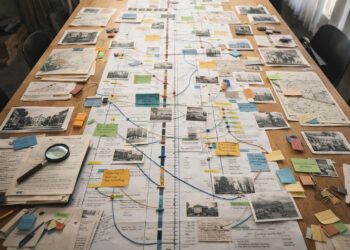


Communication began with gestures, marks and simple signals that linked individuals within small groups. Over generations these practices accumulated into systems of shared meaning that guided cooperation and culture. This article traces major shifts that reshaped how people exchanged information and coordinated action. Understanding these turning points helps explain the structures we still rely on today.
Early symbols and communal meaning
Early human groups relied on visible signs, ritualized gestures and pictorial marks to transmit important information. These symbolic acts were embedded in everyday life and in collective memory, allowing communities to coordinate hunting, ritual and land use without formal institutions. Oral storytelling and repetitive performance cemented these symbols across generations, forming the first persistent records of knowledge and values.
Writing and administrative reach
The invention of writing expanded communication from ephemeral speech to durable records, enabling administration, law and long-term planning. Written systems allowed messages to cross time as well as space, supporting complex economies and statecraft. Literacy created new social roles and institutions while standardizing how information was stored and referenced.
Mechanical and electronic signals
Mechanical innovations such as semaphores and printing presses accelerated the spread of information, while early electrical systems transformed both speed and scale.
– Optical telegraphs and semaphore chains enabled relatively fast visual relay over long distances before electricity.
– The printing press multiplied copies of texts, democratizing access to information and ideas.
– Telegraphy and early telephony introduced near-instant messaging across vast stretches, altering commerce and diplomacy.
These developments combined to shrink effective distance and increase the velocity at which societies could react. The interplay between mechanical and electronic media set the stage for global systems of communication.
Networks, protocols and the digital turn
The rise of packet-switched networks and standardized protocols redesigned communication around interoperability and scalability. Digital encoding made it possible to transmit diverse media—text, audio and images—over a common infrastructure, while search and indexing changed how information was discovered. Social platforms and networked tools further rewired social practices, influencing everything from local organizing to global information flows.
Conclusion
Each turning point built on earlier practices while introducing new technical and social possibilities. By mapping these shifts we see patterns: increased durability, faster transmission, wider reach and deeper integration into daily life. That perspective helps planners, educators and curious readers anticipate how future shifts might reshape communication again.