Discovery and rapid escalation
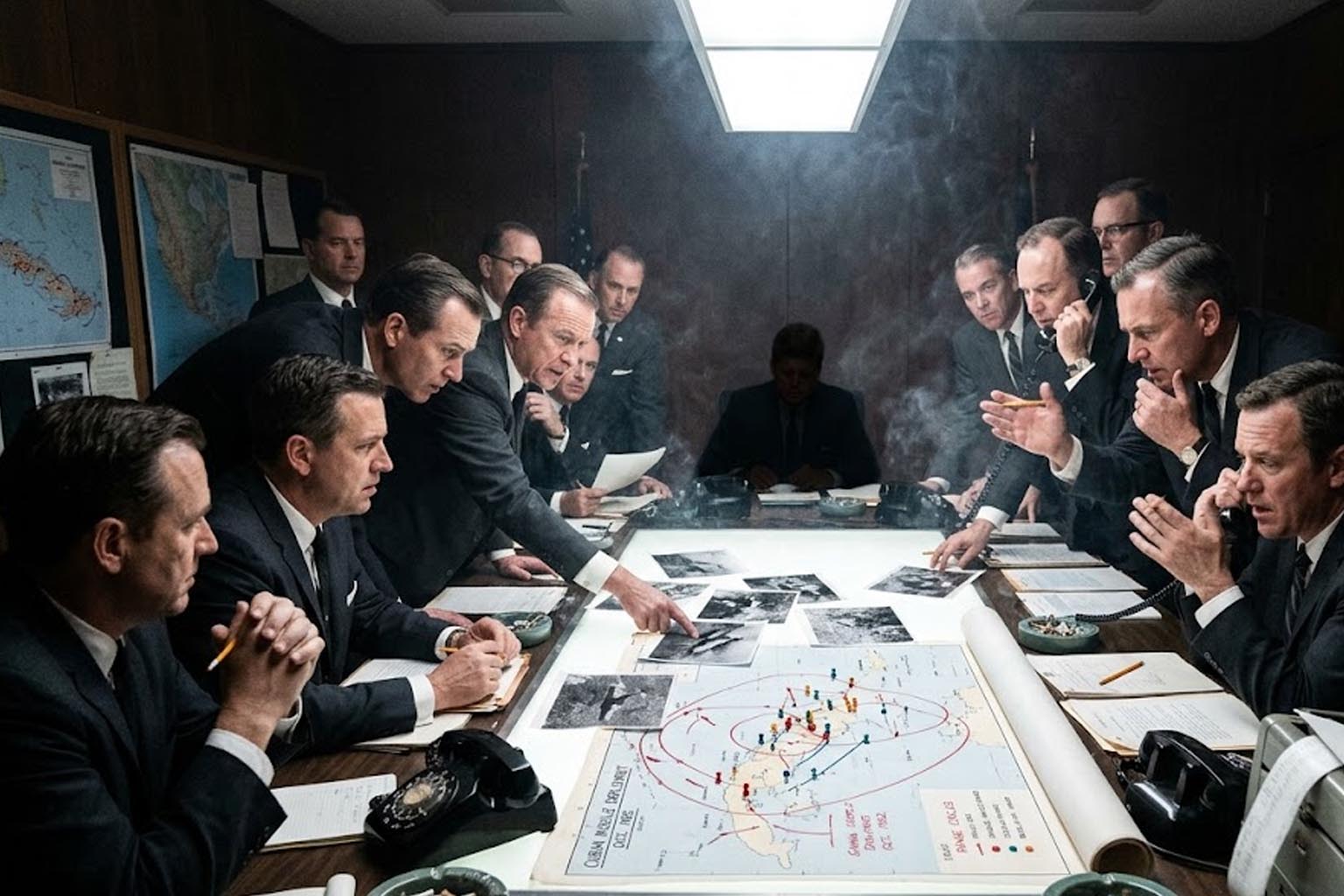
October 14, 1962: A U-2 reconnaissance plane over Cuba photographed what would become the pivotal proof — sites under construction for Soviet medium-range ballistic missiles. Within two days President John F. Kennedy and his advisors were poring over the images. By October 16 an emergency committee of the White House, later known as ExComm, began meeting around the clock to weigh responses.
The background matters. The Bay of Pigs invasion the previous year, and the presence of American Jupiter missiles in Turkey, had already increased mistrust between Washington and Moscow. The missile installations in Cuba transformed that tension into a direct, public threat: nuclear-armed missiles within easy striking distance of the U.S. mainland.
Confrontation at sea and the world on edge
October 22: Kennedy addressed the nation, revealed the existence of the missiles, and announced a naval “quarantine” of Cuba — a blockade in all but name intended to prevent more Soviet shipments. He demanded the removal of offensive weapons and warned that any attack from Cuba would be met with a full retaliatory response on the Soviet Union.
Over the next days Soviet freighters carrying military equipment approached the quarantine line. Some stopped or turned back; others slowed to test U.S. resolve. Washington tightened military readiness and moved forces into defensive postures. Diplomacy and brinkmanship ran in parallel: tense exchanges, both public and secret, between Kennedy, his advisers, and Soviet Premier Nikita Khrushchev.
Letters, a U-2 shootdown, and the bargain that ended the standoff
October 26–27: Khrushchev dispatched a letter offering to remove the missiles in return for a U.S. pledge not to invade Cuba. A second, harsher message appeared the next day, demanding also that the United States remove its Jupiter missiles from Turkey. That same day a U-2 spy plane was shot down over Cuba; its pilot, Major Rudolf Anderson, was killed, dramatically raising the stakes.
October 28: Khrushchev publicly announced the Soviet decision to dismantle and withdraw the missile installations. Privately, through back channels, the two superpowers agreed on a quid pro quo: the Soviets removed their missiles from Cuba; the United States publicly pledged not to invade and secretly agreed to withdraw its Jupiter missiles from Turkey in the months that followed.
Conclusion
The Cuban Missile Crisis is often called the closest the world came to nuclear war. Thirteen days of reconnaissance photos, secret meetings, naval maneuvers, and tense correspondence ended without open conflict, but not without consequences. The episode reshaped Cold War diplomacy: it produced new communication links, including a direct Moscow–Washington hotline, and hardened the lesson that reckless escalation could have global, irreversible costs.