
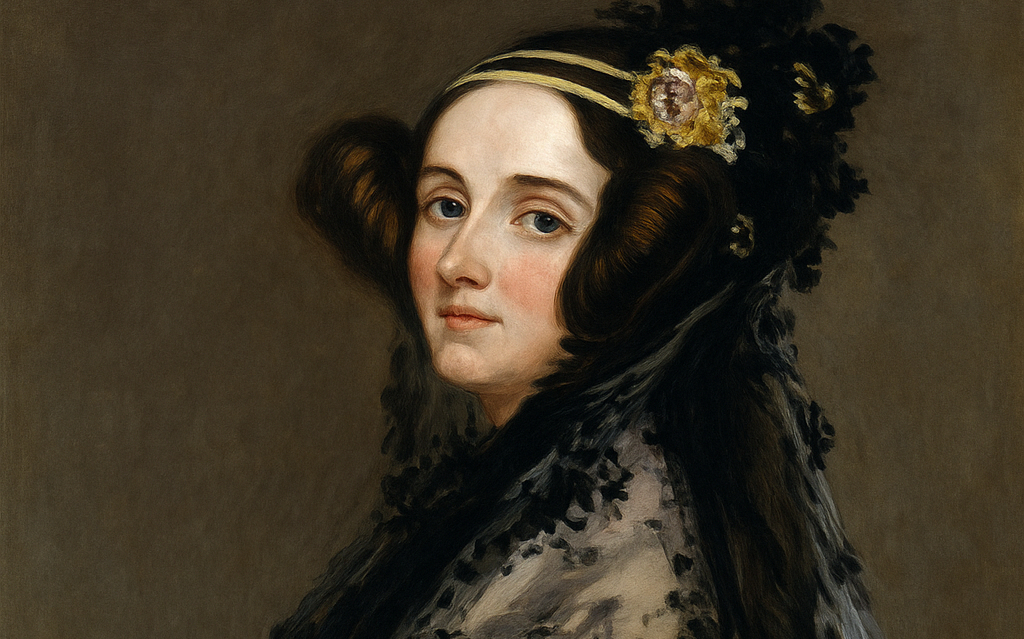
Ada Lovelace is often celebrated as the world’s first computer programmer, a remarkable distinction considering she lived in the 1800s—long before modern computers existed. Her unique combination of mathematical talent, imaginative thinking, and visionary insight allowed her to see possibilities in early mechanical machines that even their inventors did not fully understand. Her work laid the intellectual foundation for concepts that define technology today, from algorithmic thinking to the idea that machines could process more than numbers.
A Visionary Mind Ahead of Its Time
Ada Lovelace grew up surrounded by creativity and intellectual curiosity. While her father, Lord Byron, was a famous poet, Ada inherited a passion for science and mathematics from her mother. This unusual mix shaped her approach to problem-solving, blending logic with imagination. When she encountered Charles Babbage’s Analytical Engine—a proposed mechanical computer—she recognized that it could do far more than compute equations. Her insight that machines might one day create music, art, or complex patterns was revolutionary during an era when technology was limited to gears and levers.
The First Algorithm in History
Lovelace’s lasting legacy comes from her extensive notes on Babbage’s Analytical Engine. Among these notes was a detailed sequence of operations designed to instruct the machine on how to compute Bernoulli numbers. Today, this is widely recognized as the first algorithm ever written for a machine. She understood not only how to instruct the device but also how to generalize its capabilities—an approach that mirrors modern computer programming. Her emphasis on the relationship between data, processing, and output resonates in every programming language used today.
Expanding the Purpose of Machines
While Babbage viewed the engine primarily as a number-cruncher, Ada envisioned something far more expansive. She proposed that if a machine could manipulate numbers, and numbers could represent other concepts, then the machine could process symbols, text, and even creative expressions. This conceptual leap mirrors ideas that define modern computing, from digital art to artificial intelligence. Her belief that machines could amplify human imagination rather than replace it continues to influence how technology evolves.
A Legacy That Transcends Centuries
Though her work received limited recognition during her lifetime, Ada Lovelace’s ideas resurfaced as computing advanced in the 20th century. Researchers, programmers, and innovators saw her writings as strikingly ahead of their time. Today, she is honored not only as a historical figure but also as a symbol of innovation, creativity, and the vital role women play in shaping technology. Her story is a reminder that the future of technology depends on visionary thinkers who can imagine possibilities beyond the present moment.
Conclusion
Ada Lovelace’s contributions to technology were groundbreaking, not because she built machines, but because she understood what they could become. Her ability to merge logic with creativity helped shape the foundations of modern computing. As technology continues to evolve, her story serves as an enduring inspiration for those who strive to push boundaries and imagine what’s possible.