Uncover History’s Secrets with Daily Updates!
Daily News Entertainment
  • Home
  • History
  • Biographies
  • Eras
  • Regions
  • Timeline
No Result
View All Result
History Ours
  • Home
  • History
  • Biographies
  • Eras
  • Regions
  • Timeline
No Result
View All Result
History Ours
No Result
View All Result
Home Biographies

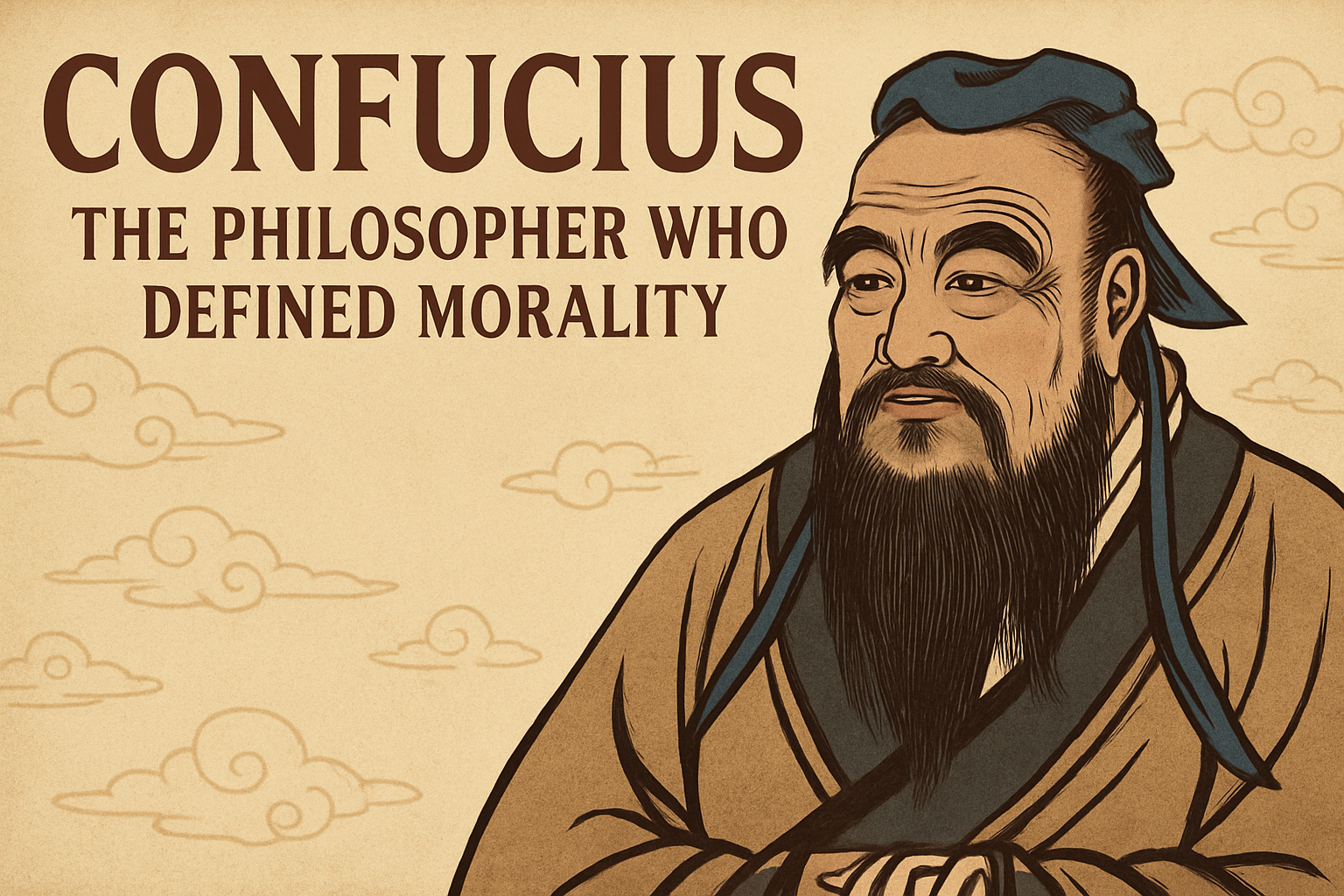
Confucius: The Philosopher Who Defined Morality

in Biographies
Confucius: The Philosopher Who Defined Morality

Confucius remains one of history’s most influential thinkers, a philosopher whose teachings shaped cultures, ethics, and governance for thousands of years. His wisdom continues to resonate today because it explores universal human values—respect, responsibility, empathy, discipline, and harmony. In a world that constantly evolves, the moral framework he built still offers timeless guidance on how people can live meaningful, ethical, and balanced lives.

The Life and Legacy of a Moral Visionary

Confucius was born in 551 BCE in what is now China’s Shandong province. Raised in modest circumstances, he dedicated his life to learning, teaching, and serving society. He believed that moral behavior—not wealth, status, or power—defined a truly great person. His teachings stressed that individuals shape the world around them through their actions, attitudes, and self-discipline. After his death, his students compiled his words into The Analects, a foundational text of Confucian thought that continues to inspire millions.

The Core Principles That Shaped Civilizations

At the heart of Confucius’s philosophy is the idea of ren, often translated as “humaneness” or “benevolence.” He believed that society thrives when people treat each other with kindness, empathy, and respect. Another key concept is li, the practice of proper conduct—behaving with dignity, honoring traditions, and fulfilling one’s responsibilities.

His teachings also emphasized filial piety, or the respect children owe to parents and elders. This wasn’t just about obedience but about preserving family harmony and building strong moral character. Confucius believed that a virtuous society begins with a virtuous family, making his ideas especially influential in cultures where family bonds remain deeply valued.

Confucius’s Impact on Leadership and Governance

Confucius didn’t only focus on personal morality; he also transformed political philosophy. He argued that good leaders rule through virtue rather than force. A leader, he said, should inspire trust, act with fairness, and be committed to serving the people—not controlling them. This concept of ethical leadership influenced governments and educational systems across Asia and still shapes modern leadership models around the world.

His belief that education can elevate individuals and societies also set a foundation for merit-based advancement. Rather than inheriting power, individuals should earn it through knowledge, integrity, and service.

Why Confucius Still Matters Today

In our fast-paced, technology-driven world, Confucius’s teachings offer something deeply needed—clarity and grounding. His philosophy reminds us of that emotional intelligence, respect, empathy, and discipline are core elements of a healthy society. Whether applied in families, workplaces, or communities, his principles provide a framework for better decision-making and more meaningful relationships.

Conclusion

Confucius wasn’t just a philosopher; he was a moral architect whose ideas helped define what it means to live a good life. His teachings continue to inspire people seeking purpose, wisdom, and harmony in a world that often feels fragmented. More than 2,500 years later, Confucius remains a guiding light for anyone striving to build a more compassionate and principled life.

Previous Post

Historical Turning Points That Changed Everything

Next Post

Karl Marx: The Thinker Who Redefined Economics

Related Posts

Mary Seacole: The Jamaican Nurse Who Went to War
Biographies

Mary Seacole: The Jamaican Nurse Who Went to War

October 30, 2026
Ada Lovelace: The Poet Who Helped Imagine Modern Computers
Biographies

Ada Lovelace: The Poet Who Helped Imagine Modern Computers

October 30, 2026
Katherine Johnson: The Numbers Behind America’s First Orbits
Biographies

Katherine Johnson: The Numbers Behind America’s First Orbits

October 25, 2026
Bessie Coleman: How a Texan Manicurist Conquered the Skies
Biographies

Bessie Coleman: How a Texan Manicurist Conquered the Skies

October 25, 2026
Next Post
Karl Marx: The Thinker Who Redefined Economics

Karl Marx: The Thinker Who Redefined Economics

Search..

No Result
View All Result

Recent Articles

How Carrara’s Marble Carved a Peculiar Mountain Region

How Carrara’s Marble Carved a Peculiar Mountain Region

November 1, 2026
The Great Dismal Swamp: Refuge, Labor, and a Hidden Region

The Great Dismal Swamp: Refuge, Labor, and a Hidden Region

November 1, 2026
The Salon Era: How Conversation Shaped the Enlightenment

The Salon Era: How Conversation Shaped the Enlightenment

October 31, 2026
Tenement New York: Life in Vertical Slums, 1870–1910

Tenement New York: Life in Vertical Slums, 1870–1910

October 31, 2026
Mary Seacole: The Jamaican Nurse Who Went to War

Mary Seacole: The Jamaican Nurse Who Went to War

October 30, 2026

Subscribe Us

By clicking submit, I authorize History Ours and its affiliated companies to: (1) use, sell, and share my information for marketing purposes, including cross-context behavioral advertising, as described in our Terms of Service and Privacy Policy, (2) supplement the information that I provide with additional information lawfully obtained from other sources, like demographic data from public sources, interests inferred from web page views, or other data relevant to what might interest me, like past purchase or location data, (3) contact me or enable others to contact me by email with offers for goods and services from any category at the email address provided, and (4) retain my information while I am engaging with marketing messages that I receive and for a reasonable amount of time thereafter. I understand I can opt out at any time through an email that I receive, or by clicking here

Subscribe To Our Newsletter

By clicking submit, I authorize History Ours and its affiliated companies to: (1) use, sell, and share my information for marketing purposes, including cross-context behavioral advertising, as described in our Terms of Service and Privacy Policy, (2) supplement the information that I provide with additional information lawfully obtained from other sources, like demographic data from public sources, interests inferred from web page views, or other data relevant to what might interest me, like past purchase or location data, (3) contact me or enable others to contact me by email with offers for goods and services from any category at the email address provided, and (4) retain my information while I am engaging with marketing messages that I receive and for a reasonable amount of time thereafter. I understand I can opt out at any time through an email that I receive, or by clicking here.

© 2026 History Ours | All Rights Reserved

  • Contact Us
  • Privacy Policy
  • Terms of Service
  • Unsubscribe
  • Privacy Choices
  • Contact Us
  • Privacy Policy
  • Terms of Service
  • Unsubscribe
  • Privacy Choices

© 2026 History Ours | All Rights Reserved

No Result
View All Result
  • Home
  • History
  • Biographies
  • Eras
  • Regions
  • Timeline

© 2026 History Ours | All Rights Reserved

Skip to content
Open toolbar Accessibility Tools

Accessibility Tools

  • Increase TextIncrease Text
  • Decrease TextDecrease Text
  • GrayscaleGrayscale
  • High ContrastHigh Contrast
  • Negative ContrastNegative Contrast
  • Light BackgroundLight Background
  • Links UnderlineLinks Underline
  • Readable FontReadable Font
  • Reset Reset