Uncover History’s Secrets with Daily Updates!
Daily News Entertainment
  • Home
  • History
  • Biographies
  • Eras
  • Regions
  • Timeline
No Result
View All Result
History Ours
  • Home
  • History
  • Biographies
  • Eras
  • Regions
  • Timeline
No Result
View All Result
History Ours
No Result
View All Result
Home Biographies

Karl Marx: The Thinker Who Redefined Economics

in Biographies
Karl Marx: The Thinker Who Redefined Economics

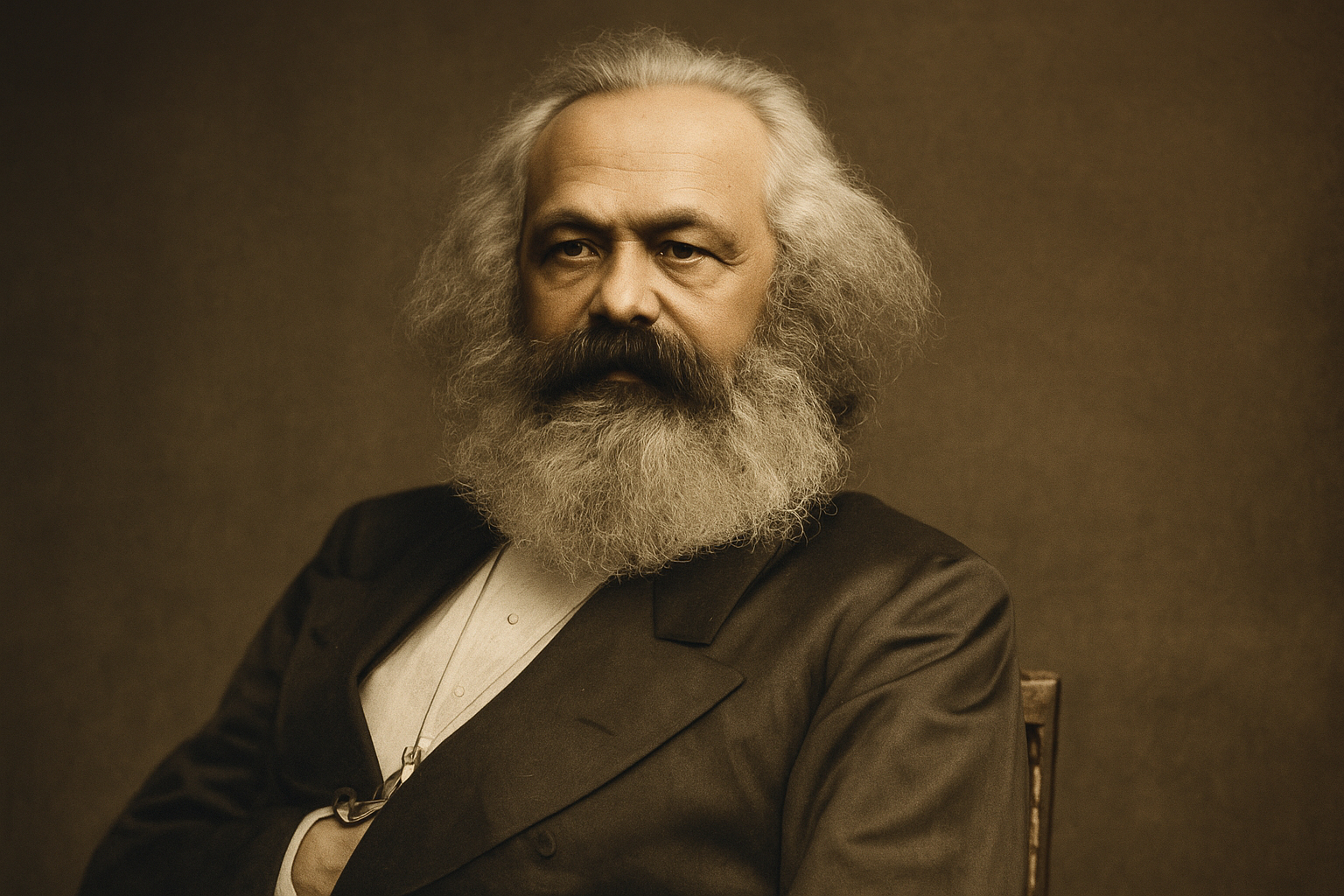
Karl Marx remains one of the most influential and debated thinkers in modern history. His ideas challenged long-standing economic structures, questioned the nature of power and inequality, and reshaped how societies understand labor, wealth, and class. Even today, in a world transformed by technology and globalization, Marx’s work continues to be studied as a lens through which we can examine economic systems and social change.

Marx’s greatest contribution was his ability to connect economic theory with lived experience. He believed that economics was not just about markets and numbers—it was about people, their struggles, and the forces that shaped their daily lives. His work aimed to understand why inequality exists and how societies evolve when economic pressures change. Because his ideas focused on fairness, justice, and the human cost of economic systems, Marx’s influence remains strong across fields such as politics, sociology, economics, and philosophy.

Understanding Marx’s Economic Vision

At the core of Marx’s thinking was the belief that economic systems shape how people live and interact. He argued that societies are built on a struggle between those who own resources and those who work to create value. This idea, known as class conflict, became the foundation of his critique of capitalism. Marx believed that wealth inequality was not an accident but the result of structural imbalances within economic systems.

He introduced the concept of “surplus value,” which explained how owners’ profit from workers’ labor. According to Marx, this imbalance leads to exploitation, not because of individual choices but because of the way the system itself is designed. His analysis helped future economists, policymakers, and scholars understand how labor dynamics affect income, opportunity, and fairness.

A Framework for Social and Economic Change

Marx did more than critique capitalism—he offered a framework for how societies transform. He believed that economic pressures push communities to evolve through different stages, from feudalism to capitalism and beyond. His theories emphasized that social change is driven by material conditions, not just ideas or historical events. This perspective shaped countless political movements and inspired discussions about worker rights, social welfare, and economic democracy.

His work also encouraged generations of people to question whether economic growth truly benefits everyone. By highlighting the experiences of everyday workers, Marx shifted attention toward the human side of economics—something that continues to shape public debates today.

Marx’s Influence in the Modern World

Although written in the 19th century, Marx’s ideas remain highly relevant. Discussions about automation, wage gaps, global supply chains, and labor rights all echo his concerns. Many modern economists draw on his insights to better understand inequality and design more inclusive systems.

His work also fueled academic disciplines like sociology and political theory, helping scholars examine how economic pressures shape cultural values, power structures, and social behavior.

Conclusion

Karl Marx was far more than an economist—he was a revolutionary thinker who reimagined how we understand wealth, work, and society. While interpretations of his work vary widely, his influence on modern thought is undeniable. Marx challenged people to question the systems around them and to imagine a world where economic structures serve everyone, not just a few. His legacy continues to spark conversation, inspire movements, and redefine how we think about fairness in the global economy.


Previous Post

Confucius: The Philosopher Who Defined Morality

Next Post

The Enlightenment Thinkers Who Changed the World

Related Posts

The Disguise That Broke Chains: Ellen and William Craft
Biographies

The Disguise That Broke Chains: Ellen and William Craft

September 15, 2026
Bass Reeves: The Marshal Who Hunted Outlaws in Indian Territory
Biographies

Bass Reeves: The Marshal Who Hunted Outlaws in Indian Territory

September 15, 2026
Ellen Craft: Passing as a Planter to Secure Freedom
Biographies

Ellen Craft: Passing as a Planter to Secure Freedom

September 15, 2026
Chien‑Shiung Wu: The Physicist Who Proved Parity’s Failure
Biographies

Chien‑Shiung Wu: The Physicist Who Proved Parity’s Failure

September 15, 2026
Next Post
The Enlightenment Thinkers Who Changed the World

The Enlightenment Thinkers Who Changed the World

Search..

No Result
View All Result

Recent Articles

The Disguise That Broke Chains: Ellen and William Craft

The Disguise That Broke Chains: Ellen and William Craft

September 15, 2026
Bass Reeves: The Marshal Who Hunted Outlaws in Indian Territory

Bass Reeves: The Marshal Who Hunted Outlaws in Indian Territory

September 15, 2026
How the Crystal Palace Turned Glass and Iron into a Modern Stage

How the Crystal Palace Turned Glass and Iron into a Modern Stage

September 15, 2026
Anne Bonny: The Pirate Who Broke Rules and Expectations

Anne Bonny: The Pirate Who Broke Rules and Expectations

September 15, 2026
How Haiti Broke Its Chains: A 1791–1804 Timeline

How Haiti Broke Its Chains: A 1791–1804 Timeline

September 15, 2026

Subscribe Us

By clicking submit, I authorize History Ours and its affiliated companies to: (1) use, sell, and share my information for marketing purposes, including cross-context behavioral advertising, as described in our Terms of Service and Privacy Policy, (2) supplement the information that I provide with additional information lawfully obtained from other sources, like demographic data from public sources, interests inferred from web page views, or other data relevant to what might interest me, like past purchase or location data, (3) contact me or enable others to contact me by email with offers for goods and services from any category at the email address provided, and (4) retain my information while I am engaging with marketing messages that I receive and for a reasonable amount of time thereafter. I understand I can opt out at any time through an email that I receive, or by clicking here

Subscribe To Our Newsletter

By clicking submit, I authorize History Ours and its affiliated companies to: (1) use, sell, and share my information for marketing purposes, including cross-context behavioral advertising, as described in our Terms of Service and Privacy Policy, (2) supplement the information that I provide with additional information lawfully obtained from other sources, like demographic data from public sources, interests inferred from web page views, or other data relevant to what might interest me, like past purchase or location data, (3) contact me or enable others to contact me by email with offers for goods and services from any category at the email address provided, and (4) retain my information while I am engaging with marketing messages that I receive and for a reasonable amount of time thereafter. I understand I can opt out at any time through an email that I receive, or by clicking here.

© 2026 History Ours | All Rights Reserved

  • Contact Us
  • Privacy Policy
  • Terms of Service
  • Unsubscribe
  • Privacy Choices
  • Contact Us
  • Privacy Policy
  • Terms of Service
  • Unsubscribe
  • Privacy Choices

© 2026 History Ours | All Rights Reserved

No Result
View All Result
  • Home
  • History
  • Biographies
  • Eras
  • Regions
  • Timeline

© 2026 History Ours | All Rights Reserved

Skip to content
Open toolbar Accessibility Tools

Accessibility Tools

  • Increase TextIncrease Text
  • Decrease TextDecrease Text
  • GrayscaleGrayscale
  • High ContrastHigh Contrast
  • Negative ContrastNegative Contrast
  • Light BackgroundLight Background
  • Links UnderlineLinks Underline
  • Readable FontReadable Font
  • Reset Reset