
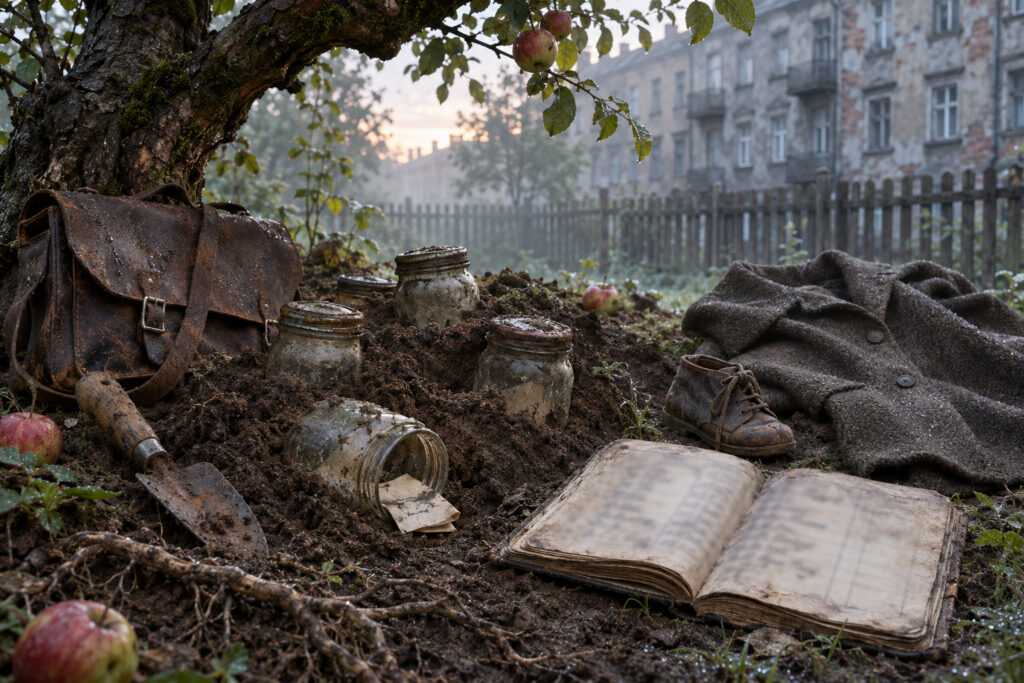
One of the clearest images left behind by Irena Sendler is oddly domestic: dozens of glass jars, each containing a folded scrap of paper. On those scraps she had written the real names of Jewish children she had helped save from the Warsaw Ghetto. She buried the jars under an apple tree in a friend’s garden so that, if the children survived, their families might one day be able to find them.
Sendler was not a soldier or a celebrity. Before the war she worked for Warsaw’s social welfare department, visiting poor families, delivering soup and medicine. When the Nazis sealed off the ghetto she kept going—at first as an aid worker, then as a courier and forger, and finally as an organizer. Her official papers and her job gave her a cover story; her steady calm let desperate parents entrust her with children they could not keep.
Methods: disguise, paperwork, and improvisation
There was no single scheme that worked. Some children were smuggled out in carts of rubbish or bundled under coats. Others left in ambulances, hidden in packages, or carried out on stretchers. Sendler and the network she helped lead—connected with the Polish underground and the clandestine group Zegota—made false identity papers, found non-Jewish homes, convents and orphanages to take the children, and taught older ones new names and stories to survive the checkpoints.
Her ledger was an act of faith. Each entry paired the child’s Jewish identity with the alias and location that would keep them alive. The jar-burial was not secrecy for secrecy’s sake; it was a way of preserving truth under impossible odds, so families could be pieced back together if any returned.
Capture, survival, and a complicated legacy
Sendler’s work finally drew attention. She was arrested by the Gestapo, tortured, and condemned. Members of the underground secured her release and hid her until the war’s end. The children she had helped save—historians estimate about 2,500—went through varied fates: some reunited with relatives, many remained with their new families, and others grew into adulthood without knowing their original names until the jars were dug up after the war.
After 1945 Sendler returned to social work. For decades her story lived mainly in the memories of survivors and the local networks that had sheltered those children. Wider recognition came only much later, as testimonies and archives brought those jars and their papers into the open.
Conclusion
Irena Sendler’s life is a study in quiet logistics turned moral defiance: ordinary paperwork and patient planning used to break the machinery of mass murder. The jars beneath an apple tree remain a stubborn image—small, fragile containers that held the names of children and, with them, a stubborn refusal to let identity be erased.