The midnight alarm
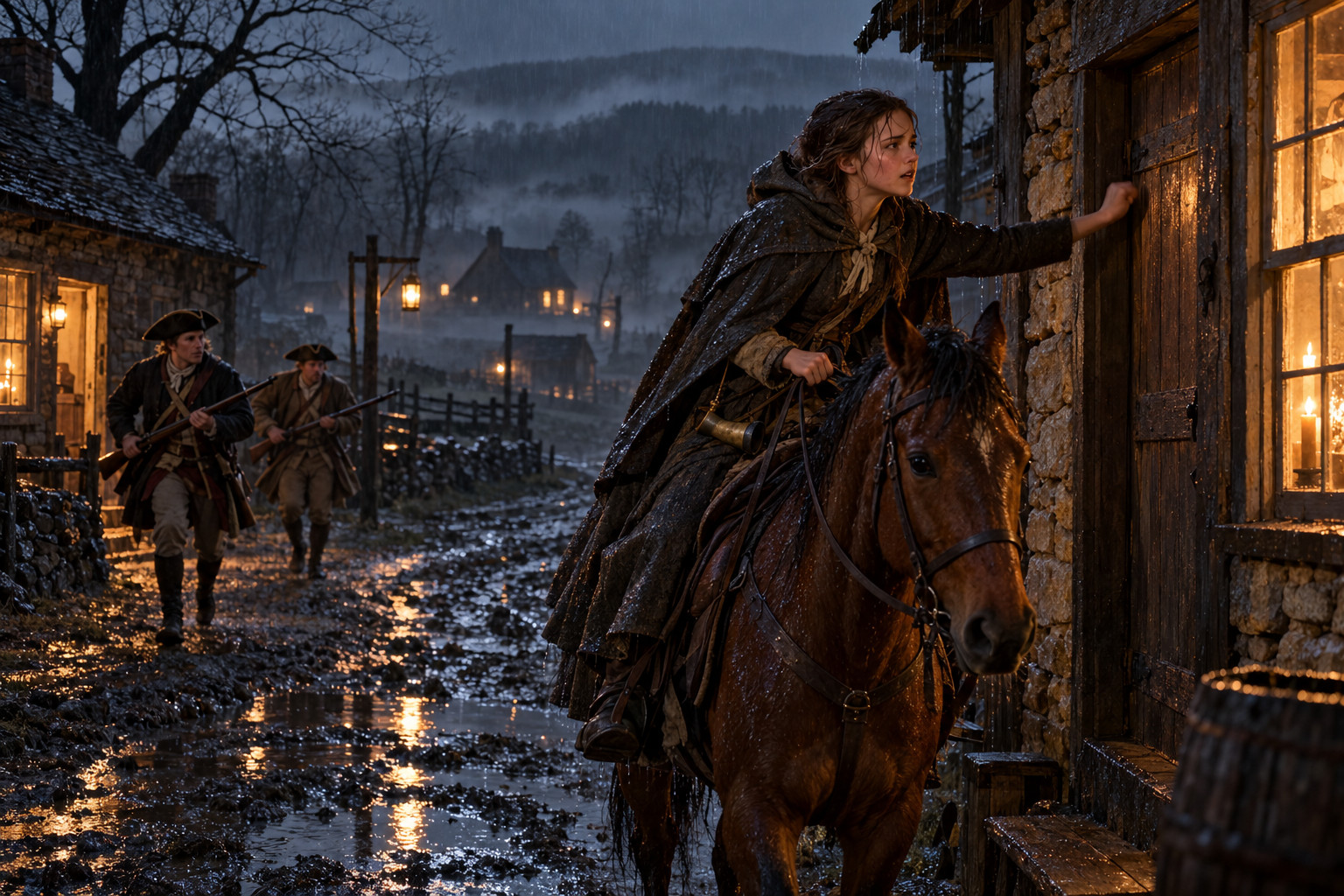
On the night of April 26, 1777, a 16‑year‑old named Sybil Ludington leapt from her bed and mounted a horse. Word had reached her family’s farm that British forces were raiding coastal towns in Connecticut. Her father, Colonel Henry Ludington, commanded local militia, and young Sybil — by family account — volunteered to sound the alarm across the countryside.
Tradition says she rode through a rain‑slicked night, calling out and rapping on doors until dawn. The distance often given is roughly 40 miles, a far longer span than the more famous ride associated with Paul Revere. She cut across dirt lanes and wooded ridges of what is today Putnam County, New York, rousing militiamen in several scattered settlements so they could assemble against the British incursion.
How one ride mattered
If Sybil did cover the distance attributed to her, the practical result was straightforward: men who otherwise might have slept past the warning were mobilized. Militia companies from the region gathered and moved toward Connecticut, where British troops had burned supplies in Danbury and clashed with American forces in the days that followed. Local militiamen harried the raiders and helped blunt the impact of the raid on the rebel cause.
Beyond the immediate military effect, the story of a teenage girl riding through a dangerous night has been a durable symbol. It surfaces in schoolbooks, local memorials, and the broader narrative of ordinary people acting in extraordinary times. In that way Sybil’s ride did what many small acts of the Revolution did: it stitched together communities and kept the fight alive at the grassroots level.
Fact, memory, and debate
Sybil Ludington’s story sits at the intersection of family memory and public history. Contemporary documents are thin; much of what people recount about the ride comes from later family accounts and 19th‑century local histories. Historians caution that details — the exact route, the precise number of miles, even how widely the warning spread that night — are hard to pin down with surviving evidence.
That uncertainty doesn’t erase the larger truth: women and girls performed crucial, often unnoticed roles during the Revolution. Whether or not every turn of Sybil’s ride can be proved, the image of a sixteen‑year‑old racing through the night captures a facet of the war too easily sidelined in grander military narratives.
Conclusion
Sybil Ludington’s ride remains a small, compelling corner of Revolutionary history — part rumor, part memory, and part plausible act of civic courage. It reminds us that wars are made not only by generals and legislatures, but by individuals who choose, at odd hours and in bad weather, to wake their neighbors and insist that the fight go on.