

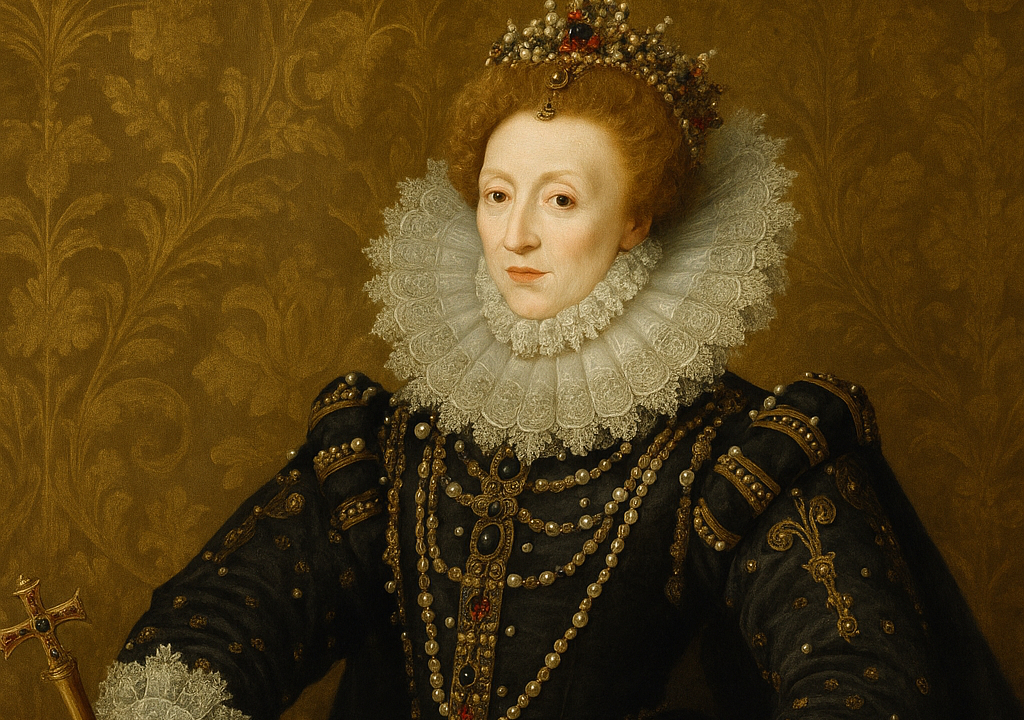
Queen Elizabeth I’s reign (1558–1603) marked one of the most remarkable periods in English history, often referred to as the “Golden Age.” She inherited a nation divided by religion and burdened with debt, yet through intelligence, resilience, and visionary leadership, she transformed England into a global power. Under her rule, the country flourished in politics, culture, and exploration — leaving a legacy that endures centuries later.
The Rise of a Resilient Monarch
Born to King Henry VIII and Anne Boleyn, Elizabeth’s path to the throne was anything but certain. Declared illegitimate after her mother’s execution, she faced years of uncertainty before becoming queen at age 25. Her early life shaped her political acumen — she learned the importance of patience, diplomacy, and self-control. Once crowned, Elizabeth worked to unify her divided kingdom, balancing Protestant and Catholic interests with remarkable political skill.
Cultural Renaissance and Artistic Flourishing
The Elizabethan era witnessed an unprecedented cultural revival. Literature and theater blossomed with figures like William Shakespeare, Christopher Marlowe, and Edmund Spenser shaping the English language and identity. The queen herself was a patron of the arts, encouraging creativity as a means to strengthen national pride. Courtly music, fashion, and architecture reflected her influence — blending elegance with innovation.
The Age of Exploration and Empire
Elizabeth’s reign also marked the dawn of England’s global ambitions. Explorers such as Sir Francis Drake and Sir Walter Raleigh ventured across oceans, expanding trade routes and establishing early colonies. These voyages brought immense wealth and positioned England as a maritime power capable of challenging Spain and Portugal. The 1588 defeat of the Spanish Armada solidified her status as a formidable ruler, symbolizing England’s emergence as a dominant naval force.
Conclusion
Queen Elizabeth I was more than a monarch; she was the architect of a new England. Her leadership inspired unity, her vision fostered creativity, and her courage defined an era. Through her, England evolved into a beacon of progress, art, and exploration — a true golden age in every sense.