Uncover History’s Secrets with Daily Updates!
Daily News Entertainment
  • Home
  • History
  • Biographies
  • Eras
  • Regions
  • Timeline
No Result
View All Result
History Ours
  • Home
  • History
  • Biographies
  • Eras
  • Regions
  • Timeline
No Result
View All Result
History Ours
No Result
View All Result
Home Biographies

Recovering Voice in Small Archives: Practical Biography Steps

in Biographies
Recovering Voice in Small Archives: Practical Biography Steps

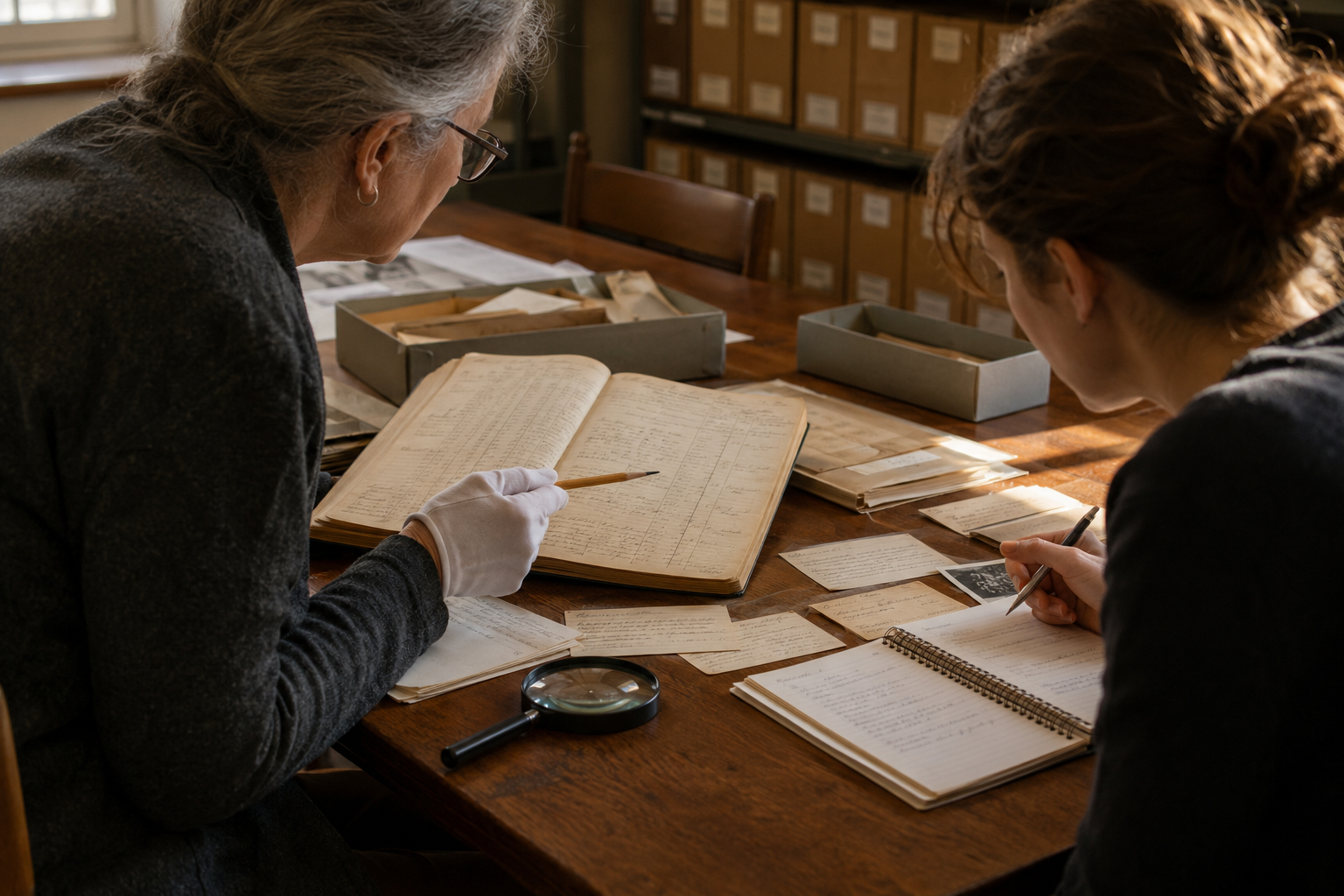
Writing a biography from scarce records demands patience and method. Small archives, fragmentary entries and gaps in the archive can mislead a hurried reader. This piece outlines pragmatic steps to expand a life portrait responsibly, emphasizing source work, contextual reading, and ethical restraint. A clear method helps avoid imposing present assumptions on past lives. These practices help historians and writers turn fragments into credible, empathetic narratives.

Groundwork: Sources and Scope

Start by mapping what exists: official documents, family papers, newspapers, and material culture often interact to produce a fuller picture. Cataloging provenance, dates and potential bias prevents overclaiming and clarifies what can be asserted. Cross-referencing names, addresses and occupations yields patterns that support cautious inference and help identify gaps. Seek out nontraditional holdings such as tax lists, business directories, or institutional ledgers that may escape standard catalogs. Set clear questions to limit speculation and prioritize verifiable claims.

Document every interpretive leap and the reasons behind it, noting where evidence is thin. A transparent research log strengthens trust in the final portrait and aids future researchers. Summarizing uncertainties in notes also helps readers assess the narrative’s limits.

Reading Silences and Small Traces

Silences are evidence too; an absence of records may reflect marginalization, legal status, or deliberate erasure rather than an absence of experience. Close reading of what is present—marginal notes, court docket lines, or household inventories—can reveal daily routines, obligations and relationships. Oral histories, material objects, and visual sources can offset documentary scarcity when interpreted carefully. Treat each small item as a clue rather than a full explanation and test it against other sources.

  • What institutions controlled record creation and who was excluded?
  • How did contemporaries record similar lives, and what patterns emerge?

Recording these contextual questions prevents narrative leaps and organizes follow-up research. Collating small traces often produces a textured but responsibly provisional portrait. These steps help turn fragments into networked evidence that supports measured interpretation.

Balancing Narrative and Caution

Crafting narrative voice requires a balance between readability and evidentiary limits so the story informs without inventing. Use present-tense vignettes or composite scenes sparingly and label conjecture clearly, separating fact from plausible reconstruction. When you draw on comparative cases, explain their relevance and the degree of certainty they provide. Be explicit when narrative choices reflect interpretive priorities rather than direct evidence. Citation and methodological notes allow readers to judge the strength of claims.

Respectful storytelling foregrounds agency without inventing it, honoring the subject’s complexity. Ethical restraint preserves both the subject’s dignity and the writer’s credibility. Invite readers into the uncertainty by providing reading guides or annotations that clarify choices.

Conclusion

Recovering lives from small archives is a methodical practice of patience and clarity. By documenting sources, reading silences attentively, and signaling inference, writers can compose credible life sketches. Those sketches enrich public understanding while honoring historical complexity.
Previous Post

How Market Fronts Directed Everyday Social Interaction

Next Post

Crafting Respectful Life Portraits from Sparse Records

Related Posts

Mary Seacole: The Jamaican Nurse Who Went to War
Biographies

Mary Seacole: The Jamaican Nurse Who Went to War

October 30, 2026
Ada Lovelace: The Poet Who Helped Imagine Modern Computers
Biographies

Ada Lovelace: The Poet Who Helped Imagine Modern Computers

October 30, 2026
Katherine Johnson: The Numbers Behind America’s First Orbits
Biographies

Katherine Johnson: The Numbers Behind America’s First Orbits

October 25, 2026
Bessie Coleman: How a Texan Manicurist Conquered the Skies
Biographies

Bessie Coleman: How a Texan Manicurist Conquered the Skies

October 25, 2026
Next Post
Crafting Respectful Life Portraits from Sparse Records

Crafting Respectful Life Portraits from Sparse Records

Search..

No Result
View All Result

Recent Articles

Mary Seacole: The Jamaican Nurse Who Went to War

Mary Seacole: The Jamaican Nurse Who Went to War

October 30, 2026
Ada Lovelace: The Poet Who Helped Imagine Modern Computers

Ada Lovelace: The Poet Who Helped Imagine Modern Computers

October 30, 2026
John Snow, the Broad Street Pump, and Cholera’s Fall

John Snow, the Broad Street Pump, and Cholera’s Fall

October 29, 2026
The Vasa: Sweden’s Giant Ship That Couldn’t Sail

The Vasa: Sweden’s Giant Ship That Couldn’t Sail

October 29, 2026
How the Black Death Spread Across Europe, 1347–1351

How the Black Death Spread Across Europe, 1347–1351

October 28, 2026

Subscribe Us

By clicking submit, I authorize History Ours and its affiliated companies to: (1) use, sell, and share my information for marketing purposes, including cross-context behavioral advertising, as described in our Terms of Service and Privacy Policy, (2) supplement the information that I provide with additional information lawfully obtained from other sources, like demographic data from public sources, interests inferred from web page views, or other data relevant to what might interest me, like past purchase or location data, (3) contact me or enable others to contact me by email with offers for goods and services from any category at the email address provided, and (4) retain my information while I am engaging with marketing messages that I receive and for a reasonable amount of time thereafter. I understand I can opt out at any time through an email that I receive, or by clicking here

Subscribe To Our Newsletter

By clicking submit, I authorize History Ours and its affiliated companies to: (1) use, sell, and share my information for marketing purposes, including cross-context behavioral advertising, as described in our Terms of Service and Privacy Policy, (2) supplement the information that I provide with additional information lawfully obtained from other sources, like demographic data from public sources, interests inferred from web page views, or other data relevant to what might interest me, like past purchase or location data, (3) contact me or enable others to contact me by email with offers for goods and services from any category at the email address provided, and (4) retain my information while I am engaging with marketing messages that I receive and for a reasonable amount of time thereafter. I understand I can opt out at any time through an email that I receive, or by clicking here.

© 2026 History Ours | All Rights Reserved

  • Contact Us
  • Privacy Policy
  • Terms of Service
  • Unsubscribe
  • Privacy Choices
  • Contact Us
  • Privacy Policy
  • Terms of Service
  • Unsubscribe
  • Privacy Choices

© 2026 History Ours | All Rights Reserved

No Result
View All Result
  • Home
  • History
  • Biographies
  • Eras
  • Regions
  • Timeline

© 2026 History Ours | All Rights Reserved

Skip to content
Open toolbar Accessibility Tools

Accessibility Tools

  • Increase TextIncrease Text
  • Decrease TextDecrease Text
  • GrayscaleGrayscale
  • High ContrastHigh Contrast
  • Negative ContrastNegative Contrast
  • Light BackgroundLight Background
  • Links UnderlineLinks Underline
  • Readable FontReadable Font
  • Reset Reset