Uncover History’s Secrets with Daily Updates!
Daily News Entertainment
  • Home
  • History
  • Biographies
  • Eras
  • Regions
  • Timeline
No Result
View All Result
History Ours
  • Home
  • History
  • Biographies
  • Eras
  • Regions
  • Timeline
No Result
View All Result
History Ours
No Result
View All Result
Home Eras

Making Sense of Overlapping Historical Eras and Scales

in Eras
Making Sense of Overlapping Historical Eras and Scales

Historical eras are tools historians use to group events, trends, and experiences into intelligible units. Many eras overlap, run at different scales, or apply unevenly across regions and social groups. Recognizing those overlaps helps avoid simplistic period labels that obscure important continuities. This article outlines practical ways to define, compare, and communicate layered eras for clearer historical narratives.

Defining Overlap and Scale

Overlap occurs when political, cultural, economic, or environmental changes do not align neatly in time; scales refer to the geographic or social reach of those changes. An industrial transformation might begin in urban centers decades before rural areas see similar shifts, creating concurrent yet distinct eras. Treating eras as stacked layers rather than discrete blocks allows historians to map how movements intersect and diverge. Emphasizing scale also foregrounds whose timelines matter in any given analysis.

Keeping overlap and scale explicit makes periodization more transparent and analytically useful. It encourages readers to see eras as relational rather than absolute, and to ask which communities or sectors a label actually describes.

Methods for Selecting Boundaries

Choose boundaries that best illuminate causal relationships and lived experience rather than forcing neat calendar markers. Use multiple criteria—technological adoption, legal reforms, cultural production, and demographic shifts—to triangulate turning points. Quantitative indicators can help, but qualitative evidence reveals how people perceived and experienced change. Flexibility in boundary choice allows scholars to compare alternative periodizations and justify their analytical aims.

Documenting the reasons for chosen cutoffs and acknowledging competing frameworks strengthens the credibility of any era-based argument. Readers benefit when methods are clear and replicable.

Communicating Layered Eras to Audiences

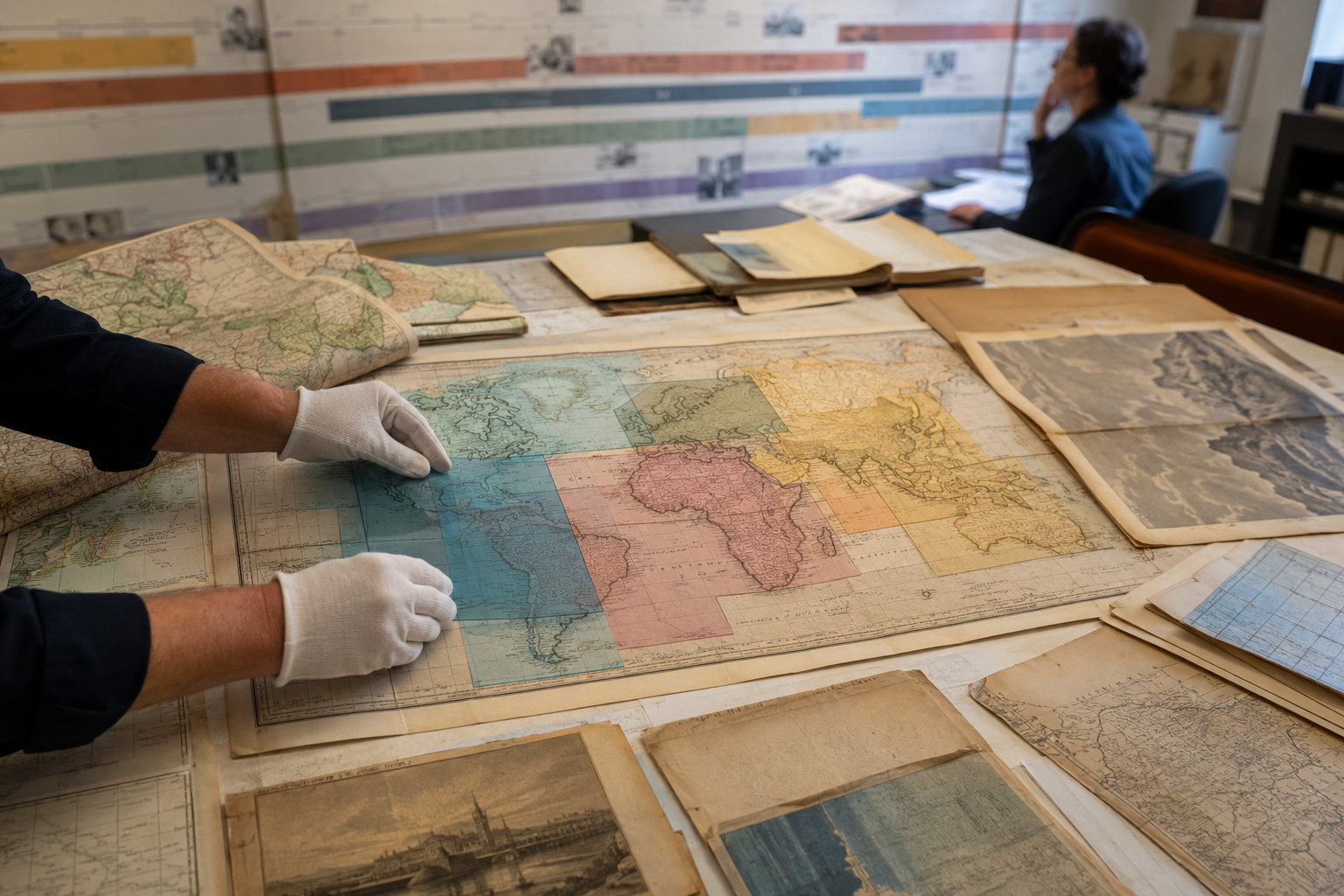
When explaining layered eras to students or the public, visual tools and narratives work well: timelines that show overlapping bands, maps indicating regional differences, and case studies centered on particular communities. Language matters; avoid implying a single universal timeline when multiple ones exist. Emphasize examples that illustrate how different scales produce different historical meanings and outcomes. Clear communication reduces misinterpretation and highlights complexity without overwhelming audiences.

Engage users with comparative questions and tangible examples to make layered periodizations accessible. Good outreach links abstract frameworks to everyday historical experience.

Conclusion

Treat historical eras as overlapping, scale-sensitive frameworks that reveal rather than conceal complexity.
Adopt explicit methods for choosing boundaries and be transparent about analytical goals.
Communicate layered timelines through visuals and grounded examples to make periodization meaningful.


Previous Post

Telling Fuller Lives When Sources Are Thin

Next Post

Anchoring the Past: Practical Strategies for Periodization

Related Posts

Pax Mongolica: How Mongol Rule Rewired the Old World
Eras

Pax Mongolica: How Mongol Rule Rewired the Old World

September 15, 2026
Life Under the Tokugawa: How Edo Japan Rewrote Social Order
Eras

Life Under the Tokugawa: How Edo Japan Rewrote Social Order

September 15, 2026
When Empires Fell: The Late Bronze Age Collapse
Eras

When Empires Fell: The Late Bronze Age Collapse

September 15, 2026
1816: How a Volcano Turned Summer Into Crisis
Eras

1816: How a Volcano Turned Summer Into Crisis

September 15, 2026
Next Post
Anchoring the Past: Practical Strategies for Periodization

Anchoring the Past: Practical Strategies for Periodization

Search..

No Result
View All Result

Recent Articles

The Disguise That Broke Chains: Ellen and William Craft

The Disguise That Broke Chains: Ellen and William Craft

September 15, 2026
Bass Reeves: The Marshal Who Hunted Outlaws in Indian Territory

Bass Reeves: The Marshal Who Hunted Outlaws in Indian Territory

September 15, 2026
How the Crystal Palace Turned Glass and Iron into a Modern Stage

How the Crystal Palace Turned Glass and Iron into a Modern Stage

September 15, 2026
Anne Bonny: The Pirate Who Broke Rules and Expectations

Anne Bonny: The Pirate Who Broke Rules and Expectations

September 15, 2026
How Haiti Broke Its Chains: A 1791–1804 Timeline

How Haiti Broke Its Chains: A 1791–1804 Timeline

September 15, 2026

Subscribe Us

By clicking submit, I authorize History Ours and its affiliated companies to: (1) use, sell, and share my information for marketing purposes, including cross-context behavioral advertising, as described in our Terms of Service and Privacy Policy, (2) supplement the information that I provide with additional information lawfully obtained from other sources, like demographic data from public sources, interests inferred from web page views, or other data relevant to what might interest me, like past purchase or location data, (3) contact me or enable others to contact me by email with offers for goods and services from any category at the email address provided, and (4) retain my information while I am engaging with marketing messages that I receive and for a reasonable amount of time thereafter. I understand I can opt out at any time through an email that I receive, or by clicking here

Subscribe To Our Newsletter

By clicking submit, I authorize History Ours and its affiliated companies to: (1) use, sell, and share my information for marketing purposes, including cross-context behavioral advertising, as described in our Terms of Service and Privacy Policy, (2) supplement the information that I provide with additional information lawfully obtained from other sources, like demographic data from public sources, interests inferred from web page views, or other data relevant to what might interest me, like past purchase or location data, (3) contact me or enable others to contact me by email with offers for goods and services from any category at the email address provided, and (4) retain my information while I am engaging with marketing messages that I receive and for a reasonable amount of time thereafter. I understand I can opt out at any time through an email that I receive, or by clicking here.

© 2026 History Ours | All Rights Reserved

  • Contact Us
  • Privacy Policy
  • Terms of Service
  • Unsubscribe
  • Privacy Choices
  • Contact Us
  • Privacy Policy
  • Terms of Service
  • Unsubscribe
  • Privacy Choices

© 2026 History Ours | All Rights Reserved

No Result
View All Result
  • Home
  • History
  • Biographies
  • Eras
  • Regions
  • Timeline

© 2026 History Ours | All Rights Reserved

Skip to content
Open toolbar Accessibility Tools

Accessibility Tools

  • Increase TextIncrease Text
  • Decrease TextDecrease Text
  • GrayscaleGrayscale
  • High ContrastHigh Contrast
  • Negative ContrastNegative Contrast
  • Light BackgroundLight Background
  • Links UnderlineLinks Underline
  • Readable FontReadable Font
  • Reset Reset