
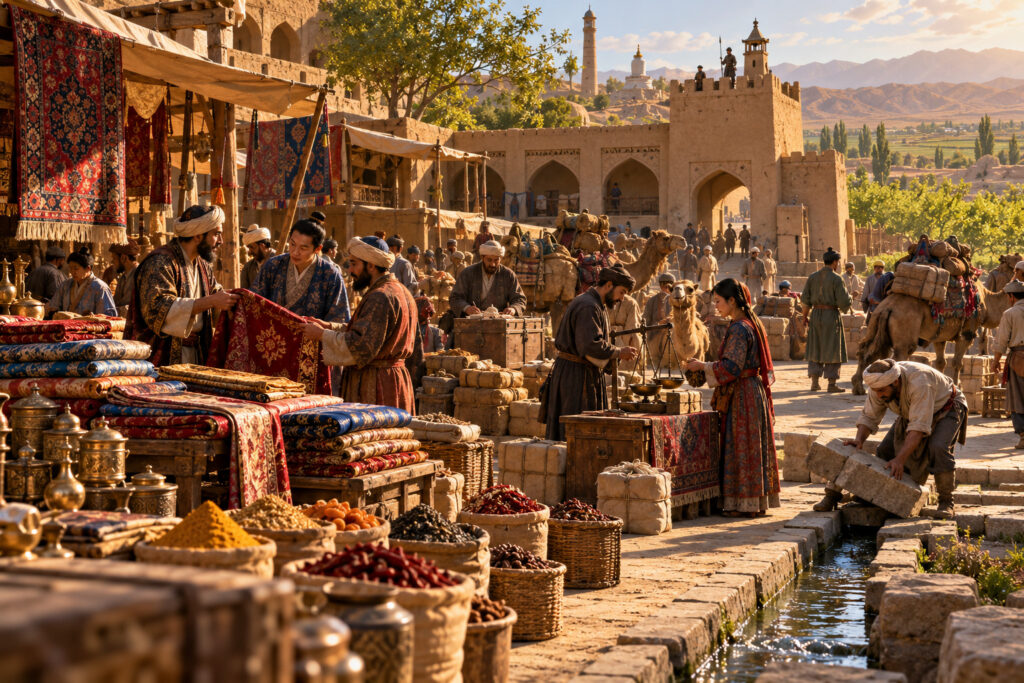
Travel across Central Asia wasn’t an unbroken stretch of sand. It was a necklace of green beads — towns anchored to springs and rivers where caravans paused, merchants traded, and cultures rubbed shoulders. Places like Dunhuang, Kashgar, Turfan and Merv sprang up where water could be diverted, stored, and defended. A reliable spring could turn a barren plain into a market square with orchards, caravanserais, and craft workshops.
These cities were logistical hubs. Camel trains arriving from western Iran or the Tarim Basin unloaded goods into warehouses; grain and fodder replenished animals; and guides negotiated routes across deserts or mountain passes. Local authorities levied tolls and offered protection. Control of irrigation channels — sometimes through underground qanats or karez systems — determined whether a settlement survived or withered.
People, goods, and unexpected collisions
Oasis towns condensed the Silk Road’s long-distance trade into human-sized encounters. Sogdian merchants from Bukhara set up booths next to Chinese silk-sellers; Persian carpets hung beside Indian spices; Buddhists, Christians, Zoroastrians and later Muslims argued theology over tea. Languages mingled: Sogdian, Tocharian, Persian, Turkic dialects and Chinese turned marketplaces into multilingual theaters.
Goods were only part of the exchange. Ideas rode the same caravans: Buddhist texts reached China through oasis libraries; paper-making techniques and coin designs spread westward; musical instruments and iconography migrated with craftsmen who changed styles to suit local tastes. The material bustle hid quieter transfers too — legal customs, accounting practices, and navigational knowledge — all spreading city to city.
Walls, water, and the architecture of mobility
Physical features reflected purpose. Thick mud-brick walls and watchtowers protected stores of grain and silk from bandits and floods. Caravanserais — long, rectangular inns with a single gated entrance and an inner courtyard — offered secure space for animals and merchandise. Mosques, mani temples, stupas and shrines clustered near market streets, signaling the religious pluralism that accompanied trade.
Environmental engineering mattered. Terraced fields and orchards claimed oxygen from the desert; wells and underground channels kept the orchards alive. When water systems failed, cities shrank. When a new route gained favor or a political power disrupted trade, once-busy markets could become ghost towns within a generation.
Conclusion
Oasis cities were more than convenient stops. They were engines of transformation: places where local needs shaped global trade and global encounters reshaped local life. In their markets, the Silk Road’s distant worlds met in a single day — exchanging not just silk or spice, but the habits, tools and stories that remade regions for centuries.