

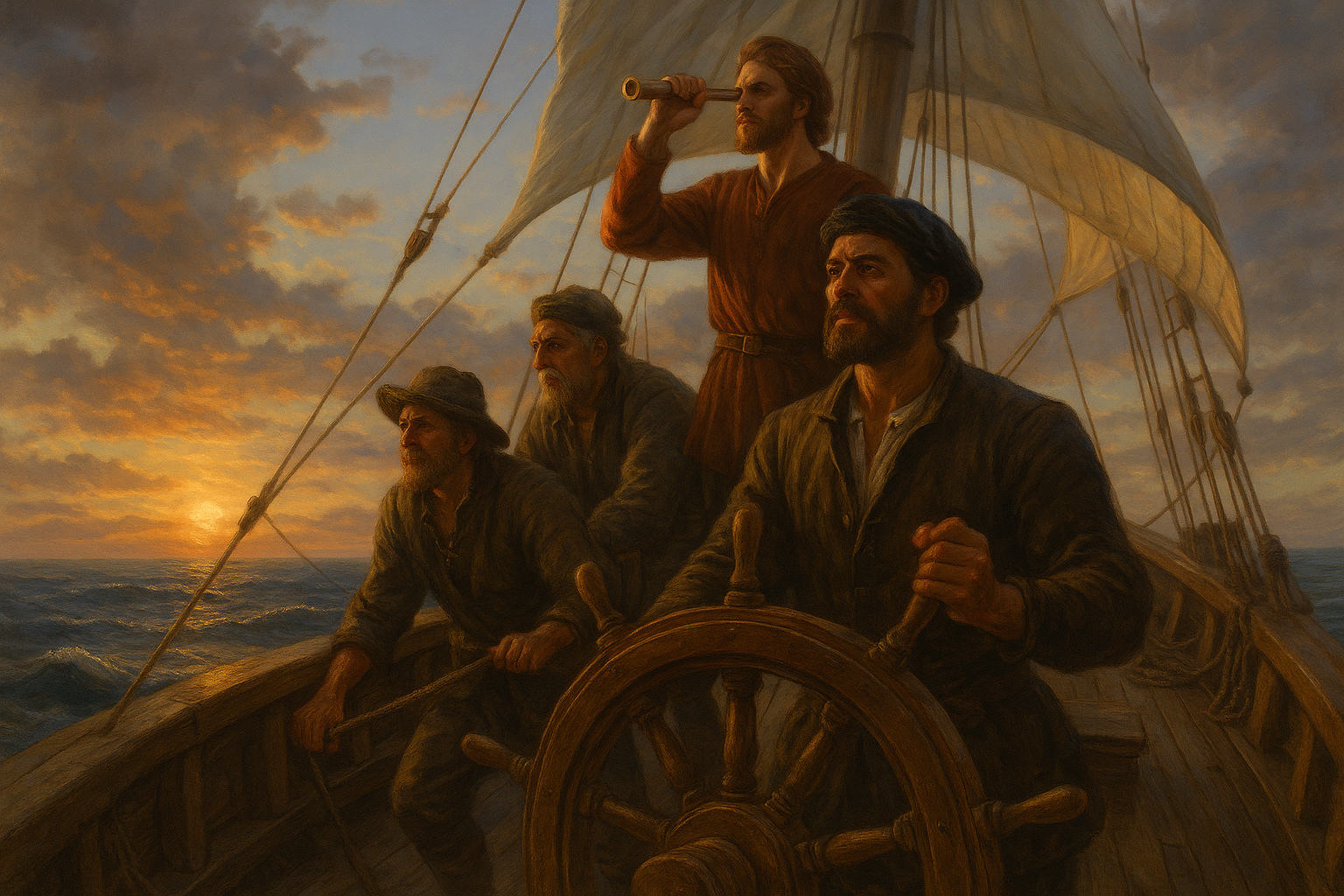
The Age of Discovery, spanning from the 15th to the 17th century, was one of the most transformative periods in human history. Driven by curiosity, ambition, and a desire for trade, explorers ventured into uncharted waters and connected continents for the first time. These voyages reshaped maps, economies, and worldviews — setting the stage for global interaction as we know it today. Yet, beyond the stories of adventure and triumph, this era also brought deep cultural, environmental, and political changes that continue to shape our world.
The Spirit of Exploration
At the heart of the Age of Discovery was a hunger to know what lay beyond the horizon. Advances in navigation, shipbuilding, and geography emboldened sailors to push farther than ever before. Nations like Portugal and Spain led the charge, funding expeditions that would forever alter global trade and geography. The compass, the astrolabe, and improved cartography turned exploration from a dream into a science. For the first time, humanity began to see the planet as a connected whole.
Voyages That Redefined the World
Some of the most significant voyages during this period redefined history. Explorers charted new routes that expanded the boundaries of knowledge and commerce. The circumnavigation of the globe proved the Earth’s roundness in practice, while transoceanic voyages connected civilizations separated by vast distances. These expeditions opened new trade routes for spices, silk, and gold, giving rise to a global economy. But they also sparked intense competition among European powers — a race for wealth and influence that would shape centuries of politics and empire.
Cultural Encounters and Consequences
The Age of Discovery was not only about exploration — it was about encounter. When explorers reached distant lands, they met cultures, languages, and traditions vastly different from their own. These interactions led to exchanges of ideas, crops, and technologies — but also to exploitation, colonization, and conflict. Indigenous populations across the world were profoundly affected by disease, displacement, and cultural upheaval. This dual legacy — discovery and disruption — remains one of history’s most powerful lessons about progress and responsibility.
The Expansion of Knowledge
The voyages of the Age of Discovery also transformed human understanding of the world. New flora, fauna, and geographic discoveries expanded the fields of science and natural history. Cartographers updated maps, scholars questioned long-held beliefs, and philosophers debated humanity’s place in a newly revealed world. The merging of exploration and intellect laid the foundation for the Enlightenment — an age of reason fueled by the data gathered during these daring expeditions.
Lasting Impact on the Modern World
The influence of the Age of Discovery can still be felt today. Global trade, cultural exchange, and international diplomacy all trace their roots to this period. The very concept of globalization — the interconnection of societies across oceans — began with these voyages. Yet, as modern historians reflect, the Age of Discovery also reminds us of the moral complexity of human ambition. Progress, when unchecked, can create both enlightenment and exploitation.
Conclusion
The Age of Discovery was more than a series of voyages — it was the beginning of a global story. It revealed both the greatness and the flaws of human curiosity. Through courage and conflict, discovery and conquest, the explorers of this era reshaped the planet and its people forever. As we chart new frontiers in science, space, and technology, the lessons of that age still echo: that every discovery carries both wonder and responsibility.