
Uncover History’s Secrets with Daily Updates!
Daily News Entertainment
  • Home
  • History
  • Biographies
  • Eras
  • Regions
  • Timeline
No Result
View All Result
History Ours
  • Home
  • History
  • Biographies
  • Eras
  • Regions
  • Timeline
No Result
View All Result
History Ours
No Result
View All Result
Home Eras

The Dhow Age: How Lateen Sails Connected the Indian Ocean

in Eras
The Dhow Age: How Lateen Sails Connected the Indian Ocean

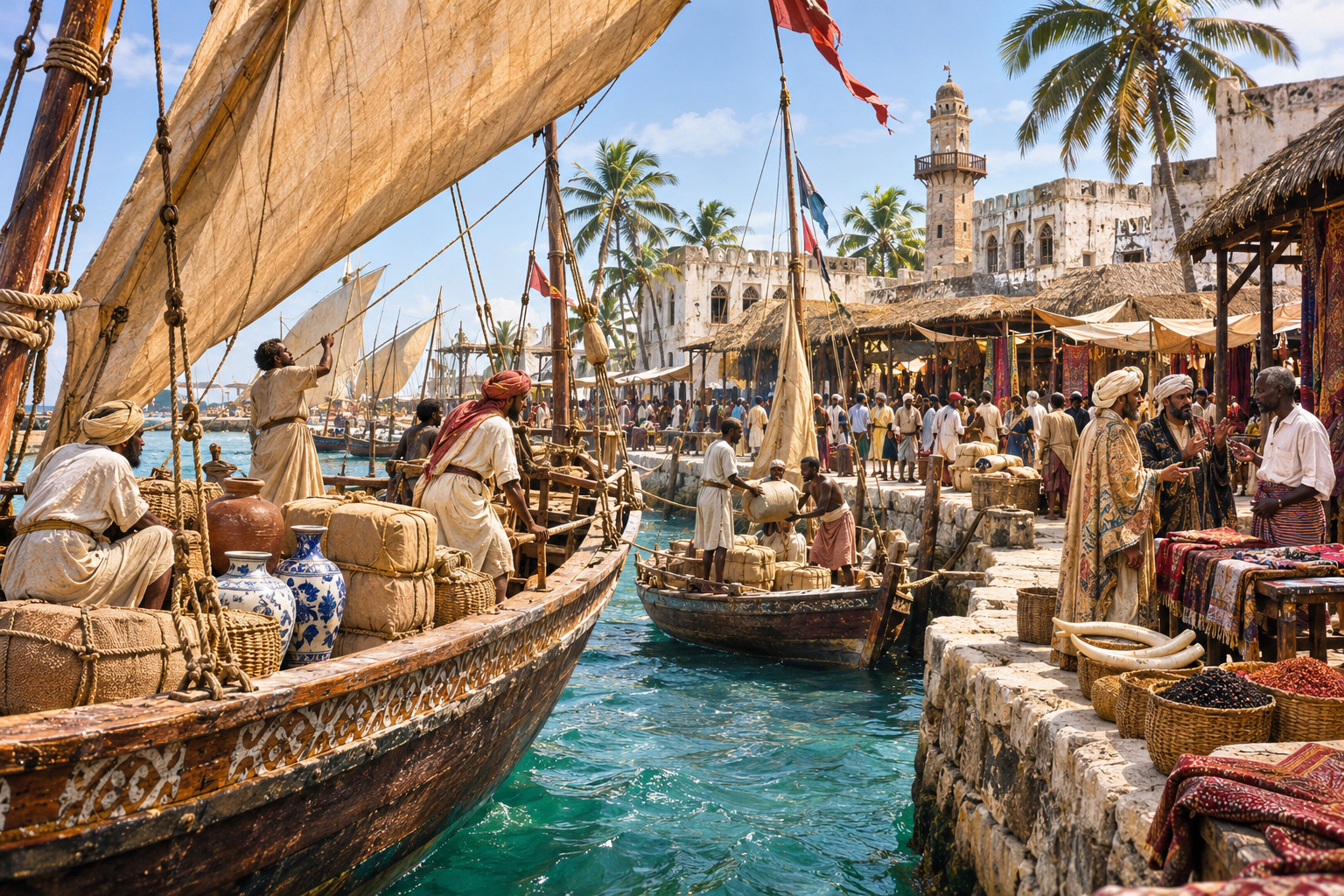
Long before steam and iron, a set of slender wooden ships threaded the rim of the Indian Ocean, carrying cloth, spices, gold, timber and people. These were dhows: clinker-built or plank-hulled vessels rigged with angled lateen sails that made cross-wind work possible. Their story is not just nautical technique but a map of exchange—economic, linguistic and religious—that linked East Africa, Arabia, South Asia and Southeast Asia for a millennium.

Ports and commodities

From the coral streets of Kilwa and the Zanzibar archipelago to the bustling bazaars of Aden and the pepper warehouses of Calicut, dhows tied a chain of entrepôts. Traders offloaded salt, textiles and beads and loaded up with timber, ivory and coastal gold. Chinese ceramics, South Indian calicoes and Arabian frankincense moved in regular rhythms, season to season. City-states like Kilwa grew rich by controlling access to inland sources—Sofala’s gold, for instance—while Malacca later rose by policing the narrow straits and the spice routes through Southeast Asia.

Sails, seasons, and shipcraft

The secret to sustained long-distance trade was weather as much as wood. Mariners learned to read the monsoon: onshore winds carried ships west in the summer, and the reverse brought them back when the monsoon shifted. The lateen sail—triangular, mounted at an angle—let dhows tack more easily than square-rigged boats could, giving captains a real advantage in variable winds and close coastal work. Craftsmen adapted hull shapes and cargo space to local needs; names like baghlah and sambuq describe distinct dhow types used for heavier cargoes or faster passage. Archaeological finds, notably wrecks carrying Tang dynasty ceramics, confirm how far these networks reached and how regular the exchanges became.

Cultural currents

Trade carried more than goods. Languages mixed—Swahili grew out of Bantu and Arabic contacts—and Islam spread with merchants and clerics along trading routes. Material culture crossed oceans: Indian textiles influenced Indonesian dress, East African towns adopted mosque architecture with Arabian precedents, and culinary ingredients moved into new kitchens. These cross-currents produced hybrid identities in port cities where a merchant from Gujarat, a sailor from Lamu and an official from Muscat might all step into the same market.

Conclusion

The Dhow Age was not a single political empire but a maritime ecology: craft, wind, port and credit combined to make a remarkably integrated trading world. Its rhythms lasted until the sixteenth-century European naval interventions and the nineteenth-century rise of steam disrupted the old calendars of the sea. Even today, the silhouette of the lateen sail remains an emblem of a long period when wooden hulls and seasonal winds made the Indian Ocean a highway of goods and ideas.

Previous Post

Isabella Stewart Gardner: Boston’s Provocative Collector and Her Museum

Next Post

The Halifax Explosion: The Blast That Shattered a City

Related Posts

The Jazz Age: Sound, Speakeasies, and Urban Style
Eras

The Jazz Age: Sound, Speakeasies, and Urban Style

November 20, 2026
The Salt Trade Era: How Salt Shaped Cities and Empires
Eras

The Salt Trade Era: How Salt Shaped Cities and Empires

November 20, 2026
Night Before Neon: How Cities Lived by Moonlight
Eras

Night Before Neon: How Cities Lived by Moonlight

November 15, 2026
The Cable-Laying Era: How Submarine Cables Shrank the World
Eras

The Cable-Laying Era: How Submarine Cables Shrank the World

November 15, 2026
Next Post
The Halifax Explosion: The Blast That Shattered a City

The Halifax Explosion: The Blast That Shattered a City

Search..

No Result
View All Result

Recent Articles

The Halifax Explosion: The Blast That Shattered a City

The Halifax Explosion: The Blast That Shattered a City

November 23, 2026
The Dhow Age: How Lateen Sails Connected the Indian Ocean

The Dhow Age: How Lateen Sails Connected the Indian Ocean

November 23, 2026
Isabella Stewart Gardner: Boston’s Provocative Collector and Her Museum

Isabella Stewart Gardner: Boston’s Provocative Collector and Her Museum

November 22, 2026
The Erie Canal: A Waterway That Built New York

The Erie Canal: A Waterway That Built New York

November 22, 2026
The Trent Affair: How a Diplomatic Snag Nearly Brought Britain In

The Trent Affair: How a Diplomatic Snag Nearly Brought Britain In

November 21, 2026

Subscribe Us

By clicking submit, I authorize History Ours and its affiliated companies to: (1) use, sell, and share my information for marketing purposes, including cross-context behavioral advertising, as described in our Terms of Service and Privacy Policy, (2) supplement the information that I provide with additional information lawfully obtained from other sources, like demographic data from public sources, interests inferred from web page views, or other data relevant to what might interest me, like past purchase or location data, (3) contact me or enable others to contact me by email with offers for goods and services from any category at the email address provided, and (4) retain my information while I am engaging with marketing messages that I receive and for a reasonable amount of time thereafter. I understand I can opt out at any time through an email that I receive, or by clicking here

Subscribe To Our Newsletter

By clicking submit, I authorize History Ours and its affiliated companies to: (1) use, sell, and share my information for marketing purposes, including cross-context behavioral advertising, as described in our Terms of Service and Privacy Policy, (2) supplement the information that I provide with additional information lawfully obtained from other sources, like demographic data from public sources, interests inferred from web page views, or other data relevant to what might interest me, like past purchase or location data, (3) contact me or enable others to contact me by email with offers for goods and services from any category at the email address provided, and (4) retain my information while I am engaging with marketing messages that I receive and for a reasonable amount of time thereafter. I understand I can opt out at any time through an email that I receive, or by clicking here.

© 2026 History Ours | All Rights Reserved

  • Contact Us
  • Privacy Policy
  • Terms of Service
  • Unsubscribe
  • Privacy Choices
  • Contact Us
  • Privacy Policy
  • Terms of Service
  • Unsubscribe
  • Privacy Choices

© 2026 History Ours | All Rights Reserved

No Result
View All Result
  • Home
  • History
  • Biographies
  • Eras
  • Regions
  • Timeline

© 2026 History Ours | All Rights Reserved

Skip to content
Open toolbar Accessibility Tools

Accessibility Tools

  • Increase TextIncrease Text
  • Decrease TextDecrease Text
  • GrayscaleGrayscale
  • High ContrastHigh Contrast
  • Negative ContrastNegative Contrast
  • Light BackgroundLight Background
  • Links UnderlineLinks Underline
  • Readable FontReadable Font
  • Reset Reset