Uncover History’s Secrets with Daily Updates!
Daily News Entertainment
  • Home
  • History
  • Biographies
  • Eras
  • Regions
  • Timeline
No Result
View All Result
History Ours
  • Home
  • History
  • Biographies
  • Eras
  • Regions
  • Timeline
No Result
View All Result
History Ours
No Result
View All Result
Home Biographies

Isabella Stewart Gardner: Boston’s Provocative Collector and Her Museum

in Biographies
Isabella Stewart Gardner: Boston’s Provocative Collector and Her Museum

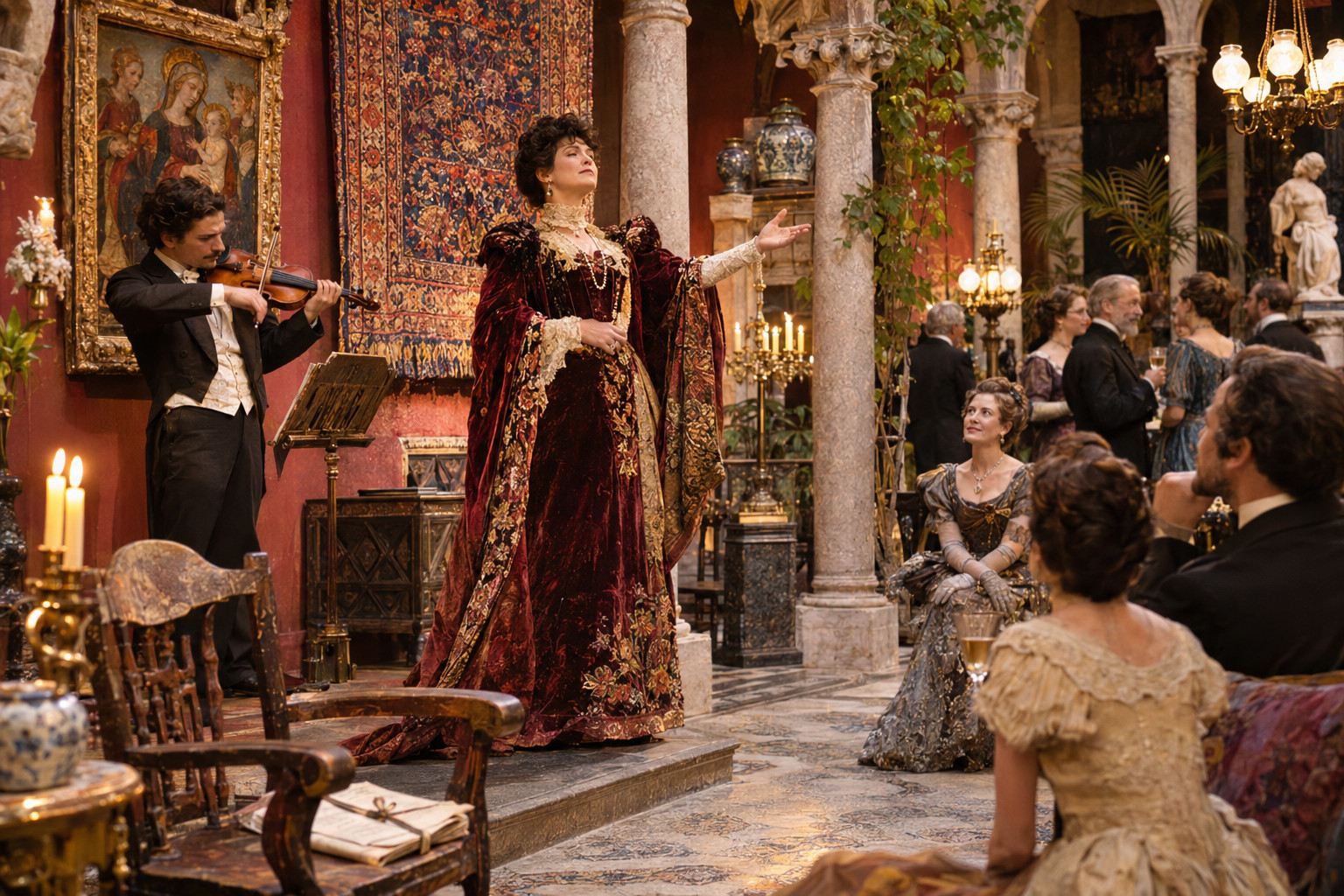
Isabella Stewart Gardner was not a quiet philanthropist. Born in 1840, she moved through the Gilded Age with theatrical flair: exotic dress, dramatic rooms, and a taste for objects that read like props in a private drama. Travel to Italy and a fascination with Venetian palaces shaped her eye. Rather than follow the neat, encyclopedic display favored by many collectors, she assembled scenes—tapestries next to Chinese porcelains, Flemish paintings beside carved furniture—so that visitors felt they had stepped into someone’s very particular world.

Fenway Court: a museum that was also a personality

In 1903 Gardner opened Fenway Court, the home she had remodeled into a palazzo-style gallery on a Boston avenue. She staged concerts, dinners, and performances there, turning the museum into a social engine as much as a repository. Her will made Fenway Court into the Isabella Stewart Gardner Museum and set one strict condition: the arrangement of the rooms and the placement of objects were not to be changed. That bequest fixed the museum as an expression of one collector’s sensibility—imperfect, idiosyncratic, and intentionally theatrical.

Gardner’s circle included artists, musicians, and dealers, and she bought broadly: tapestries, early Renaissance paintings, rare books, and decorative arts that others might dismiss as curios. She delighted in provenance stories and the small, human details that make a collection feel lived in: a scuffed chair here, a scrap of manuscript there. Those choices made the museum intimate and, to some contemporaries, controversial—she refused the neutral, cataloged authority of many academic museums.

Legacy, loss, and a museum that still surprises

Isabella Stewart Gardner died in 1924, leaving behind a museum that was as much a portrait of her tastes as a public institution. That portrait has been complicated by theft and mystery: in 1990, the museum was the scene of the largest art theft in U.S. history when thieves removed thirteen works, among them pieces by Vermeer and Rembrandt. Those losses are part of the museum’s story now, but they have also reinforced the power of Gardner’s original idea: a place deliberately arranged to feel like a single person’s view of the world.

Today the Isabella Stewart Gardner Museum still feels unlike most museums. You don’t go there primarily to tick off canons of art history; you go to move through rooms that insist on personality. Gardner’s bequest—equal parts eccentricity and curatorial command—keeps the visitor close to the collector herself, an artifact of taste that continues to provoke questions about what a museum can be.

Conclusion

Isabella Stewart Gardner’s legacy is not only the paintings and tapestries she left behind but the boldness of her method: she chose intimacy over orthodoxy, atmosphere over neat categorization. The museum she designed remains a rare, stubbornly personal space where the past still shows up as theater.


Previous Post

The Erie Canal: A Waterway That Built New York

Related Posts

Claudette Colvin: The Teen Who Refused a Bus Seat
Biographies

Claudette Colvin: The Teen Who Refused a Bus Seat

November 19, 2026
Mary Shelley: How Frankenstein Began in a Flooded Summer
Biographies

Mary Shelley: How Frankenstein Began in a Flooded Summer

November 19, 2026
Ibn Battuta: Journeys That Sketched a Fourteenth‑Century World
Biographies

Ibn Battuta: Journeys That Sketched a Fourteenth‑Century World

November 14, 2026
Irena Sendler: The Nurse Who Hid an Empire of Children
Biographies

Irena Sendler: The Nurse Who Hid an Empire of Children

November 14, 2026

Search..

No Result
View All Result

Recent Articles

Isabella Stewart Gardner: Boston’s Provocative Collector and Her Museum

Isabella Stewart Gardner: Boston’s Provocative Collector and Her Museum

November 22, 2026
The Erie Canal: A Waterway That Built New York

The Erie Canal: A Waterway That Built New York

November 22, 2026
The Trent Affair: How a Diplomatic Snag Nearly Brought Britain In

The Trent Affair: How a Diplomatic Snag Nearly Brought Britain In

November 21, 2026
After the Quake: How 1755 Lisbon Reshaped an Empire

After the Quake: How 1755 Lisbon Reshaped an Empire

November 21, 2026
The Jazz Age: Sound, Speakeasies, and Urban Style

The Jazz Age: Sound, Speakeasies, and Urban Style

November 20, 2026

Subscribe Us

By clicking submit, I authorize History Ours and its affiliated companies to: (1) use, sell, and share my information for marketing purposes, including cross-context behavioral advertising, as described in our Terms of Service and Privacy Policy, (2) supplement the information that I provide with additional information lawfully obtained from other sources, like demographic data from public sources, interests inferred from web page views, or other data relevant to what might interest me, like past purchase or location data, (3) contact me or enable others to contact me by email with offers for goods and services from any category at the email address provided, and (4) retain my information while I am engaging with marketing messages that I receive and for a reasonable amount of time thereafter. I understand I can opt out at any time through an email that I receive, or by clicking here

Subscribe To Our Newsletter

By clicking submit, I authorize History Ours and its affiliated companies to: (1) use, sell, and share my information for marketing purposes, including cross-context behavioral advertising, as described in our Terms of Service and Privacy Policy, (2) supplement the information that I provide with additional information lawfully obtained from other sources, like demographic data from public sources, interests inferred from web page views, or other data relevant to what might interest me, like past purchase or location data, (3) contact me or enable others to contact me by email with offers for goods and services from any category at the email address provided, and (4) retain my information while I am engaging with marketing messages that I receive and for a reasonable amount of time thereafter. I understand I can opt out at any time through an email that I receive, or by clicking here.

© 2026 History Ours | All Rights Reserved

  • Contact Us
  • Privacy Policy
  • Terms of Service
  • Unsubscribe
  • Privacy Choices
  • Contact Us
  • Privacy Policy
  • Terms of Service
  • Unsubscribe
  • Privacy Choices

© 2026 History Ours | All Rights Reserved

No Result
View All Result
  • Home
  • History
  • Biographies
  • Eras
  • Regions
  • Timeline

© 2026 History Ours | All Rights Reserved

Skip to content
Open toolbar Accessibility Tools

Accessibility Tools

  • Increase TextIncrease Text
  • Decrease TextDecrease Text
  • GrayscaleGrayscale
  • High ContrastHigh Contrast
  • Negative ContrastNegative Contrast
  • Light BackgroundLight Background
  • Links UnderlineLinks Underline
  • Readable FontReadable Font
  • Reset Reset