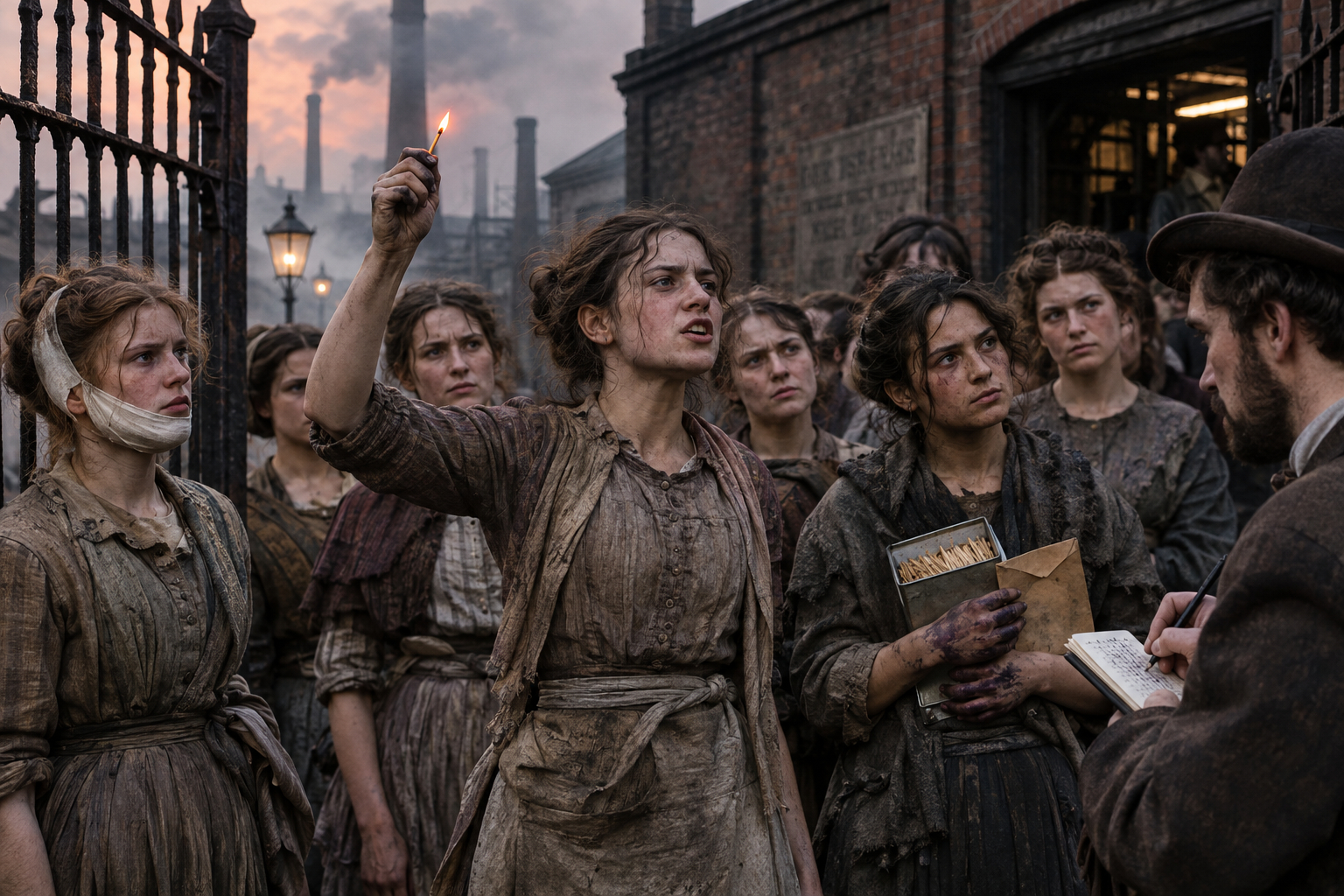
In the East End of London, a small red flame drove a large injustice. At the Bryant & May match factory, the workers—mostly girls and young women—spent long hours dipping wooden splints into a paste that contained white phosphorus. The chemical produced match heads that would light more easily, but it also left a gruesome legacy: a painful jaw disease later called “phossy jaw,” and routine burns and scalds for the workers who handled it.
Pay was meagre, fines for trivial infractions ate away wages, and employers expected long, supervised days in a building that smelled of chemicals and hot glue. The matchgirls were visible in the streets as they left factory gates at dusk, but their working lives were invisible to polite society until they decided to make themselves heard.
The Spark and the Strike
One summer, fed up with penalties and harassment, the women walked out. They did not wait for a union banner or a male organizer to lead the way; they left the factory, gathered on the street, and sent a clear message that they would not return under the same conditions. Their action drew attention fast: sympathetic reporters, curious neighbors and a few reformers came to listen.
Annie Besant, a campaigner who had been investigating factory conditions, amplified their story. Public outrage mounted not just because of low pay but because the working conditions were a clear public-health scandal. The matchgirls organized meetings, elected spokespeople, and pressed specific demands: an end to punitive fines, safer handling practices and recognition that they deserved a living wage.
Public Pressure and Lasting Change
Confronted with bad press and a sudden labor crisis, the company made concessions. Management promised to repeal some of the worst fines and to inspect health conditions. Importantly, the strike broke a common assumption that working-class women lacked the will or the organization to press for change. In the months after, the women set up their own union and continued to campaign for safer production methods—pushing the industry, slowly, away from white phosphorus toward safer alternatives.
The strike was not a single dramatic victory but a turning point: it connected local grievances to national attention, made the plight of female factory workers harder to ignore, and added momentum to broader labor and public-health reforms. Young women who had been dismissed as powerless suddenly appeared in print and on public platforms demanding dignity.
Conclusion
The Matchgirls’ Revolt matters because it was ordinary people—young women with little formal power—who forced change. Their walkout in 1888 reiterated an essential lesson of history: visibility can be a weapon. By stepping out of the factory and into the street, the matchgirls transformed private suffering into public scandal and helped push Britain toward safer workplaces and more organized labor for women.