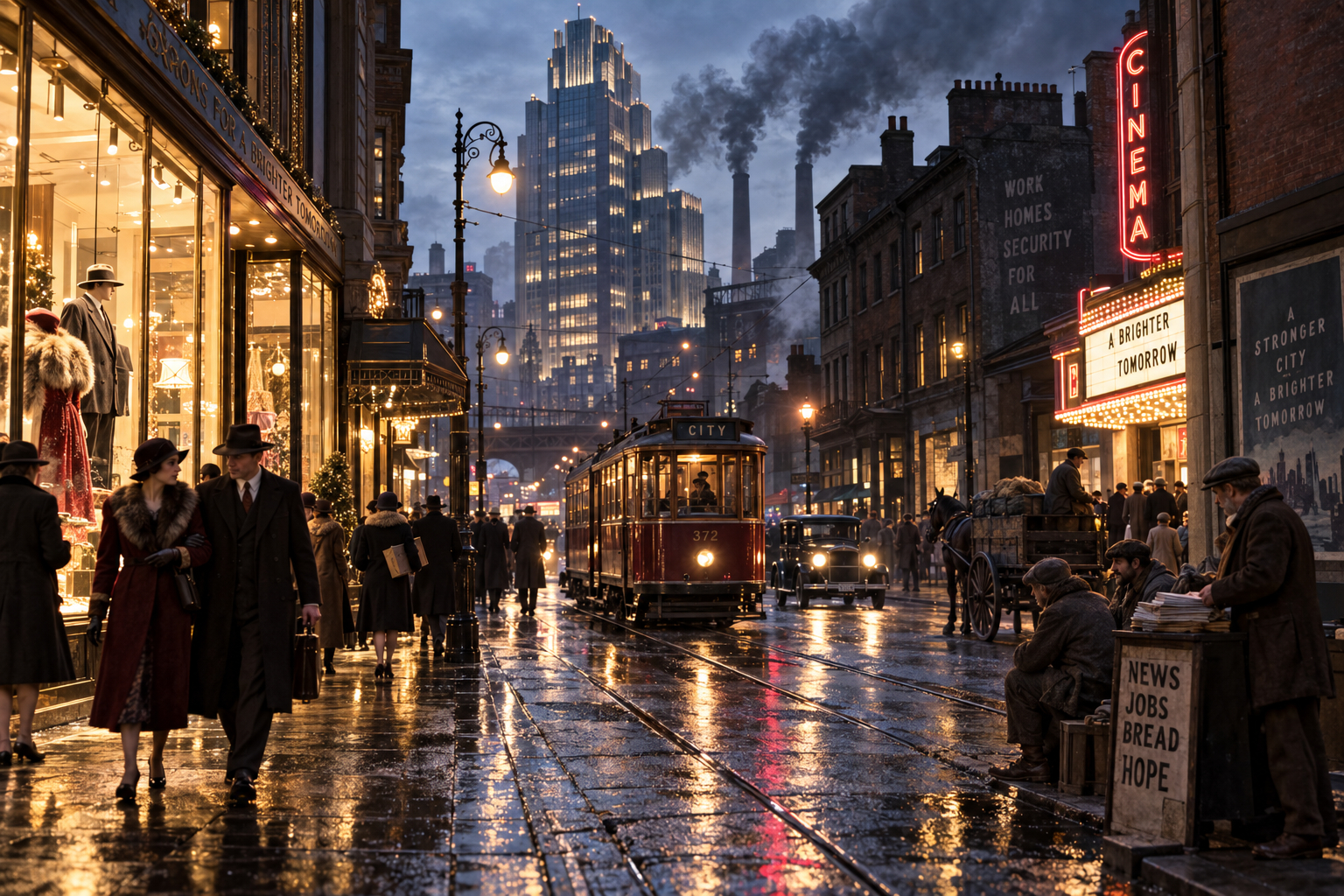
Walk into an interwar city and the contrast is immediate. Horse-drawn carts still threaded side streets where neon signs and electric trams already competed for attention. Smoke from coal-fired boilers hung low in winter, giving a soot-streaked look to new glass-and-steel office blocks that were reshaping skylines. Architects experimented—art deco stepped facades rose beside repaired Victorian tenements—and the visual effect was one of layered time. The city felt both unfinished and urgently modern: daylight revealed soot and factories; at night, gas lamps gave way to flickering electric bulbs and the first advertising lights that promised everything from motorcars to nylons.
Work, Leisure, and New Technologies
The interwar decades changed how urban residents spent their hours. Factories reorganized work rhythms with assembly-line techniques carried over from wartime production, while offices swelled with clerks, typists, and telephone operators. Public transport networks expanded—electric trams, suburban railways, and, where funds permitted, new subway lines—making commuting possible on a larger scale.
Leisure carved out surprising niches. Cinemas multiplied into neighbourhood palaces showing silent films and, later, talkies. Department stores became social stages: their tea rooms and window displays were as much a draw as the goods on the racks. Radio, still a novelty in 1920, became a living-room staple by the 1930s, bringing national news, music, and serialized stories into households that until recently relied on local taverns or newspapers for entertainment.
Uneasy Prosperity and Political Undercurrents
Not all of the interwar city’s developments felt uniformly hopeful. Periods of boom—car ownership creeping into middle-class life, new consumer goods on shelves—were interrupted by sharp downturns, most dramatically the global economic collapse that began in 1929. Unemployment, housing shortages, and grinding poverty coexisted with glowing electric signs and jazz clubs. Public spaces could be stages for both spectacle and protest: rallies, rent strikes, and street demonstrations became familiar urban scenes as people pressed authorities for jobs and housing.
Migration reshaped cities too. Internal migrants and international arrivals brought languages, foods, and religious practices that remade neighbourhood life. Some municipal planners responded with ambitious housing programs and public health campaigns; others failed, and the result was patchwork improvement rather than wholesale reform.
Conclusion
Between 1918 and 1939 cities were laboratories of modern living: messy, noisy, and exhilarating. Coal smoke and neon light, factory whistles and cinema organs, rent queues and rooftop dances—all sat side by side. The interwar city taught residents new possibilities and exposed stark inequalities, leaving an urban legacy that shaped the late twentieth century: faster transport, mass entertainment, and built forms that still define many city centers today.