
Uncover History’s Secrets with Daily Updates!
Daily News Entertainment
  • Home
  • History
  • Biographies
  • Eras
  • Regions
  • Timeline
No Result
View All Result
History Ours
  • Home
  • History
  • Biographies
  • Eras
  • Regions
  • Timeline
No Result
View All Result
History Ours
No Result
View All Result
Home Eras

How the Little Ice Age Changed Everyday Life in Europe

in Eras
How the Little Ice Age Changed Everyday Life in Europe

A colder world, year by year

The phrase “Little Ice Age” covers centuries when average temperatures in parts of Europe dipped enough to reshape daily routines. It was not a single freeze but a long patchwork of colder winters and shortened growing seasons between roughly the 14th and 19th centuries. Those chillier decades arrived in fits and starts—bad harvests one year, brutal winters the next—and their effects were unmistakable in the streets, fields, and kitchens of ordinary people.

When crops failed, the consequences were immediate. Shorter summers meant later planting and earlier frosts; grain yields dropped, bread grew dearer, and communities that had once relied on predictable harvest cycles learned scarcity. The European famine of the early 14th century is one stark example of how vulnerable food supplies became when weather turned against them.

Winters that remade public life

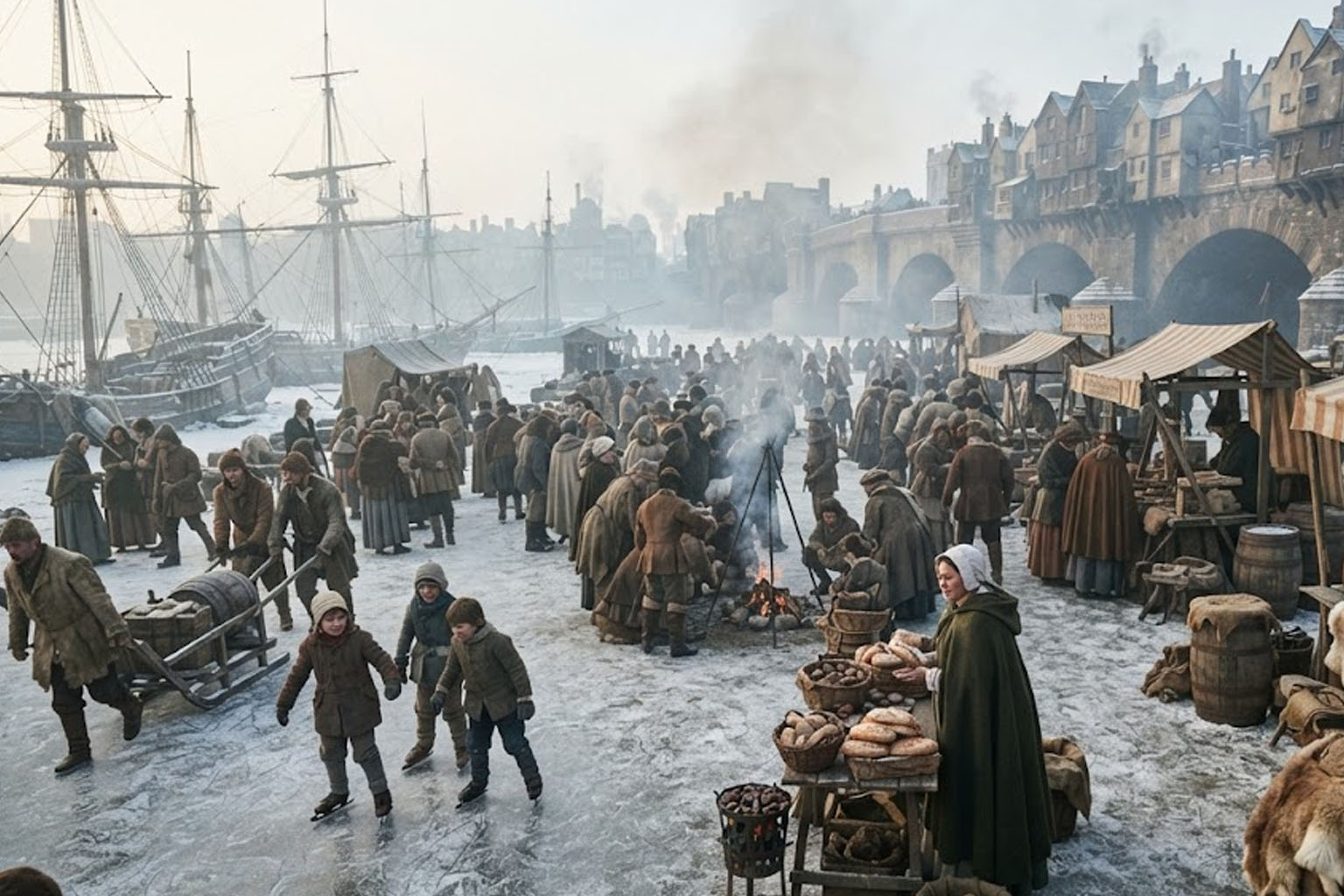
Cold winters altered how towns functioned. Rivers and canals that usually kept commerce moving froze over, turning trade routes into temporary roadways. London’s Thames, when reliably frozen, hosted frost fairs where people sold food, played games, and set up booths on the ice. In the countryside, frozen lakes and canals became thoroughfares for sledges and skaters. Daily routines shifted: clothing grew heavier and houses were adapted to keep heat longer; fuel—a scarce, expensive commodity in many places—became a political issue as well as a household concern.

Artists recorded the change. Northern European painters from the 16th and 17th centuries began portraying more frequent scenes of skating, sleighs, and snowbound villages. Those images aren’t just pretty; they are evidence that cold winters had slipped into common experience and imagination.

Migration, collapse, and longer echoes

Not every community coped. Remote settlements that depended on fragile trade or marginal farming suffered most. The Norse communities in Greenland, established a few centuries earlier, gradually disappeared in the later medieval period; scholars debate exactly how much climate, economics, and isolation each contributed, but colder conditions made Greenland’s marginal farms harder to sustain.

Colder weather also helped tip political and social stress into unrest. Where harvests repeatedly failed, food riots and migration to cities rose. Urbanization exchanged one form of hardship for another—crowding, disease, and competition for work—but it was also one route people took when rural life no longer fed them.

Conclusion

The Little Ice Age was not a single event but a prolonged squeeze on European life. Its mark can be read in frozen rivers turned into marketplaces, in paintings full of ice and sleighs, in abandoned farms at the edge of habitable land, and in the rhythms of scarcity that forced families and communities to change how they ate, dressed, and lived. Those adaptations remind us that climate has always been a quiet—yet decisive—actor in history.
Previous Post

The Disguise That Broke Chains: Ellen and William Craft

Next Post

Edo: Japan’s Urban Revolution of Lanterns and Printshops

Related Posts

Edo: Japan’s Urban Revolution of Lanterns and Printshops
Eras

Edo: Japan’s Urban Revolution of Lanterns and Printshops

September 16, 2026
Pax Mongolica: How Mongol Rule Rewired the Old World
Eras

Pax Mongolica: How Mongol Rule Rewired the Old World

September 15, 2026
Life Under the Tokugawa: How Edo Japan Rewrote Social Order
Eras

Life Under the Tokugawa: How Edo Japan Rewrote Social Order

September 15, 2026
When Empires Fell: The Late Bronze Age Collapse
Eras

When Empires Fell: The Late Bronze Age Collapse

September 15, 2026
Next Post
Edo: Japan’s Urban Revolution of Lanterns and Printshops

Edo: Japan’s Urban Revolution of Lanterns and Printshops

Search..

No Result
View All Result

Recent Articles

Edo: Japan’s Urban Revolution of Lanterns and Printshops

Edo: Japan’s Urban Revolution of Lanterns and Printshops

September 16, 2026
How the Little Ice Age Changed Everyday Life in Europe

How the Little Ice Age Changed Everyday Life in Europe

September 16, 2026
The Disguise That Broke Chains: Ellen and William Craft

The Disguise That Broke Chains: Ellen and William Craft

September 15, 2026
Bass Reeves: The Marshal Who Hunted Outlaws in Indian Territory

Bass Reeves: The Marshal Who Hunted Outlaws in Indian Territory

September 15, 2026
How the Crystal Palace Turned Glass and Iron into a Modern Stage

How the Crystal Palace Turned Glass and Iron into a Modern Stage

September 15, 2026

Subscribe Us

By clicking submit, I authorize History Ours and its affiliated companies to: (1) use, sell, and share my information for marketing purposes, including cross-context behavioral advertising, as described in our Terms of Service and Privacy Policy, (2) supplement the information that I provide with additional information lawfully obtained from other sources, like demographic data from public sources, interests inferred from web page views, or other data relevant to what might interest me, like past purchase or location data, (3) contact me or enable others to contact me by email with offers for goods and services from any category at the email address provided, and (4) retain my information while I am engaging with marketing messages that I receive and for a reasonable amount of time thereafter. I understand I can opt out at any time through an email that I receive, or by clicking here

Subscribe To Our Newsletter

By clicking submit, I authorize History Ours and its affiliated companies to: (1) use, sell, and share my information for marketing purposes, including cross-context behavioral advertising, as described in our Terms of Service and Privacy Policy, (2) supplement the information that I provide with additional information lawfully obtained from other sources, like demographic data from public sources, interests inferred from web page views, or other data relevant to what might interest me, like past purchase or location data, (3) contact me or enable others to contact me by email with offers for goods and services from any category at the email address provided, and (4) retain my information while I am engaging with marketing messages that I receive and for a reasonable amount of time thereafter. I understand I can opt out at any time through an email that I receive, or by clicking here.

© 2026 History Ours | All Rights Reserved

  • Contact Us
  • Privacy Policy
  • Terms of Service
  • Unsubscribe
  • Privacy Choices
  • Contact Us
  • Privacy Policy
  • Terms of Service
  • Unsubscribe
  • Privacy Choices

© 2026 History Ours | All Rights Reserved

No Result
View All Result
  • Home
  • History
  • Biographies
  • Eras
  • Regions
  • Timeline

© 2026 History Ours | All Rights Reserved

Skip to content
Open toolbar Accessibility Tools

Accessibility Tools

  • Increase TextIncrease Text
  • Decrease TextDecrease Text
  • GrayscaleGrayscale
  • High ContrastHigh Contrast
  • Negative ContrastNegative Contrast
  • Light BackgroundLight Background
  • Links UnderlineLinks Underline
  • Readable FontReadable Font
  • Reset Reset