
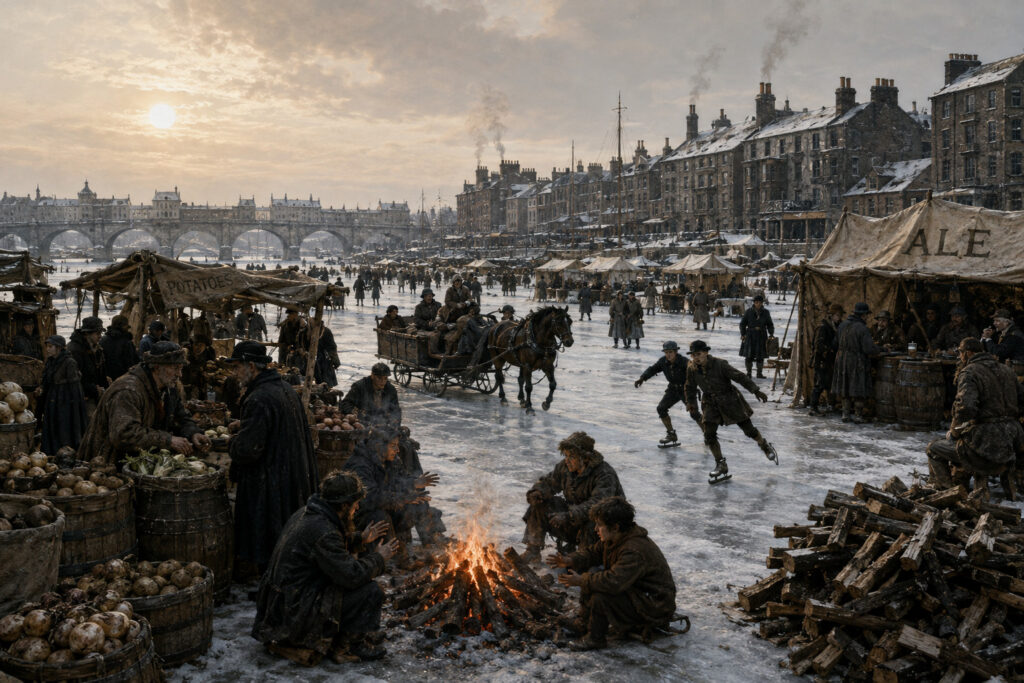
The Little Ice Age refers to a stretch of cooler, often stormier weather that affected much of the North Atlantic world roughly from the 14th century into the mid-19th century. It wasn’t a single freeze so much as a string of colder decades and harsher winters that reshaped everyday life: fields yielded less, rivers iced over, and seasons shifted in ways that people felt in their stomachs and on the town clock.
Food, Work, and Winter Survival
Shorter growing seasons mattered. Harvests failed more frequently, grain prices jumped, and communities that had once relied on marginal land found themselves precarious. In parts of Europe, hardy new crops—most famously the potato—took on outsized importance because they produced calories where wheat struggled. Households adapted in other ways too: thicker clothing, larger fuel stores, and a shift in rooflines and chimneys to keep longer-lasting fires burning through deeper winters.
Hard times invited movement. Some rural families headed for towns where casual labor might be available; others joined waves of migration into regions with more reliable harvests. In the far north, the cooling climate was one factor that made Norse settlements in Greenland harder to sustain, contributing to their eventual disappearance by the 15th century.
Trade, Transport, and Strange Festivals
Colder weather changed commerce. Frozen rivers and canals could stop traffic for months, but they also opened surprising possibilities: when the Thames froze solid in winters between the 17th and early 19th centuries, Londoners held frost fairs on its surface, with booths, games and even horse races sketched across the ice. The last of those fairs came in 1814, after changes to London Bridge and river engineering altered the current and reduced icing.
Winegrowers felt the chill too. Vineyards at the northern edge of Europe contracted, and some regions lost vintages that earlier centuries had counted on. Fishing and furs became steadier sources of income in colder zones, while insurers, merchants and cities adjusted to the higher risk of crop failure and storm-related loss.
Culture in a Colder Light
The climate left traces in art and literature. Painters turned their gaze to winter landscapes with new intensity; Pieter Bruegel the Elder’s 1565 painting “Hunters in the Snow” is one famous example of how hard winters entered visual culture. Folktales, songs and local customs often reflect the extra strain of cold—proverbs about hard winters, communal wood-cutting parties, and ritualized food-saving practices became part of survival.
Conclusion
The Little Ice Age was not an exotic anomaly locked in textbooks; it was lived weather. It forced new crops, new jobs, new festivals on the ice, and sometimes new patterns of migration. Looking at its fingerprints—frozen rivers, changing crops, altered economies—reminds us that climate and human life have long been entangled in concrete, surprising ways.