Uncover History’s Secrets with Daily Updates!
Daily News Entertainment
  • Home
  • History
  • Biographies
  • Eras
  • Regions
  • Timeline
No Result
View All Result
History Ours
  • Home
  • History
  • Biographies
  • Eras
  • Regions
  • Timeline
No Result
View All Result
History Ours
No Result
View All Result
Home History

Beasts of Burden: How Pack Animals Shaped Trade and Travel

in History
Beasts of Burden: How Pack Animals Shaped Trade and Travel

Pack animals powered economies long before engines existed.
Their abilities determined which routes were feasible, how fast goods moved, and how much transport cost.
Across mountains, plains, and deserts, the choice of animal shaped settlement locations and market connections.
Exploring these roles reveals how preindustrial societies organized logistics, commerce, and mobility.

Beasts and the Economics of Movement

Pack animals functioned as mobile capital: merchants and states weighed their purchase, upkeep, and recovery against the cargo they could carry. Different species provided distinct economic trade-offs—camels for long arid journeys, oxen for heavy loads at low speed, horses and mules for faster transport over varied terrain. These differences influenced commodity selection, market reach, and the rhythm of trade seasons. When animals were scarce or costly, transport prices rose and local economies adapted by producing goods suited to cheaper modes of movement.

Infrastructure and Routes for Animal Transport

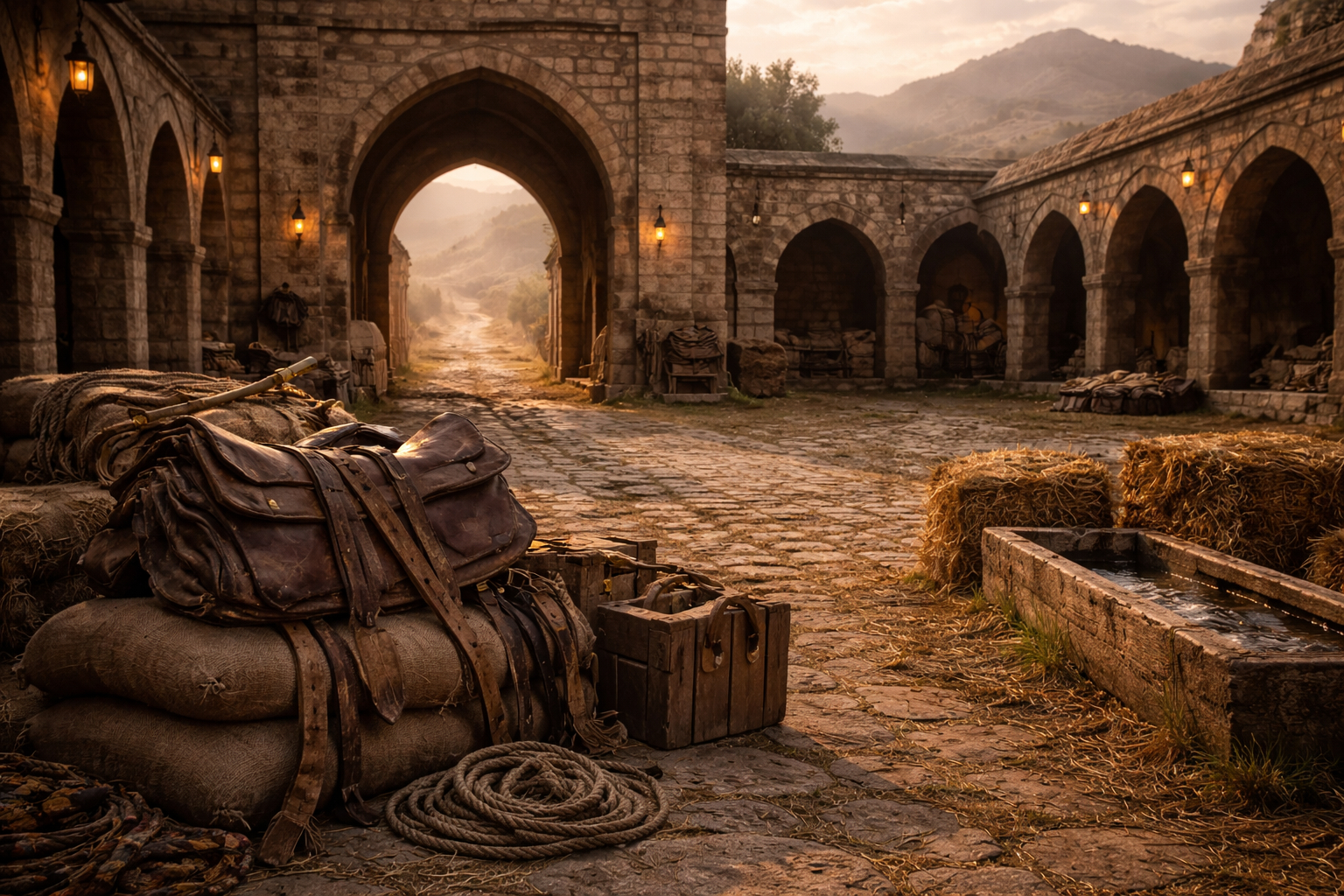
Routes and support infrastructure evolved around animal needs as much as human ones, with water points, forage stops, and gentle gradients prioritized over directness. Staging posts and inns provided fodder, rest, and transfer points where goods could be consolidated or repackaged for different animals. Markets, bridges, and river fords were sited with an eye to animal traffic capacity rather than just human access.
– Typical route features included reliable watering sites, safe night enclosures, and gradual ascents to protect animals and loads.
– Supply points often doubled as commercial hubs where pack animals were hired, traded, or bred.
These features created a resilient network that allowed long-distance movement despite variable climates and seasons.

Technologies and Animal Management

Innovations in saddlery, harnesses, shoeing, and veterinary care extended the service life and efficiency of pack animals. Specialized gear such as panniers, pack saddles, and yokes distributed weight to reduce injury and increase payload effectiveness. Breeding programs and selective training produced hardy lines adapted to local terrains and workloads, while caravan organization and herding techniques improved safety and pace. Small technological changes often multiplied carrying capacity and reduced losses, thereby lowering transport costs over time.

Cultural and Environmental Impact

Pack-animal networks shaped social relations, from caravan guilds to pastoral migration patterns, and facilitated cultural exchange along trade corridors. The environmental footprint included pasture demand, trail erosion, and the spread of species and diseases across regions. Yet these animals also enabled settlements in marginal zones and supported economies that would have been impossible on human labor alone.

Conclusion

Pack animals were foundational to preindustrial logistics, influencing roads, markets, and settlements through practical needs and economic logic.
Their management, tools, and routes created durable networks that carried goods and ideas across great distances.
Recognizing their role clarifies how mobility and commerce developed long before mechanized transport.

Previous Post

Continuities and Shifts That Define Historical Eras

Next Post

How Port Cities Shaped Early Trade and Society

Related Posts

How the Crystal Palace Turned Glass and Iron into a Modern Stage
History

How the Crystal Palace Turned Glass and Iron into a Modern Stage

September 15, 2026
Anne Bonny: The Pirate Who Broke Rules and Expectations
History

Anne Bonny: The Pirate Who Broke Rules and Expectations

September 15, 2026
Mary Anning and the Coast That Revealed Lost Worlds
History

Mary Anning and the Coast That Revealed Lost Worlds

September 15, 2026
When Mount Pelée Erased Saint-Pierre, 1902
History

When Mount Pelée Erased Saint-Pierre, 1902

September 15, 2026
Next Post
How Port Cities Shaped Early Trade and Society

How Port Cities Shaped Early Trade and Society

Search..

No Result
View All Result

Recent Articles

The Disguise That Broke Chains: Ellen and William Craft

The Disguise That Broke Chains: Ellen and William Craft

September 15, 2026
Bass Reeves: The Marshal Who Hunted Outlaws in Indian Territory

Bass Reeves: The Marshal Who Hunted Outlaws in Indian Territory

September 15, 2026
How the Crystal Palace Turned Glass and Iron into a Modern Stage

How the Crystal Palace Turned Glass and Iron into a Modern Stage

September 15, 2026
Anne Bonny: The Pirate Who Broke Rules and Expectations

Anne Bonny: The Pirate Who Broke Rules and Expectations

September 15, 2026
How Haiti Broke Its Chains: A 1791–1804 Timeline

How Haiti Broke Its Chains: A 1791–1804 Timeline

September 15, 2026

Subscribe Us

By clicking submit, I authorize History Ours and its affiliated companies to: (1) use, sell, and share my information for marketing purposes, including cross-context behavioral advertising, as described in our Terms of Service and Privacy Policy, (2) supplement the information that I provide with additional information lawfully obtained from other sources, like demographic data from public sources, interests inferred from web page views, or other data relevant to what might interest me, like past purchase or location data, (3) contact me or enable others to contact me by email with offers for goods and services from any category at the email address provided, and (4) retain my information while I am engaging with marketing messages that I receive and for a reasonable amount of time thereafter. I understand I can opt out at any time through an email that I receive, or by clicking here

Subscribe To Our Newsletter

By clicking submit, I authorize History Ours and its affiliated companies to: (1) use, sell, and share my information for marketing purposes, including cross-context behavioral advertising, as described in our Terms of Service and Privacy Policy, (2) supplement the information that I provide with additional information lawfully obtained from other sources, like demographic data from public sources, interests inferred from web page views, or other data relevant to what might interest me, like past purchase or location data, (3) contact me or enable others to contact me by email with offers for goods and services from any category at the email address provided, and (4) retain my information while I am engaging with marketing messages that I receive and for a reasonable amount of time thereafter. I understand I can opt out at any time through an email that I receive, or by clicking here.

© 2026 History Ours | All Rights Reserved

  • Contact Us
  • Privacy Policy
  • Terms of Service
  • Unsubscribe
  • Privacy Choices
  • Contact Us
  • Privacy Policy
  • Terms of Service
  • Unsubscribe
  • Privacy Choices

© 2026 History Ours | All Rights Reserved

No Result
View All Result
  • Home
  • History
  • Biographies
  • Eras
  • Regions
  • Timeline

© 2026 History Ours | All Rights Reserved

Skip to content
Open toolbar Accessibility Tools

Accessibility Tools

  • Increase TextIncrease Text
  • Decrease TextDecrease Text
  • GrayscaleGrayscale
  • High ContrastHigh Contrast
  • Negative ContrastNegative Contrast
  • Light BackgroundLight Background
  • Links UnderlineLinks Underline
  • Readable FontReadable Font
  • Reset Reset