
Uncover History’s Secrets with Daily Updates!
Daily News Entertainment
  • Home
  • History
  • Biographies
  • Eras
  • Regions
  • Timeline
No Result
View All Result
History Ours
  • Home
  • History
  • Biographies
  • Eras
  • Regions
  • Timeline
No Result
View All Result
History Ours
No Result
View All Result
Home History

Caravanserais: How Rest Stops Shaped Long-Distance Trade

in History
Caravanserais: How Rest Stops Shaped Long-Distance Trade

Caravanserais served as essential hubs along overland trade corridors for centuries.
They offered shelter, safety, and logistical support to merchants, animals, and goods traveling vast distances.
More than inns, they were nodes where commercial, legal, and cultural exchanges occurred across languages and faiths.
Understanding their role reveals how infrastructure shaped early globalization.

Origins and Functions
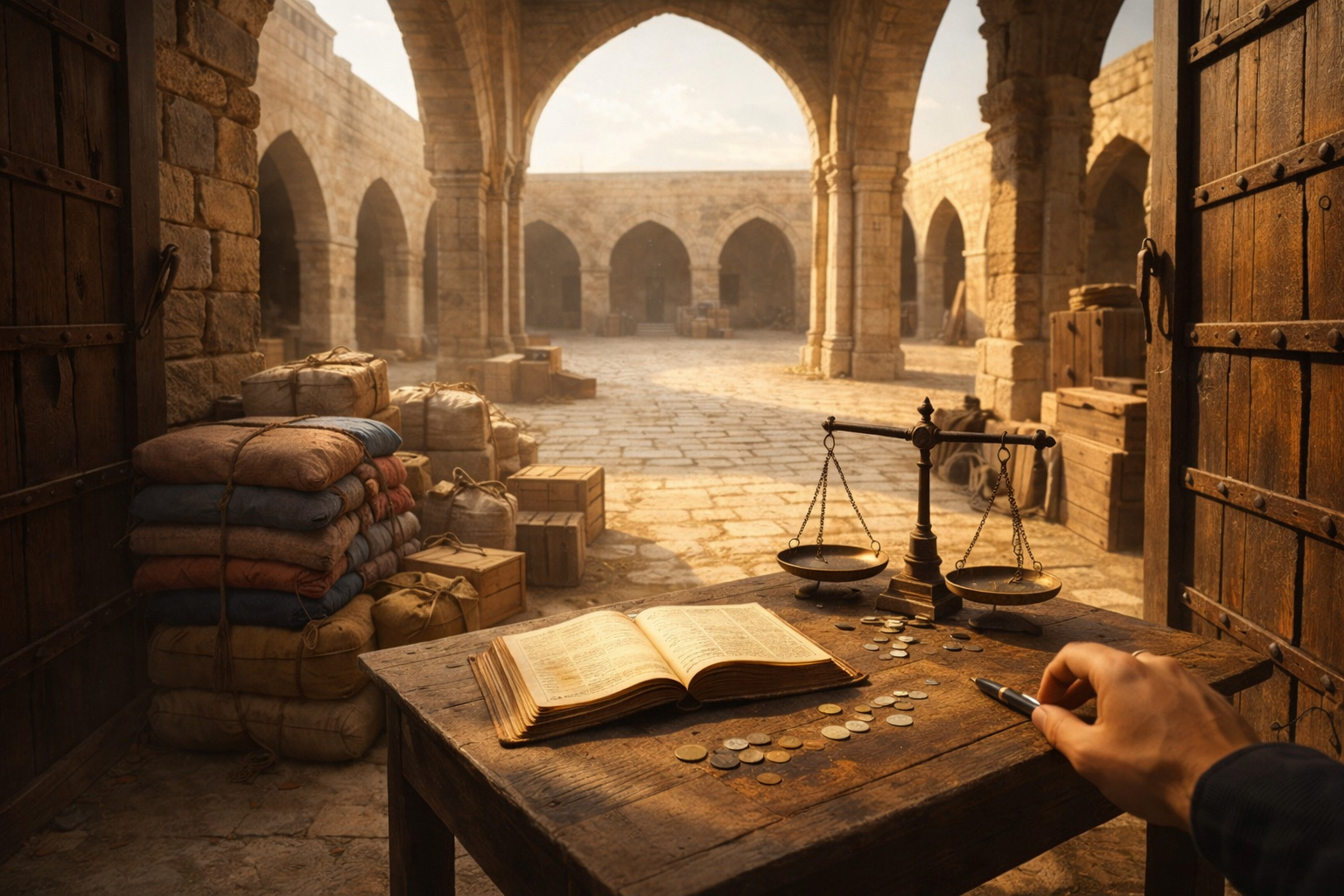
Caravanserais emerged where long-distance routes crossed difficult terrain or political frontiers, responding to the practical needs of travel. They combined lodging, stabling, storage, and marketplaces so caravans could recuperate and resupply without detouring into insecure towns. Often sponsored by rulers, religious endowments, or wealthy patrons, these facilities served strategic and economic aims alike. Their regulated services reduced travel costs and risks, making sustained trade feasible across continents.

Daily Life and Services
Life inside a caravanserai centered on rhythms of arrival, negotiation, and departure, with merchants repairing gear and exchanging information. Skilled handlers tended animals while local agents managed weigh-ins and documentation for goods moving between jurisdictions. Food, water, and basic veterinary care were as important as security measures that protected against banditry and fraud.
– Communal courtyards facilitated bartering and mingling among traders from diverse regions.
– On-site storerooms and warehouses allowed seasonal stockpiling and consolidation of shipments.
– Religious rooms and legal spaces supported formal contracts and dispute resolution.
These practical services knitted together commercial networks, and the caravanserai’s predictable operations made route planning more reliable for long-range merchants.

Economic and Cultural Impact
By concentrating traders and goods, caravanserais reduced transaction costs and enabled price stabilization along routes. They acted as information hubs where market intelligence, technological innovations, and fashions spread rapidly between distant places. Cultural exchange often accompanied commerce: languages mixed, culinary ideas circulated, and artisans encountered new materials and techniques. In many regions, the presence of caravanserais stimulated the growth of satellite settlements and periodic fairs that further integrated hinterlands into broader economies.

Architecture and Legacy
Architecturally, caravanserais balanced durability and functionality, featuring thick walls, secure gates, inner courtyards, and vaulted storage rooms that protected against both weather and theft. Their layouts reflect a pragmatic approach to flow control: separate zones for animals, for merchandise, and for human accommodation minimized cross-contamination and conflict. Many modern logistics centers echo this separation of functions, while some historic caravanserais survive as cultural landmarks and museums. Their legacy endures in the way built infrastructure continues to coordinate movement, commerce, and community across distances.

Conclusion
Caravanserais were more than simple rest stops; they were institutional responses to the challenges of long-distance trade.
By providing services, security, and spaces for exchange, they enabled networks that connected distant societies and economies.
Studying them offers practical lessons about how infrastructure shapes economic and cultural connectivity.

Previous Post

Milestones in Communication: A Timeline of Key Developments

Next Post

Bridges and Crossings That Transformed Ancient Connectivity

Related Posts

How the Crystal Palace Turned Glass and Iron into a Modern Stage
History

How the Crystal Palace Turned Glass and Iron into a Modern Stage

September 15, 2026
Anne Bonny: The Pirate Who Broke Rules and Expectations
History

Anne Bonny: The Pirate Who Broke Rules and Expectations

September 15, 2026
Mary Anning and the Coast That Revealed Lost Worlds
History

Mary Anning and the Coast That Revealed Lost Worlds

September 15, 2026
When Mount Pelée Erased Saint-Pierre, 1902
History

When Mount Pelée Erased Saint-Pierre, 1902

September 15, 2026
Next Post
Emilie du Chatelet: Bridging Philosophy and Early Physics

Emilie du Chatelet: Bridging Philosophy and Early Physics

Search..

No Result
View All Result

Recent Articles

The Disguise That Broke Chains: Ellen and William Craft

The Disguise That Broke Chains: Ellen and William Craft

September 15, 2026
Bass Reeves: The Marshal Who Hunted Outlaws in Indian Territory

Bass Reeves: The Marshal Who Hunted Outlaws in Indian Territory

September 15, 2026
How the Crystal Palace Turned Glass and Iron into a Modern Stage

How the Crystal Palace Turned Glass and Iron into a Modern Stage

September 15, 2026
Anne Bonny: The Pirate Who Broke Rules and Expectations

Anne Bonny: The Pirate Who Broke Rules and Expectations

September 15, 2026
How Haiti Broke Its Chains: A 1791–1804 Timeline

How Haiti Broke Its Chains: A 1791–1804 Timeline

September 15, 2026

Subscribe Us

By clicking submit, I authorize History Ours and its affiliated companies to: (1) use, sell, and share my information for marketing purposes, including cross-context behavioral advertising, as described in our Terms of Service and Privacy Policy, (2) supplement the information that I provide with additional information lawfully obtained from other sources, like demographic data from public sources, interests inferred from web page views, or other data relevant to what might interest me, like past purchase or location data, (3) contact me or enable others to contact me by email with offers for goods and services from any category at the email address provided, and (4) retain my information while I am engaging with marketing messages that I receive and for a reasonable amount of time thereafter. I understand I can opt out at any time through an email that I receive, or by clicking here

Subscribe To Our Newsletter

By clicking submit, I authorize History Ours and its affiliated companies to: (1) use, sell, and share my information for marketing purposes, including cross-context behavioral advertising, as described in our Terms of Service and Privacy Policy, (2) supplement the information that I provide with additional information lawfully obtained from other sources, like demographic data from public sources, interests inferred from web page views, or other data relevant to what might interest me, like past purchase or location data, (3) contact me or enable others to contact me by email with offers for goods and services from any category at the email address provided, and (4) retain my information while I am engaging with marketing messages that I receive and for a reasonable amount of time thereafter. I understand I can opt out at any time through an email that I receive, or by clicking here.

© 2026 History Ours | All Rights Reserved

  • Contact Us
  • Privacy Policy
  • Terms of Service
  • Unsubscribe
  • Privacy Choices
  • Contact Us
  • Privacy Policy
  • Terms of Service
  • Unsubscribe
  • Privacy Choices

© 2026 History Ours | All Rights Reserved

No Result
View All Result
  • Home
  • History
  • Biographies
  • Eras
  • Regions
  • Timeline

© 2026 History Ours | All Rights Reserved

Skip to content
Open toolbar Accessibility Tools

Accessibility Tools

  • Increase TextIncrease Text
  • Decrease TextDecrease Text
  • GrayscaleGrayscale
  • High ContrastHigh Contrast
  • Negative ContrastNegative Contrast
  • Light BackgroundLight Background
  • Links UnderlineLinks Underline
  • Readable FontReadable Font
  • Reset Reset