

Uncover History’s Secrets with Daily Updates!
Daily News Entertainment
  • Home
  • History
  • Biographies
  • Eras
  • Regions
  • Timeline
No Result
View All Result
History Ours
  • Home
  • History
  • Biographies
  • Eras
  • Regions
  • Timeline
No Result
View All Result
History Ours
No Result
View All Result
Home History

Corners and Crossings: Social Life in Historic Market Streets

in History
Corners and Crossings: Social Life in Historic Market Streets

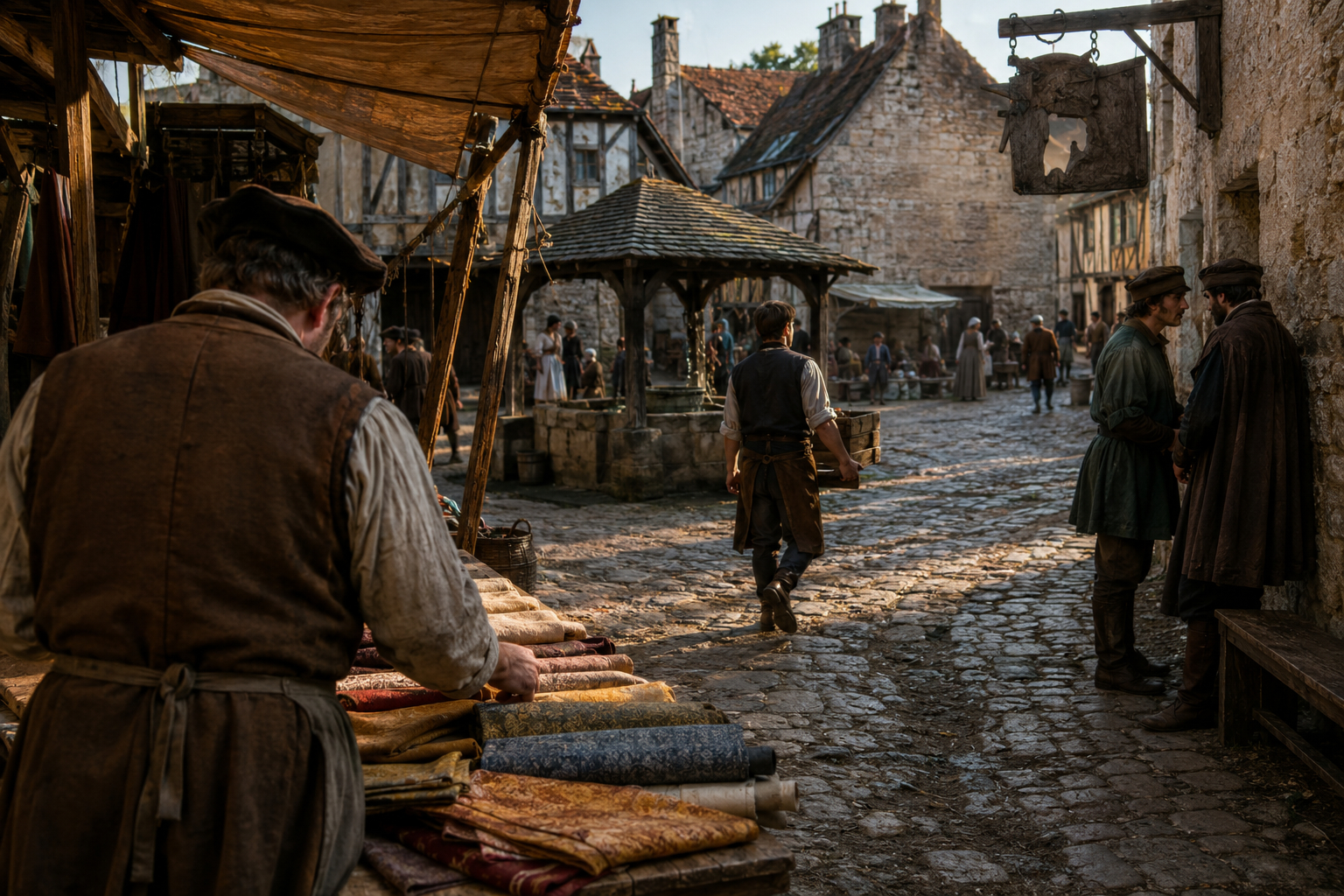
Market streets were the physical and social spine of historic towns, where trade, gossip, and daily life intertwined.
Buildings, stalls, and pathways shaped how people moved and who they met across seasons.
These thoroughfares mediated economic exchange but also regulated access to resources, information, and reputation.
Understanding their rhythms reveals much about urban social networks and material practices.

Stalls as Social Nodes

Stalls, shopfronts, and temporary markets served as focal points for exchange beyond goods, including news, favors, and social cues. Vendors curated displays and routines that signaled status, trustworthiness, and affiliation within the neighborhood. Regular customers and itinerant buyers negotiated prices but also reinforced bonds through repeated encounters. These patterns turned transactional spaces into predictable meeting places that structured daily life.

Over time, stall locations and vendor reputations became embedded in local memory. Such constancy helped townspeople orient themselves in social as well as physical space. Neighbors learned to read these cues and adjust their expectations accordingly.

Movement, Time, and Work Rhythms

Daily schedules — market days, church hours, and craft routines — orchestrated who occupied streets at different times. Apprentices, merchants, and laborers followed distinct circuits that intersected at chokepoints like bridges, gates, and crosses. Seasonal fairs and weekly markets introduced temporal spikes of activity, reshaping social interactions and opportunities for exchange. Inhabitants adapted household tasks around these public rhythms to maximize income and social contact.

These temporal patterns marked social hierarchy as much as economic need. Timekeeping on the street was therefore a strategy for navigating community life. These shared schedules also shaped local rituals and informal support networks.

Objects, Signs, and Everyday Material Culture

Objects on display — from tools and textiles to foodstuffs — communicated skill, value, and trust without words. Signs, shop marks, and household thresholds served as visual cues that guided behavior and conveyed belonging. Water troughs, benches, and wells also acted as informal meeting points where information circulated across different social groups. The material environment thus shaped not just consumption but patterns of care, cooperation, and conflict.

Material traces left in shops and streets recorded long-term relationships between producers and consumers. Reading these traces helps historians reconstruct ordinary lives beneath monumental narratives. Conserved markers like signposts or shop marks often outlived individual businesses and told longer stories.

Conclusion

Market streets combined commerce, movement, and material signposting to produce complex social fabrics.
Studying their intersections offers a window into everyday strategies of survival, meaning, and belonging.
By tracing corners and crossings we reveal the hidden infrastructures of past communal life.

Previous Post

Practical Steps to Layer Community History on Timelines

Next Post

Neighborhood Kitchens and Urban Foodways in Historic Towns

Related Posts

Neighborhood Kitchens and Urban Foodways in Historic Towns
History

Neighborhood Kitchens and Urban Foodways in Historic Towns

July 11, 2026
Street-Level Sociability in Historic Market Towns
History

Street-Level Sociability in Historic Market Towns

July 6, 2026
Material Lives: Objects and Everyday Practice in Market Towns
History

Material Lives: Objects and Everyday Practice in Market Towns

July 6, 2026
Corners of Memory: Local Sites and Living Histories
History

Corners of Memory: Local Sites and Living Histories

July 3, 2026
Next Post
Neighborhood Kitchens and Urban Foodways in Historic Towns

Neighborhood Kitchens and Urban Foodways in Historic Towns

Search..

No Result
View All Result

Recent Articles

Neighborhood Kitchens and Urban Foodways in Historic Towns

Neighborhood Kitchens and Urban Foodways in Historic Towns

July 11, 2026
Corners and Crossings: Social Life in Historic Market Streets

Corners and Crossings: Social Life in Historic Market Streets

July 11, 2026
Practical Steps to Layer Community History on Timelines

Practical Steps to Layer Community History on Timelines

July 10, 2026
Selecting Scope and Structure for Community Timelines

Selecting Scope and Structure for Community Timelines

July 10, 2026
Stitching Local Practices Into Regional Historical Landscapes

Stitching Local Practices Into Regional Historical Landscapes

July 9, 2026

Subscribe Us

By clicking submit, I authorize History Ours and its affiliated companies to: (1) use, sell, and share my information for marketing purposes, including cross-context behavioral advertising, as described in our Terms of Service and Privacy Policy, (2) supplement the information that I provide with additional information lawfully obtained from other sources, like demographic data from public sources, interests inferred from web page views, or other data relevant to what might interest me, like past purchase or location data, (3) contact me or enable others to contact me by email with offers for goods and services from any category at the email address provided, and (4) retain my information while I am engaging with marketing messages that I receive and for a reasonable amount of time thereafter. I understand I can opt out at any time through an email that I receive, or by clicking here

Subscribe To Our Newsletter

By clicking submit, I authorize History Ours and its affiliated companies to: (1) use, sell, and share my information for marketing purposes, including cross-context behavioral advertising, as described in our Terms of Service and Privacy Policy, (2) supplement the information that I provide with additional information lawfully obtained from other sources, like demographic data from public sources, interests inferred from web page views, or other data relevant to what might interest me, like past purchase or location data, (3) contact me or enable others to contact me by email with offers for goods and services from any category at the email address provided, and (4) retain my information while I am engaging with marketing messages that I receive and for a reasonable amount of time thereafter. I understand I can opt out at any time through an email that I receive, or by clicking here.

© 2026 History Ours | All Rights Reserved

  • Contact Us
  • Privacy Policy
  • Terms of Service
  • Unsubscribe
  • Privacy Choices
  • Contact Us
  • Privacy Policy
  • Terms of Service
  • Unsubscribe
  • Privacy Choices

© 2026 History Ours | All Rights Reserved

No Result
View All Result
  • Home
  • History
  • Biographies
  • Eras
  • Regions
  • Timeline

© 2026 History Ours | All Rights Reserved

Skip to content
Open toolbar Accessibility Tools

Accessibility Tools

  • Increase TextIncrease Text
  • Decrease TextDecrease Text
  • GrayscaleGrayscale
  • High ContrastHigh Contrast
  • Negative ContrastNegative Contrast
  • Light BackgroundLight Background
  • Links UnderlineLinks Underline
  • Readable FontReadable Font
  • Reset Reset