Choosing the right scope and structure is the first step in building a timeline that resonates with a community audience. A clear scope narrows what to include while a coherent structure guides how the audience reads connections over time. Decisions about scale, focal events, and narrative threads determine whether a timeline informs, challenges, or inspires further inquiry. This article outlines practical choices to make when planning public-facing historical timelines.
Successful timelines balance research fidelity with approachable design, and that balance begins with deliberate scope-setting. By thinking through purpose, audience, and format early, creators can avoid common pitfalls and shape meaningful narratives.
Defining Scope
Begin by asking why the timeline exists: education, commemoration, or interpretive context will each require different scopes. Time range and geographic bounds should match the intended narrative rather than encompass everything that happened. Establish inclusion criteria—such as social impact, source reliability, or representativeness—to keep the project focused and defensible. Engaging stakeholders in this step helps surface priorities and prevents scope creep.
Clear scope reduces research burden and makes display choices easier; it also helps visitors understand the curator’s frame. Revisit scope decisions as new evidence or community perspectives emerge to keep the timeline relevant.
Structuring Chronology
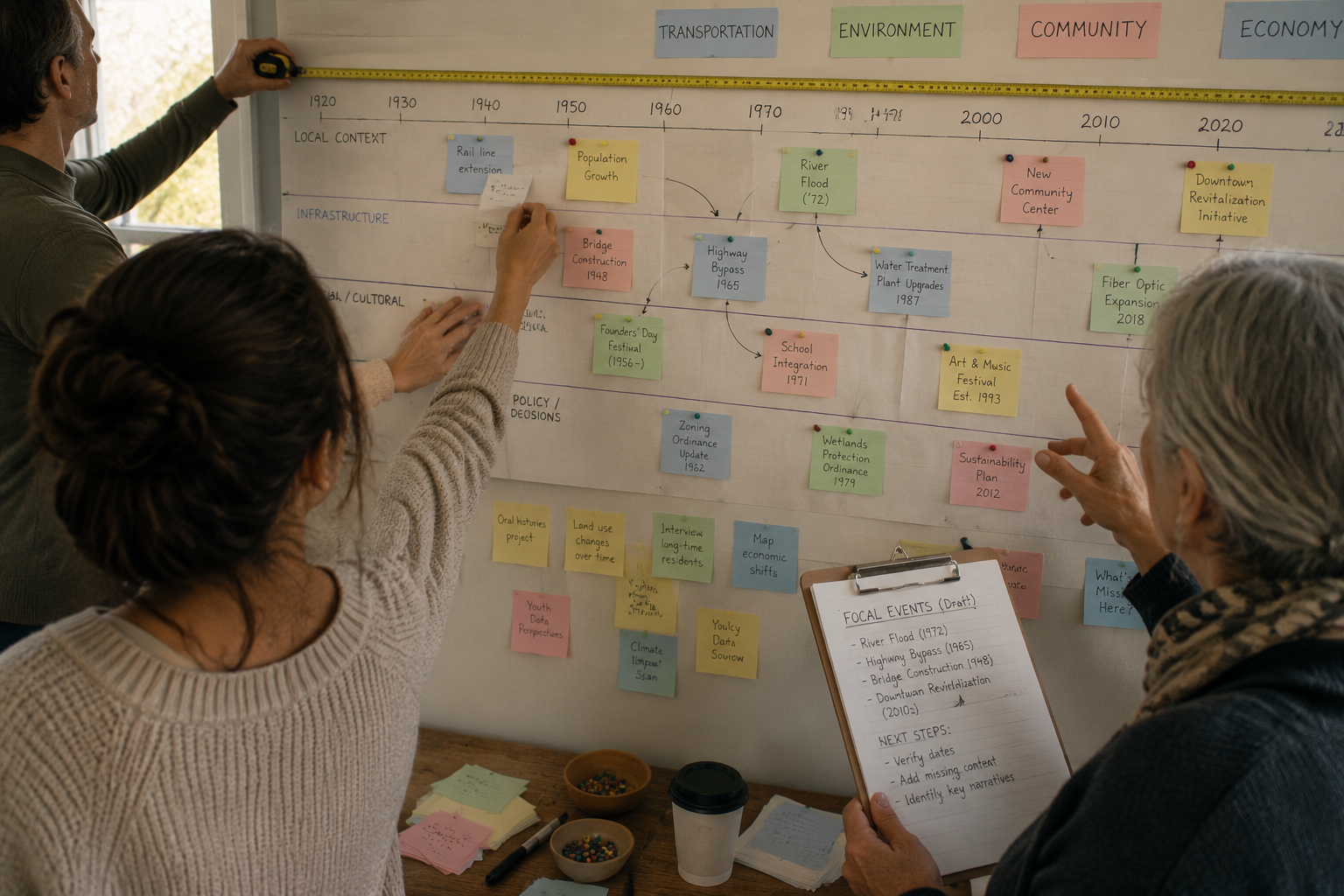
Decide whether the timeline will use strict linear chronology, thematic lanes, or a blended approach that groups events by topic as well as date. Linear layouts support straightforward cause-and-effect reading, while layered or modular layouts allow multiple threads to coexist. Consider scale breaks to accommodate both long-term trends and sudden events without overwhelming the viewer. Provide visual anchors—period markers, headings, or recurring motifs—to help readers orient themselves.
Structure should guide interpretation without dictating it; offer pathways through the material and let visitors follow threads that interest them. Consistency in visual rules helps users compare eras and themes across the timeline.
Selecting Focal Events
Not every event can or should appear. Prioritize moments that illuminate patterns, change trajectories, or represent underrepresented perspectives. Use a mix of well-known dates and lesser-known episodes that add depth and provoke questions. Aim for diversity in event types—legal changes, cultural shifts, everyday practices—to show complexity. Where possible, link items to primary sources or interpretive notes that explain selection choices.
- Relevance to the chosen scope and themes
- Availability and credibility of sources
- Potential to illustrate broader patterns or local impact
Explicit selection criteria make the timeline more transparent and invite users to critique or contribute additions. Transparency encourages trust and civic engagement around contested histories.
Designing for Audience and Use
Consider how people will encounter the timeline: a printed panel, an online interactive, or an exhibit display each has different affordances. Simpler, high-contrast visuals work well for quick gallery viewing, while interactive layers support deep dives for researchers or students. Include short contextual captions and signposts to guide non-specialist readers. Accessibility—clear language, legible type, and alternative text for images—broadens reach.
Plan for maintenance and updates so the timeline can evolve with new research and community feedback. Iterative improvements keep the resource useful and credible over time.
Conclusion
Effective community timelines start with deliberate choices about scope and structure and follow through with consistent selection and design rules. Transparent criteria and audience-aware formats foster understanding and invite participation. Thoughtful planning turns chronologies into accessible narratives that encourage ongoing public engagement.