

Uncover History’s Secrets with Daily Updates!
Daily News Entertainment
  • Home
  • History
  • Biographies
  • Eras
  • Regions
  • Timeline
No Result
View All Result
History Ours
  • Home
  • History
  • Biographies
  • Eras
  • Regions
  • Timeline
No Result
View All Result
History Ours
No Result
View All Result
Home History

Neighborhood Kitchens and Urban Foodways in Historic Towns

in History
Neighborhood Kitchens and Urban Foodways in Historic Towns

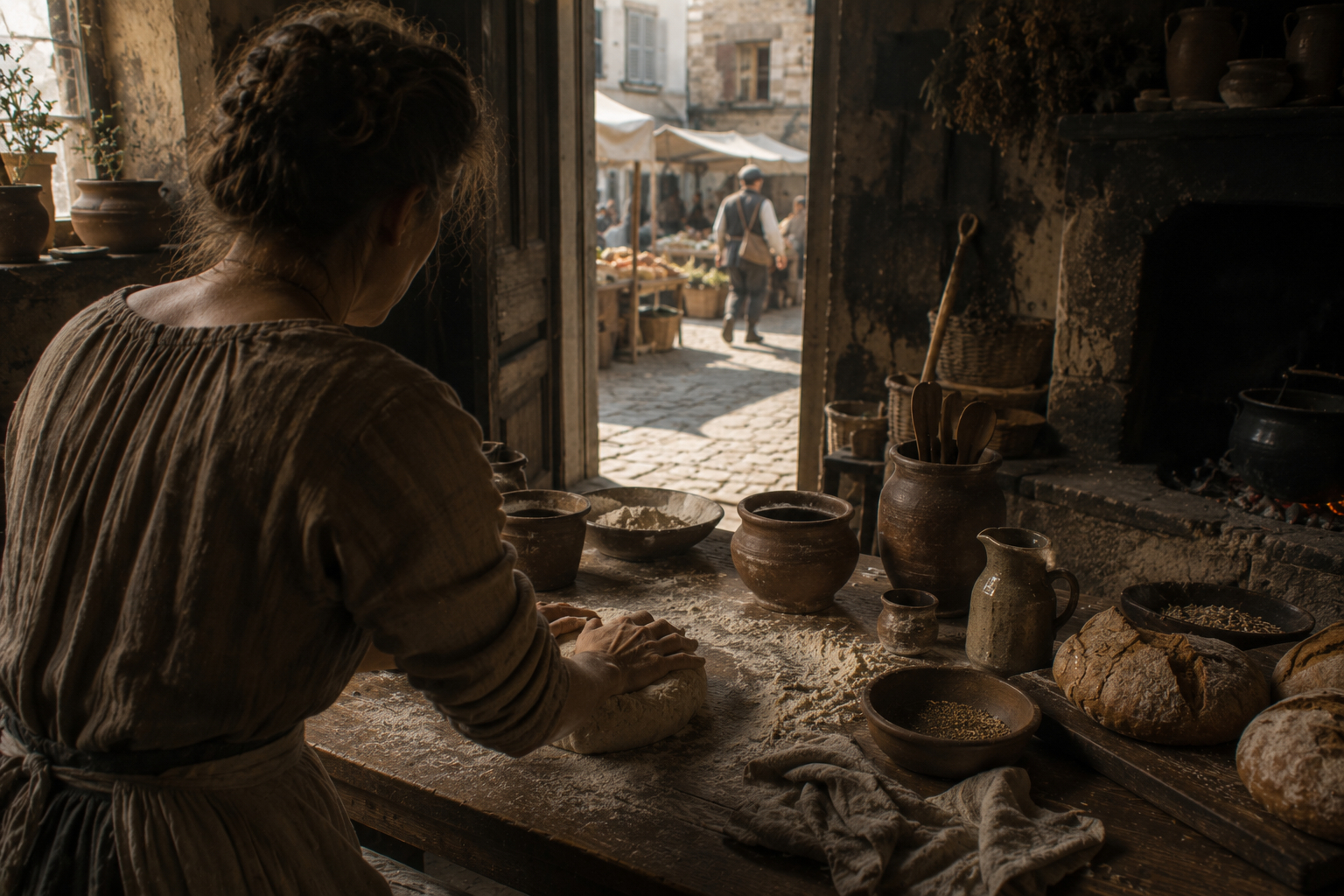
Neighborhood kitchens were more than places to prepare meals; they acted as hubs of production, exchange, and social memory.
In many historic towns household cooking connected domestic routines to market days, festivals, and seasonal labor.
The flows of ingredients, recipes, and labor across thresholds shaped urban rhythms and relationships between neighbors.
Looking at these foodways helps us understand how everyday practices structured public life and urban space.

Domestic Kitchens as Productive Spaces

In preindustrial and early industrial towns kitchens functioned simultaneously as sites of consumption and domestic manufacture, where preservation, baking, brewing, and small-scale processing took place alongside family life.

These activities required tools, storage, and arrangement of space, and they often determined when and how households interacted with nearby markets or itinerant traders.

Women’s labor in food preparation was central to household economies, and recipes circulated through kinship ties, apprenticeships, and casual exchange among neighbors.

Consequently, kitchens were nodes in broader economic networks rather than isolated private rooms; they contributed to the town’s resilience and material culture.

Street Food, Vendors, and Market Circuits

Street vendors and market stalls extended domestic production into public streets, offering cooked dishes, baked goods, and preserved foods to passersby and late-shift workers.

These vendors negotiated regulations, guild restrictions, and public order while shaping the soundscape and aroma of market quarters, drawing customers through scent and display.

Market circuits connected rural producers to urban consumers, and the timing of sales — morning bread, midday pies, evening soups — mapped onto occupational schedules and ritual practices.

Thus, street food both complemented household kitchens and created a parallel economy that sustained diverse urban populations.

Material Culture and Food Rituals

Utensils, hearths, communal ovens, and storage vessels reveal how material objects structured cooking practices and social obligations in town neighborhoods.

Ceramics and metalwork not only served functional needs but signaled status, taste, and belonging in competitive and cooperative social contexts.

Food-centered rituals — from market feasts to seasonal preserves — reinforced communal calendars and provided occasions for negotiation of identity and mutual aid.

Studying these material traces and rituals uncovers everyday strategies for survival, hospitality, and neighborhood cohesion across changing economic conditions.

Conclusion

Historic neighborhood kitchens and urban foodways offer a window into how daily practices shaped public life and social networks.
They show the interplay between private labor and public exchange, revealing invisible infrastructures of community care.
Understanding these dynamics enriches our view of urban history and the material foundations of civic life.

Previous Post

Corners and Crossings: Social Life in Historic Market Streets

Next Post

The Archivist Who Reframed Everyday Lives in History

Related Posts

How the Crystal Palace Turned Glass and Iron into a Modern Stage
History

How the Crystal Palace Turned Glass and Iron into a Modern Stage

September 15, 2026
Anne Bonny: The Pirate Who Broke Rules and Expectations
History

Anne Bonny: The Pirate Who Broke Rules and Expectations

September 15, 2026
Mary Anning and the Coast That Revealed Lost Worlds
History

Mary Anning and the Coast That Revealed Lost Worlds

September 15, 2026
When Mount Pelée Erased Saint-Pierre, 1902
History

When Mount Pelée Erased Saint-Pierre, 1902

September 15, 2026
Next Post
The Archivist Who Reframed Everyday Lives in History

The Archivist Who Reframed Everyday Lives in History

Search..

No Result
View All Result

Recent Articles

Edo: Japan’s Urban Revolution of Lanterns and Printshops

Edo: Japan’s Urban Revolution of Lanterns and Printshops

September 16, 2026
How the Little Ice Age Changed Everyday Life in Europe

How the Little Ice Age Changed Everyday Life in Europe

September 16, 2026
The Disguise That Broke Chains: Ellen and William Craft

The Disguise That Broke Chains: Ellen and William Craft

September 15, 2026
Bass Reeves: The Marshal Who Hunted Outlaws in Indian Territory

Bass Reeves: The Marshal Who Hunted Outlaws in Indian Territory

September 15, 2026
How the Crystal Palace Turned Glass and Iron into a Modern Stage

How the Crystal Palace Turned Glass and Iron into a Modern Stage

September 15, 2026

Subscribe Us

By clicking submit, I authorize History Ours and its affiliated companies to: (1) use, sell, and share my information for marketing purposes, including cross-context behavioral advertising, as described in our Terms of Service and Privacy Policy, (2) supplement the information that I provide with additional information lawfully obtained from other sources, like demographic data from public sources, interests inferred from web page views, or other data relevant to what might interest me, like past purchase or location data, (3) contact me or enable others to contact me by email with offers for goods and services from any category at the email address provided, and (4) retain my information while I am engaging with marketing messages that I receive and for a reasonable amount of time thereafter. I understand I can opt out at any time through an email that I receive, or by clicking here

Subscribe To Our Newsletter

By clicking submit, I authorize History Ours and its affiliated companies to: (1) use, sell, and share my information for marketing purposes, including cross-context behavioral advertising, as described in our Terms of Service and Privacy Policy, (2) supplement the information that I provide with additional information lawfully obtained from other sources, like demographic data from public sources, interests inferred from web page views, or other data relevant to what might interest me, like past purchase or location data, (3) contact me or enable others to contact me by email with offers for goods and services from any category at the email address provided, and (4) retain my information while I am engaging with marketing messages that I receive and for a reasonable amount of time thereafter. I understand I can opt out at any time through an email that I receive, or by clicking here.

© 2026 History Ours | All Rights Reserved

  • Contact Us
  • Privacy Policy
  • Terms of Service
  • Unsubscribe
  • Privacy Choices
  • Contact Us
  • Privacy Policy
  • Terms of Service
  • Unsubscribe
  • Privacy Choices

© 2026 History Ours | All Rights Reserved

No Result
View All Result
  • Home
  • History
  • Biographies
  • Eras
  • Regions
  • Timeline

© 2026 History Ours | All Rights Reserved

Skip to content
Open toolbar Accessibility Tools

Accessibility Tools

  • Increase TextIncrease Text
  • Decrease TextDecrease Text
  • GrayscaleGrayscale
  • High ContrastHigh Contrast
  • Negative ContrastNegative Contrast
  • Light BackgroundLight Background
  • Links UnderlineLinks Underline
  • Readable FontReadable Font
  • Reset Reset