Uncover History’s Secrets with Daily Updates!
Daily News Entertainment
  • Home
  • History
  • Biographies
  • Eras
  • Regions
  • Timeline
No Result
View All Result
History Ours
  • Home
  • History
  • Biographies
  • Eras
  • Regions
  • Timeline
No Result
View All Result
History Ours
No Result
View All Result
Home History

How Ordinary People Shaped Ancient Urban Life

in History
How Ordinary People Shaped Ancient Urban Life

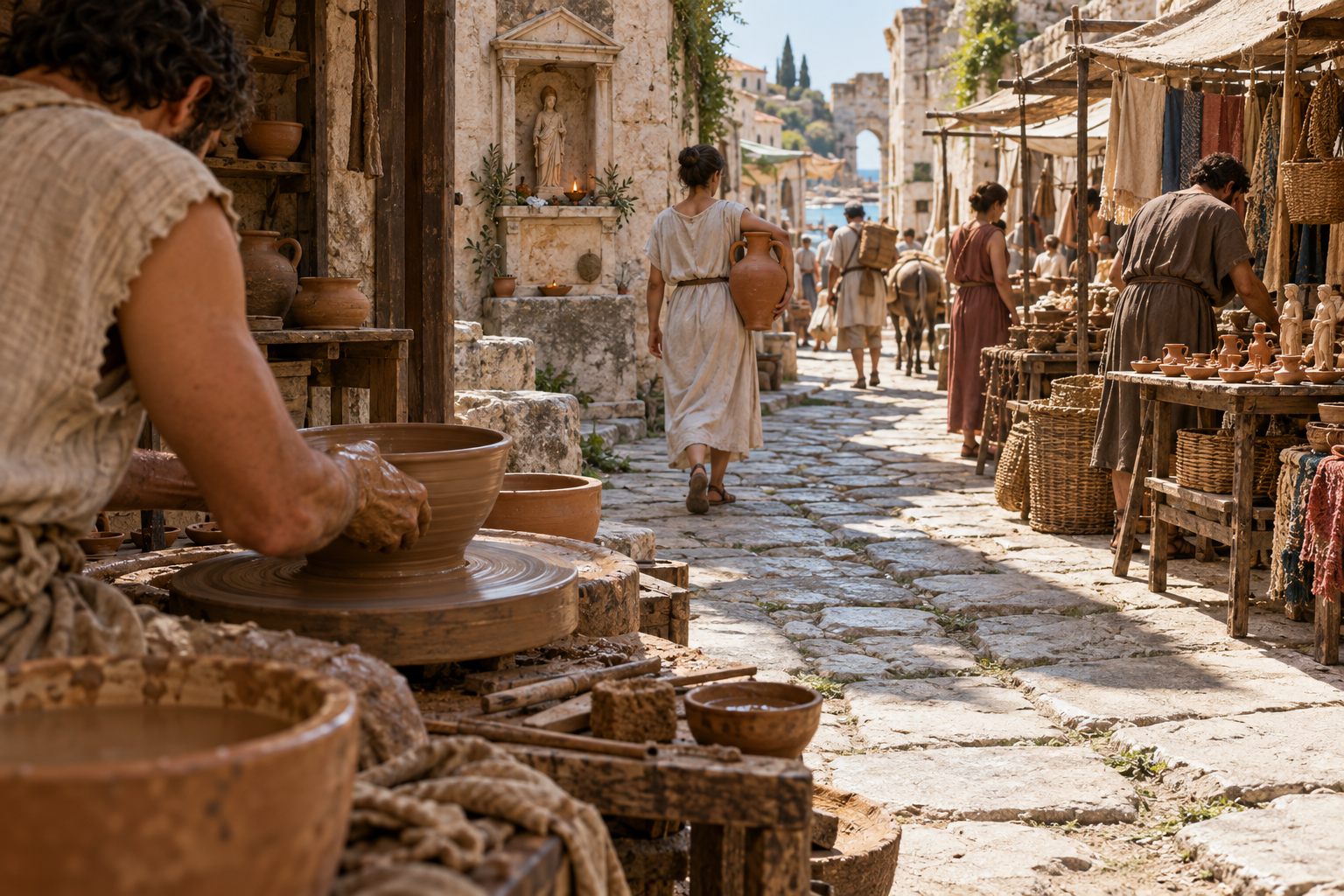
Histories of ancient cities often focus on rulers, monuments, and warfare, but everyday people made urban life functional and meaningful. Craftspeople, traders, householders, and ritual specialists negotiated space, labor, and social ties that sustained complex communities. Archaeology and documentary evidence can reveal patterns of consumption, work, and social interaction that illuminate ordinary experience. Exploring these traces helps us understand how cities were lived in, not just governed.

Urban Rituals and Public Spaces

Public spaces in ancient cities were stages for routine rituals as much as ceremonial spectacles, and they structured daily movements and encounters. Markets, fountains, workshops, and shrines anchored neighborhoods and became sites where social norms were reinforced and negotiated. Inscriptions, wear patterns on paving stones, and the distribution of small votive objects show how common people used and reshaped communal areas. These practices made abstract civic identities tangible through repeated, grounded activities that connected individuals to larger urban rhythms.

Understanding these rituals highlights the interplay between formal institutions and popular custom. Ordinary acts of devotion, bargaining, and repair created continuity and adaptability in urban life.

Trade, Labor and the Informal Economy

Markets and artisanal quarters formed the economic backbone of ancient cities, and much of this work happened outside elite oversight. Skilled artisans and day laborers operated in dense networks of credit, apprenticeship, and reputation that facilitated production and exchange. Archaeological remains of workshops, tool assemblages, and small-scale finished goods point to diverse specialties and local innovations. Documentary sources occasionally record contracts and disputes, providing glimpses of how labor relations and commercial norms were negotiated.

  • Short-term labor arrangements allowed households to diversify income.
  • Shared workshop spaces encouraged knowledge transfer across generations.
  • Informal credit networks reduced reliance on formal institutions.

These elements underline the resilience of urban economies, which depended on flexible, everyday practices as much as on grand trade routes.

Domestic Life and Material Culture

Homes reveal the rhythms of daily life: cooking areas, storage spaces, and domestic shrines show how families managed resources and identities. Pottery, textiles, and household tools reflect consumption choices shaped by availability, status, and cultural preference. Spatial organization within houses indicates patterns of privacy and social interaction among kin and guests. Small, ordinary objects often provide the clearest evidence of continuity and change in everyday practices.

By focusing on material traces, historians reconstruct routines that did not make it into official annals. This approach balances grand narratives with lived experience.

Conclusion

Studying ordinary people transforms our picture of ancient urban life from static monuments to dynamic communities. Material culture and spatial analysis reveal how routines, work, and ritual bound cities together. Paying attention to these practices enriches historical understanding and connects past urban realities to present human experiences.

Previous Post

The Boston Molasses Flood: A Timeline of Sticky Disaster

Next Post

Understanding Everyday Life in Ancient Cities

Related Posts

Understanding Everyday Life in Ancient Cities
History

Understanding Everyday Life in Ancient Cities

September 29, 2026
The Strasbourg Dancing Plague: When People Couldn’t Stop Dancing
History

The Strasbourg Dancing Plague: When People Couldn’t Stop Dancing

September 24, 2026
When a Brewing Vat Turned London Streets into a River of Beer
History

When a Brewing Vat Turned London Streets into a River of Beer

September 24, 2026
How Krakatoa’s 1883 Blast Echoed Around the World
History

How Krakatoa’s 1883 Blast Echoed Around the World

September 19, 2026
Next Post
Understanding Everyday Life in Ancient Cities

Understanding Everyday Life in Ancient Cities

Search..

No Result
View All Result

Recent Articles

Understanding Everyday Life in Ancient Cities

Understanding Everyday Life in Ancient Cities

September 29, 2026
How Ordinary People Shaped Ancient Urban Life

How Ordinary People Shaped Ancient Urban Life

September 29, 2026
The Boston Molasses Flood: A Timeline of Sticky Disaster

The Boston Molasses Flood: A Timeline of Sticky Disaster

September 28, 2026
1848: Europe’s Year of Revolt — A Timeline

1848: Europe’s Year of Revolt — A Timeline

September 28, 2026
Gotland’s Herring Booms: How Fish Forged a Baltic Region

Gotland’s Herring Booms: How Fish Forged a Baltic Region

September 27, 2026

Subscribe Us

By clicking submit, I authorize History Ours and its affiliated companies to: (1) use, sell, and share my information for marketing purposes, including cross-context behavioral advertising, as described in our Terms of Service and Privacy Policy, (2) supplement the information that I provide with additional information lawfully obtained from other sources, like demographic data from public sources, interests inferred from web page views, or other data relevant to what might interest me, like past purchase or location data, (3) contact me or enable others to contact me by email with offers for goods and services from any category at the email address provided, and (4) retain my information while I am engaging with marketing messages that I receive and for a reasonable amount of time thereafter. I understand I can opt out at any time through an email that I receive, or by clicking here

Subscribe To Our Newsletter

By clicking submit, I authorize History Ours and its affiliated companies to: (1) use, sell, and share my information for marketing purposes, including cross-context behavioral advertising, as described in our Terms of Service and Privacy Policy, (2) supplement the information that I provide with additional information lawfully obtained from other sources, like demographic data from public sources, interests inferred from web page views, or other data relevant to what might interest me, like past purchase or location data, (3) contact me or enable others to contact me by email with offers for goods and services from any category at the email address provided, and (4) retain my information while I am engaging with marketing messages that I receive and for a reasonable amount of time thereafter. I understand I can opt out at any time through an email that I receive, or by clicking here.

© 2026 History Ours | All Rights Reserved

  • Contact Us
  • Privacy Policy
  • Terms of Service
  • Unsubscribe
  • Privacy Choices
  • Contact Us
  • Privacy Policy
  • Terms of Service
  • Unsubscribe
  • Privacy Choices

© 2026 History Ours | All Rights Reserved

No Result
View All Result
  • Home
  • History
  • Biographies
  • Eras
  • Regions
  • Timeline

© 2026 History Ours | All Rights Reserved

Skip to content
Open toolbar Accessibility Tools

Accessibility Tools

  • Increase TextIncrease Text
  • Decrease TextDecrease Text
  • GrayscaleGrayscale
  • High ContrastHigh Contrast
  • Negative ContrastNegative Contrast
  • Light BackgroundLight Background
  • Links UnderlineLinks Underline
  • Readable FontReadable Font
  • Reset Reset