
Introduction
Every town and neighborhood holds layers of memory in streets, storefronts, parks, and backyards. These ordinary places accumulate stories through daily routines, celebrations, and quiet losses that rarely make it into formal histories. Paying attention to the textures of everyday landscapes reveals how residents remember, forget, and reframe the past across generations. This article explores practical ways communities read, record, and preserve those local narratives for a richer public history.
Reading the Landscape
Landscape reading is a method that treats physical environments as documents of human experience, where architecture, street patterns, and public signage offer clues to changing social life. By noting patterns such as reused materials, altered facades, or persistent pocket parks, researchers and residents can trace economic shifts and cultural continuities without relying solely on written records. This approach encourages observation, interviews, and mapping exercises that prioritize ordinary vantage points over monumental accounts. It is especially useful where archival sources are limited or biased.
As a short practice, volunteers can walk a single block together and record five features that suggest past uses or events. These small, focused projects build collective attention and often surface unexpected connections between people and places.
Oral Memory and Everyday Places
Oral history remains a central tool for recovering memories embedded in everyday sites, capturing personal narratives that reveal what a place meant at particular moments. Conversations with longtime residents often link domestic spaces to broader social change, such as migration, work patterns, or local rituals, creating a vivid counterpoint to official accounts. Collecting these testimonies requires ethical listening and local trust, ensuring contributors shape how their stories are used. Combining oral accounts with landscape observations deepens interpretation and highlights contested memories.
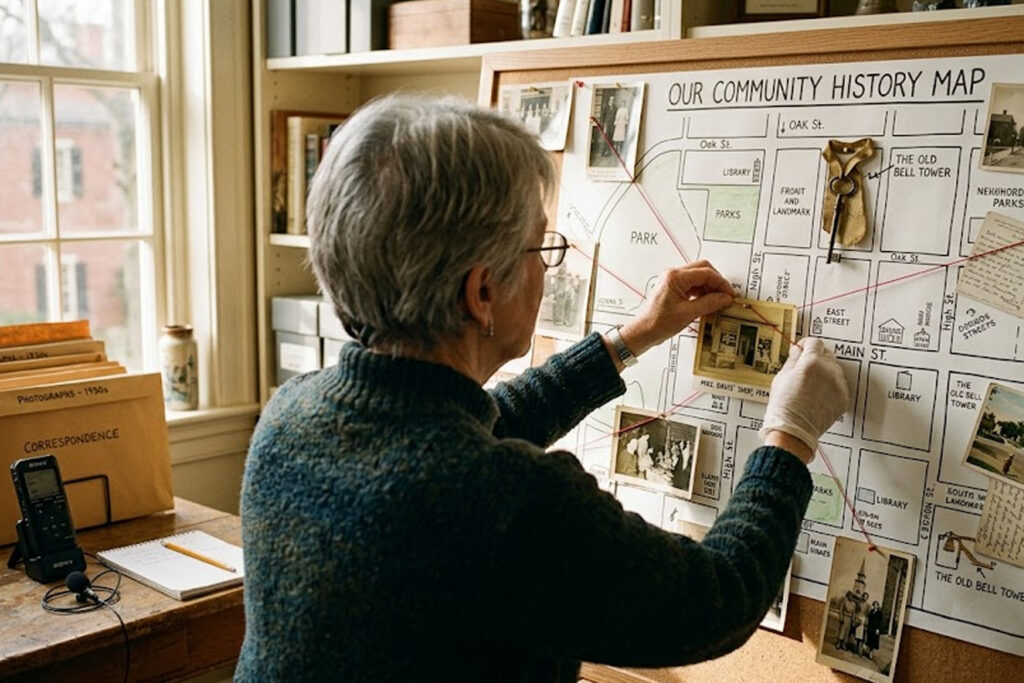
Community-led interviews can be complemented by audio walking tours or recorded neighborhood maps that pair voices with exact locations. These formats make memory spatially legible and accessible to wider audiences.
Preserving Layers in Local Archives
Small museums, libraries, and neighborhood archives play a crucial role in preserving everyday history by accepting donations of ordinary objects, photographs, and ephemera that formal repositories might overlook. Cataloging materials with contextual notes from donors enriches their research value and helps future users understand how items functioned in daily life. Digital tools now allow modest projects to create searchable collections that connect artifacts to oral testimonies and mapped places. Collaborative stewardship encourages local ownership and ongoing contribution.
Simple exhibitions or pop-up displays in community centers can translate archival work into public engagement, inviting residents to reflect on what matters to them about shared places.
Conclusion
Everyday landscapes are living archives that reveal layered, contested local histories. By combining landscape reading, oral memory, and small-scale archiving, communities preserve richer stories of place. These practices make public history more inclusive and resilient.