
Market streets spoke in images as much as in speech, and their signs and symbols shaped how people moved, traded, and judged one another.
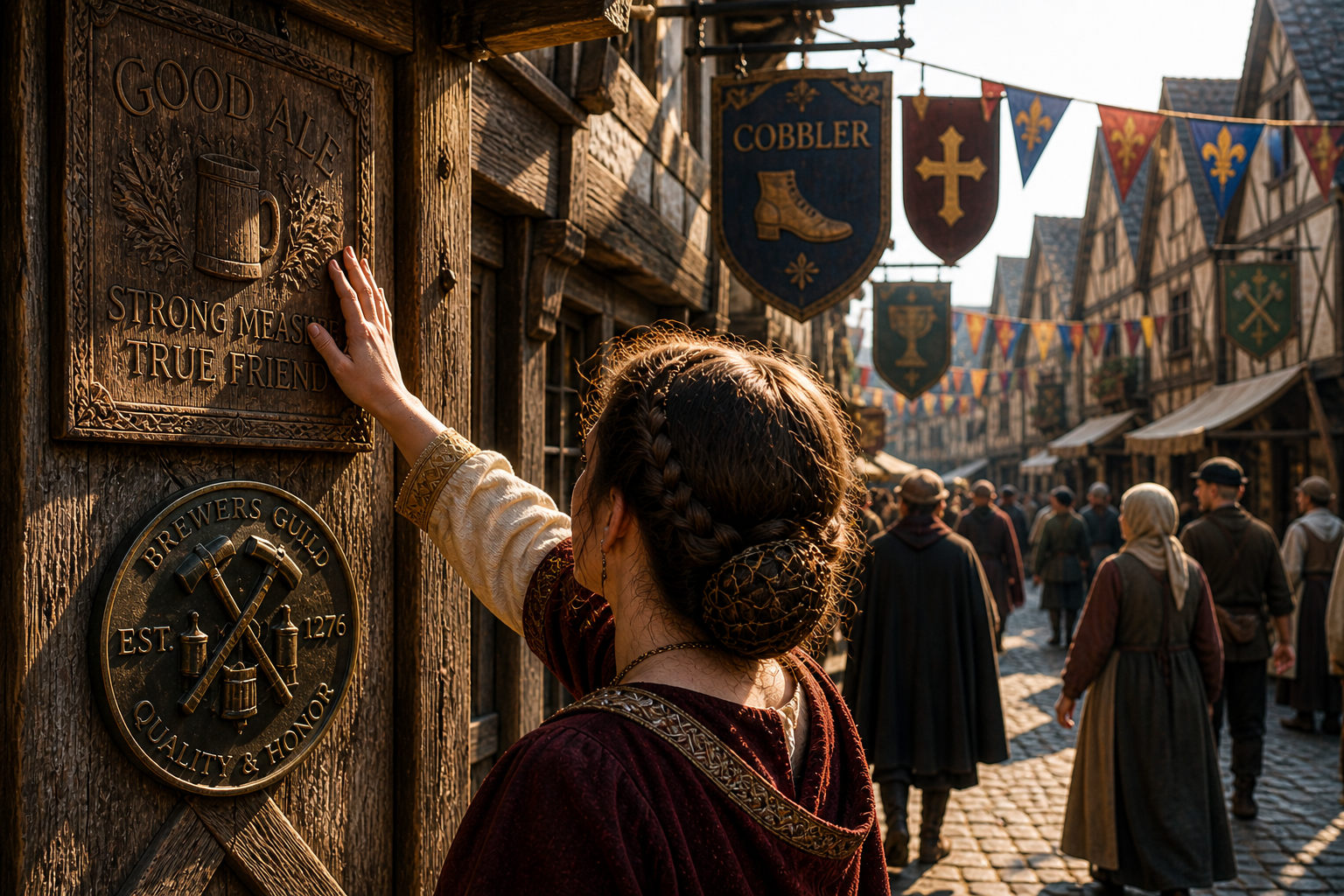
Carefully crafted shop boards, painted crosses, and guild emblems worked as a visual language that communicated reputation, function, and status.
These markers helped strangers navigate crowded lanes and offered residents cues about where to find goods, services, or protection.
Reading this visual vocabulary reveals how communities negotiated authority, trust, and public order in everyday urban life.
Visual Codes and Commercial Identity
Shop signs and painted motifs were practical tools for identification long before widespread literacy, and their designs carried layered meanings that merchants cultivated deliberately. Traders used symbols — animals, tools, celestial motifs — to hint at product quality, origin stories, or family lineage, while color choices and materials signaled investment and permanence. The repetition of certain emblems along a street established recognizable corridors of trade and shaped consumer expectations. These visual codes became shorthand for reputation in markets where word of mouth and appearance mattered most.
As a result, façades and fronts served as ongoing advertisements and moral claims. Communities read them and adjusted where they spent money and whom they avoided.
Guild Marks, Regulation, and Trust
Guild marks and municipal insignia functioned as formal cues that regulated production and reassured buyers about standards. Plaster stamps, carved emblems, and metal house signs often indicated membership in a regulated trade and adherence to local rules, which reduced uncertainty in transactions. Authorities used visible markers to enforce zoning, monitor taxes, and assert civic order, while consumers used the same symbols as heuristics for quality. In this way, signage enacted an informal contract between producers, regulators, and the public.
Consequently, visible regulation shaped both competition and cooperation among vendors. It helped stabilize markets by making compliance and reputation legible to all.
Ritual, Procession, and Public Memory
Beyond commerce, symbols on market streets anchored rituals and seasonal displays that reinforced communal identity and memory. Banners, carved crosses, and temporary signs for fairs and processions turned commercial spaces into stages for civic life, articulating shared values and histories. These ephemeral displays interacted with permanent signage to create layered meanings that changed with time and occasion. People moving through the market absorbed a constantly shifting narrative of belonging and belonging’s limits.
Thus, material markers linked commerce to ceremony and made collective life visible in ways that sustained social cohesion. They reminded residents of both privilege and obligation.
Navigation, Exclusion, and Everyday Order
Finally, signs and symbols organized movement and membership, often drawing invisible boundaries that determined who belonged where and when. Markers could include warning signs, designated gates, or symbols signifying restricted trades and apprenticeships, each shaping patterns of access and avoidance. At the same time, improvisation — chalked messages, pennants, or painted directions — allowed communities to contest or reinterpret official orders. The negotiated visual landscape was therefore a medium for both control and contest.
In short, the visual language of market streets mediated interactions at every scale, from individual transactions to collective governance. Reading these signs helps historians reconstruct how people made cities legible and livable.
Conclusion
Signs and symbols in market streets were more than ornament; they structured social life through visible rules and stories.
They guided movement, signaled trust, and framed communal rituals in public space.
Understanding this visual vocabulary deepens our sense of everyday order in historic towns.