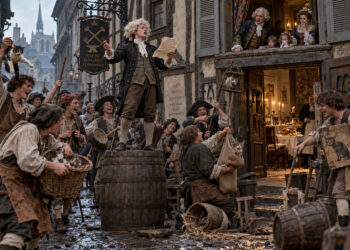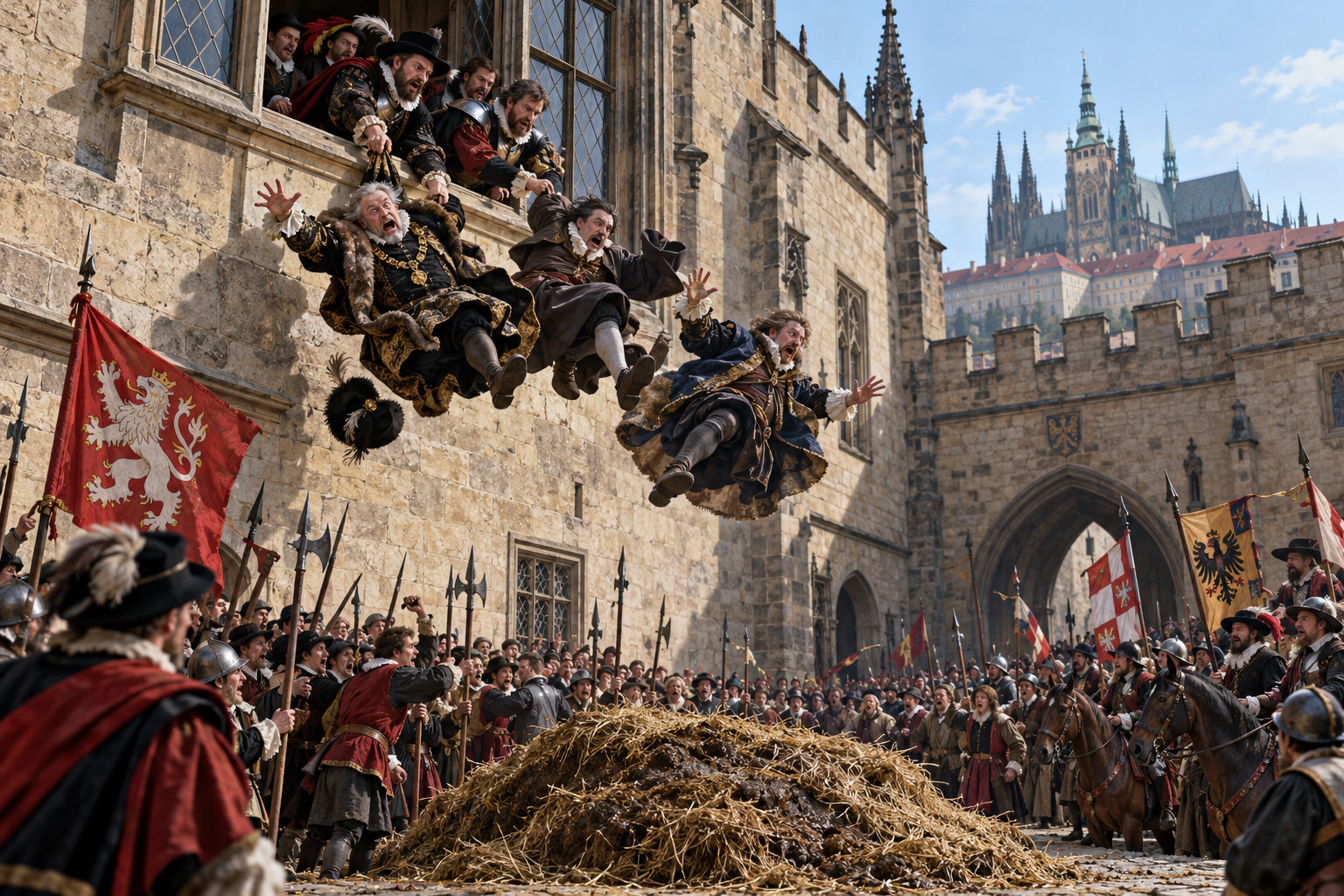
On a spring morning in Prague, May 23, 1618, a crowd gathered at the royal castle not for a festival but with fists and fury. Protestant nobles, convinced that their religious rights were being stripped away by Habsburg officials, marched into the offices of the king’s representatives. In a single violent gesture they hauled two of the royal governors and their secretary up to a high window and sent them tumbling into the courtyard below.
The act was simple and theatrical: a defenestration, literally the throwing out of a window. But it was also the concentrated expression of years of tension. Bohemia’s Reformation-era settlements had won Protestants legal breathing room; by 1617–18 the new Catholic emperor, Ferdinand II, and his administrators were seen as dismantling those protections—closing chapels and ignoring local rights. The castle window became the place where grievance met irrevocable action.
The men, the fall, and the stories that followed
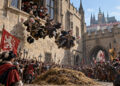
The officials who fell included two noble governors—Jaroslav Bořita of Martinice and Vilém Slavata of Chlum—and their secretary, Filip Fabricius. Remarkably, all three survived. Contemporary accounts and later retellings disagree about why. Catholic defenders framed it as miraculous deliverance; Protestant witnesses preferred a less heavenly explanation: the victims landed on a pile of dung in the castle yard. The disagreement over that detail helped turn an already dramatic episode into a mythic symbol for both sides.
Either way, the physical survival of the thrown men did not blunt the political shock. The assault on imperial authority was instant and public, a declaration that Bohemian elites were no longer willing to tolerate encroachments on their religious and political autonomy.
From Prague’s courtyard to war across Europe
The 1618 defenestration was not the first in Prague’s history—similar expulsions had punctuated the Hussite era—but this one ricocheted beyond Bohemia. In the weeks and months that followed, the Bohemian estates rebelled, deposed the Habsburg ruler locally, and in 1619 offered their crown to Frederick V of the Palatinate. Europe’s tangled alliances, religious fault lines, and dynastic ambitions turned the Bohemian revolt into the opening chapter of the Thirty Years’ War, a conflict that would devastate central Europe for decades.
What began as a dramatic, local act of defiance became a signal flare. Armies assembled, old rivalries flared into pitched battles, and ordinary people bore the consequences. For historians and storytellers alike, the image of men ejected from a castle window captures how quickly a single violent moment can unmoor politics and set a continent on fire.
Conclusion
The 1618 defenestration matters because it shows how symbolic acts can catalyze wider change. A window, a shove, and the survival of three officials became, in memory and consequence, a turning point: a private quarrel about chapels and privileges that exploded into one of early modern Europe’s defining catastrophes. The courtyard in Prague is small; the war it helped start was not.