Launched in 1511, the Mary Rose served as one of Henry VIII’s principal warships during a time when England was reshaping itself into a naval power. She was cutting‑edge for her day: broad‑beamed, heavily armed, and designed to deliver volleys of cannon fire rather than rely only on boarding actions. For decades she patrolled the English Channel, a floating symbol of Tudor ambition and the shifting tactics of early modern warfare.
The ship’s complement mixed professional seamen, gunners, soldiers and—when on campaign—additional marines and servants. Life aboard was cramped, noisy and dangerous. Sailors slept in hammocks or on deck; gun crews operated primitive but lethal early artillery. On a routine July day in 1545 the Mary Rose heeled over and disappeared beneath the Solent, taking many of her company with her.
How She Went Down
Contemporary accounts are fragmentary; historians still debate the exact cause. The leading explanation is an unlucky combination: a sharp gust of wind, open gunports for a broadside, and a sudden shift of weight as soldiers moved across the deck. Once her decks took on water she could not right herself and foundered quickly. Contemporary reports and later archaeological evidence suggest perhaps around 500 men were aboard—most did not survive.
The loss was a shock to Tudor England. A king who invested in ships and ordnance saw one of his flagship vessels vanish in a few moments, carrying men and material culture into a cold, oxygen‑poor mud that would preserve them for centuries.
Archaeology Beneath the Mud
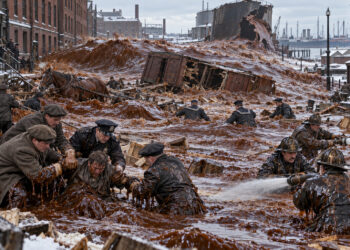
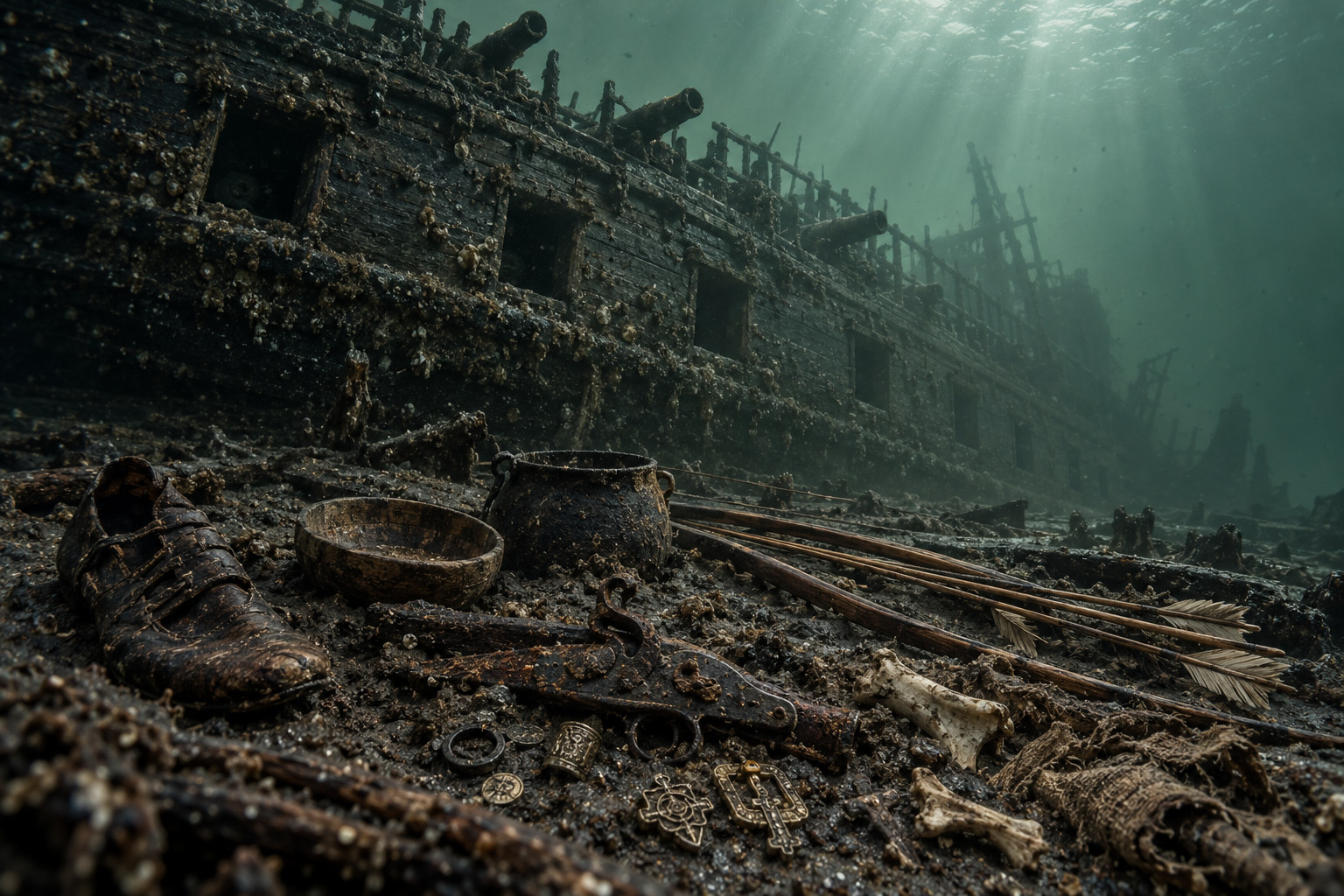
The wreck lay mostly intact on the seabed until a dramatic recovery in 1982. When archaeologists raised the hull and thousands of objects it became one of the richest time‑capsules of the Renaissance ever found. The anaerobic conditions of the Solent preserved wood, leather, textiles and metal in surprising detail.
Objects recovered are vivid and everyday: iron cannon and gunlocks, longbows and arrows, cooking pots, shoes, knives, wooden bowls, and small personal items. Human bones and fragments of clothing told a story of health, diet and origins. Later scientific work on teeth and bones revealed that the crew were not a homogenous pool: individuals came from different regions, reflecting the mobility of the period. Conservation itself became a long saga—the wooden hull was soaked and treated for years with polyethylene glycol before the Mary Rose could be displayed.