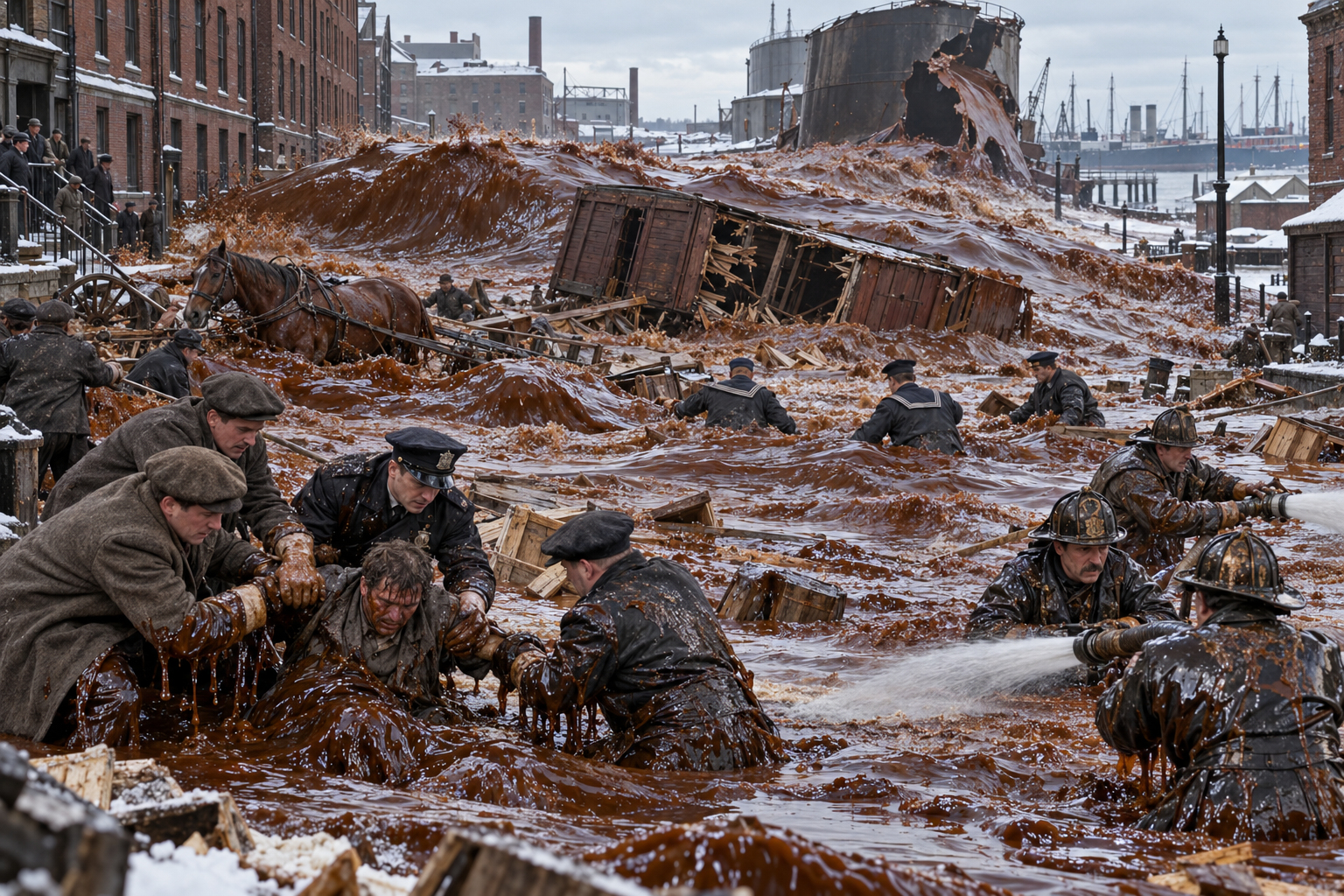
On January 15, 1919, a steel tank of molasses on Commercial Street in Boston’s North End ruptured and unleashed a brown, sticky wave into the neighborhood. The tank, owned by the Purity Distilling Company, had been filled with roughly 2.3 million gallons of molasses used in the production of industrial alcohol during World War I. Neighbors described a sound like a subway train, then a wall of molasses up to 15 feet high racing down the street at an estimated 35 miles per hour.
The flood tore away buildings, smashed freight cars, and hurled people and animals into the viscous tide. Horses were trapped and could not pull wagons free; rescue workers waded into chest-deep molasses to haul survivors out. In the immediate hours, 21 people died and about 150 were injured—a catastrophic toll for a single urban accident.
A sticky rescue and an even stickier cleanup
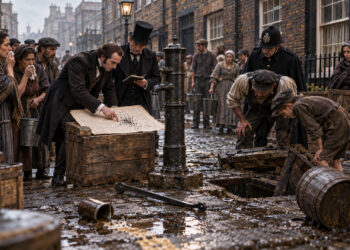
Rescue efforts were hampered by winter temperatures and the nature of the cargo. Molasses stiffens in cold weather and clings to everything. Volunteers, police, firefighters, and Navy sailors labored with shovels and pumps. The famous image of workers hosing down streets with salt water helped free trapped debris and wash molasses toward the harbor, but the harbor itself turned brown for months.
Cleanup took weeks. Buildings had to be scraped and cleaned; basements remained coated. Residents reported a sweet, pervasive smell for years afterward. The cleanup costs, the human losses, and the spectacle of an industrial byproduct inundating a neighborhood made this disaster a national story and left long memories in Boston.
Why it happened — and what followed
The causes were debated, but investigators pointed to poor construction and negligent maintenance. The tank had been installed only a few years earlier and showed signs of leaks. Some engineers argued temperature changes and fermentation of the molasses inside raised internal pressure, while others emphasized faulty rivets and thin steel. Whatever the exact mix of factors, the verdict at trial was that the company had been responsible for an unsafe structure.
Nearly 1,300 plaintiffs filed claims. After lengthy litigation, settlements and judgments required the company to pay compensation to victims and families. The case helped push forward expectations of corporate responsibility in industrial accidents—an early example of mass litigation over urban industrial safety.
Conclusion
The Great Molasses Flood remains one of those improbable historical moments that reveal how modern cities grew up around risky industries. It is remembered in photographs, in the odd lingering smell noted by older Bostonians for decades, and in a lesson about engineering, oversight, and the unexpected hazards of everyday commodities.