

Uncover History’s Secrets with Daily Updates!
Daily News Entertainment
  • Home
  • History
  • Biographies
  • Eras
  • Regions
  • Timeline
No Result
View All Result
History Ours
  • Home
  • History
  • Biographies
  • Eras
  • Regions
  • Timeline
No Result
View All Result
History Ours
No Result
View All Result
Home History

The Evolution of Money: From Barter to Blockchain

in History
The Evolution of Money: From Barter to Blockchain

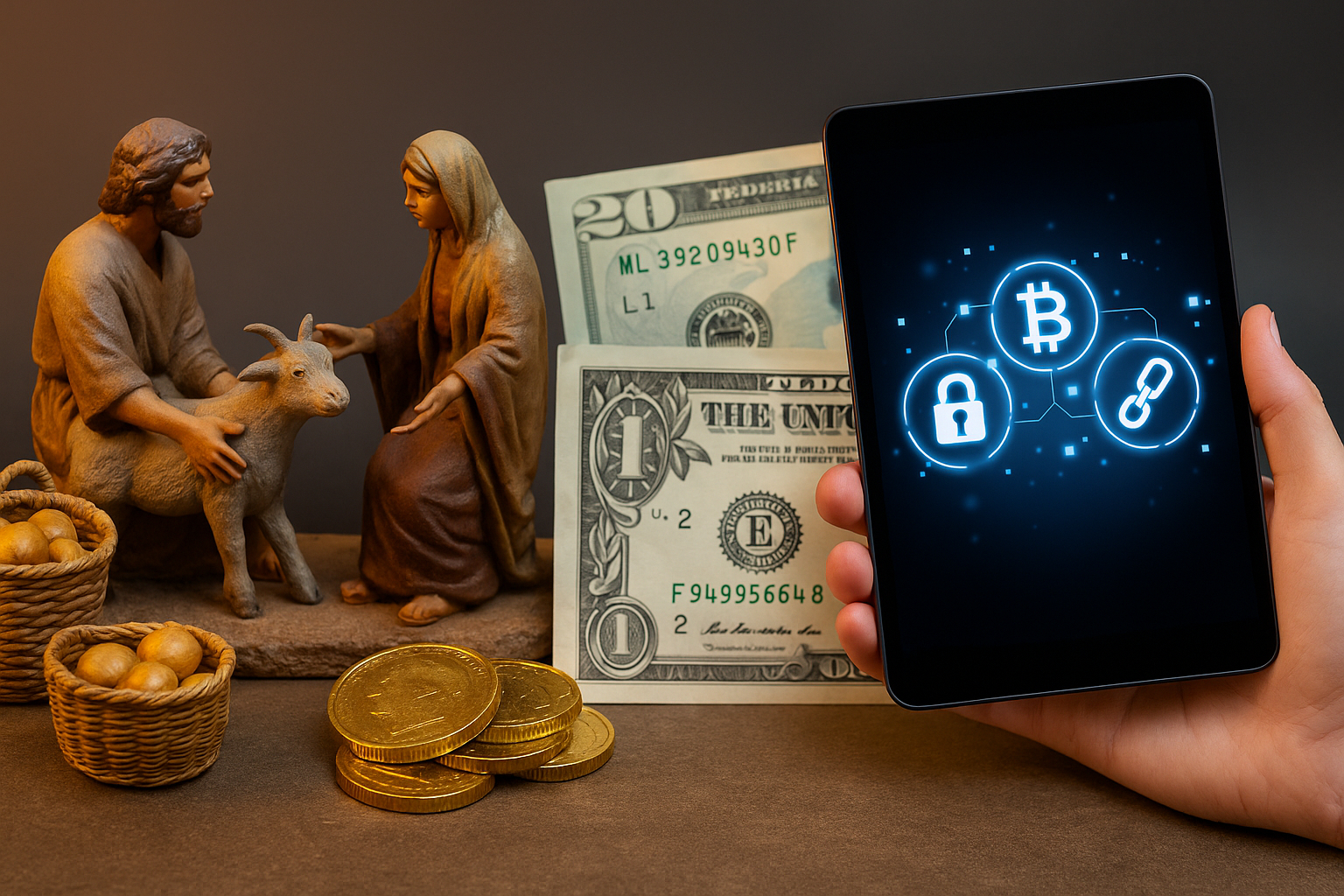
Money has been one of humanity’s most transformative inventions — a universal tool that enables trade, builds economies, and fuels civilizations. From the earliest days of bartering goods to the digital revolution of blockchain technology, the story of money reflects innovation, trust, and adaptation. Understanding its evolution helps us grasp how societies progress and how technology continues to redefine value.

Barter System: The Beginning of Exchange

Before money existed, people relied on the barter system, directly trading goods and services. Farmers exchanged grain for tools, and herders traded livestock for pottery. While practical in small communities, barter had limitations — it required a “double coincidence of wants,” meaning both parties had to need what the other offered. This inefficiency led to the search for a more universal medium of exchange.

Commodity Money: Value in Tangibility

The next stage saw the rise of commodity money — items that had intrinsic value. Goods like salt, gold, silver, and cowrie shells became widely accepted for trade. Metals, especially gold and silver, gained prominence due to their durability and divisibility. Ancient civilizations such as the Lydians (around 600 BCE) were among the first to mint coins, standardizing value and making trade easier and more reliable.

Paper Money and Banking: A New Era of Trust

As trade expanded, carrying heavy metals became impractical. Around the 7th century in China, paper money emerged under the Tang and Song Dynasties. These early banknotes represented stored value and laid the groundwork for modern banking.
In medieval Europe, merchants began depositing gold with goldsmiths, who issued receipts — precursors to modern banknotes. Over time, trust in these institutions grew, giving rise to banks, central currencies, and the idea of government-backed money.

Electronic Money: The Digital Transformation

The 20th century introduced electronic money, reshaping how we store and transfer value. Credit cards, debit cards, and online banking eliminated the need for physical cash, offering convenience and speed. The rise of the internet revolutionized finance further, paving the way for digital wallets, mobile banking, and global electronic payments — connecting billions of people to a new financial ecosystem.

Cryptocurrency and Blockchain: The Future of Money

The 21st century ushered in a financial revolution with cryptocurrencies and blockchain technology. Introduced in 2009 with Bitcoin, blockchain offered a decentralized, transparent system that removed the need for intermediaries like banks. Unlike traditional currencies controlled by governments, cryptocurrencies rely on cryptography and distributed ledgers to ensure security and authenticity.
Beyond money, blockchain’s potential now extends to supply chains, healthcare, and digital identity — proving that this innovation is as much about trust and transparency as it is about technology.

Conclusion

From bartering goods to mining digital coins, the evolution of money mirrors human progress — from tangible exchange to virtual value. As we move deeper into a digital age, blockchain stands as the next frontier in how we define, secure, and use money. Yet, at its core, the essence of money remains unchanged: a shared belief in value that drives connection, commerce, and civilization itself.

Previous Post

The Journey of Art: From Cave Walls to Canvas

Next Post

Women Who Quietly Changed the Course of History

Related Posts

How the Crystal Palace Turned Glass and Iron into a Modern Stage
History

How the Crystal Palace Turned Glass and Iron into a Modern Stage

September 15, 2026
Anne Bonny: The Pirate Who Broke Rules and Expectations
History

Anne Bonny: The Pirate Who Broke Rules and Expectations

September 15, 2026
Mary Anning and the Coast That Revealed Lost Worlds
History

Mary Anning and the Coast That Revealed Lost Worlds

September 15, 2026
When Mount Pelée Erased Saint-Pierre, 1902
History

When Mount Pelée Erased Saint-Pierre, 1902

September 15, 2026
Next Post
Women Who Quietly Changed the Course of History

Women Who Quietly Changed the Course of History

Search..

No Result
View All Result

Recent Articles

Edo: Japan’s Urban Revolution of Lanterns and Printshops

Edo: Japan’s Urban Revolution of Lanterns and Printshops

September 16, 2026
How the Little Ice Age Changed Everyday Life in Europe

How the Little Ice Age Changed Everyday Life in Europe

September 16, 2026
The Disguise That Broke Chains: Ellen and William Craft

The Disguise That Broke Chains: Ellen and William Craft

September 15, 2026
Bass Reeves: The Marshal Who Hunted Outlaws in Indian Territory

Bass Reeves: The Marshal Who Hunted Outlaws in Indian Territory

September 15, 2026
How the Crystal Palace Turned Glass and Iron into a Modern Stage

How the Crystal Palace Turned Glass and Iron into a Modern Stage

September 15, 2026

Subscribe Us

By clicking submit, I authorize History Ours and its affiliated companies to: (1) use, sell, and share my information for marketing purposes, including cross-context behavioral advertising, as described in our Terms of Service and Privacy Policy, (2) supplement the information that I provide with additional information lawfully obtained from other sources, like demographic data from public sources, interests inferred from web page views, or other data relevant to what might interest me, like past purchase or location data, (3) contact me or enable others to contact me by email with offers for goods and services from any category at the email address provided, and (4) retain my information while I am engaging with marketing messages that I receive and for a reasonable amount of time thereafter. I understand I can opt out at any time through an email that I receive, or by clicking here

Subscribe To Our Newsletter

By clicking submit, I authorize History Ours and its affiliated companies to: (1) use, sell, and share my information for marketing purposes, including cross-context behavioral advertising, as described in our Terms of Service and Privacy Policy, (2) supplement the information that I provide with additional information lawfully obtained from other sources, like demographic data from public sources, interests inferred from web page views, or other data relevant to what might interest me, like past purchase or location data, (3) contact me or enable others to contact me by email with offers for goods and services from any category at the email address provided, and (4) retain my information while I am engaging with marketing messages that I receive and for a reasonable amount of time thereafter. I understand I can opt out at any time through an email that I receive, or by clicking here.

© 2026 History Ours | All Rights Reserved

  • Contact Us
  • Privacy Policy
  • Terms of Service
  • Unsubscribe
  • Privacy Choices
  • Contact Us
  • Privacy Policy
  • Terms of Service
  • Unsubscribe
  • Privacy Choices

© 2026 History Ours | All Rights Reserved

No Result
View All Result
  • Home
  • History
  • Biographies
  • Eras
  • Regions
  • Timeline

© 2026 History Ours | All Rights Reserved

Skip to content
Open toolbar Accessibility Tools

Accessibility Tools

  • Increase TextIncrease Text
  • Decrease TextDecrease Text
  • GrayscaleGrayscale
  • High ContrastHigh Contrast
  • Negative ContrastNegative Contrast
  • Light BackgroundLight Background
  • Links UnderlineLinks Underline
  • Readable FontReadable Font
  • Reset Reset