
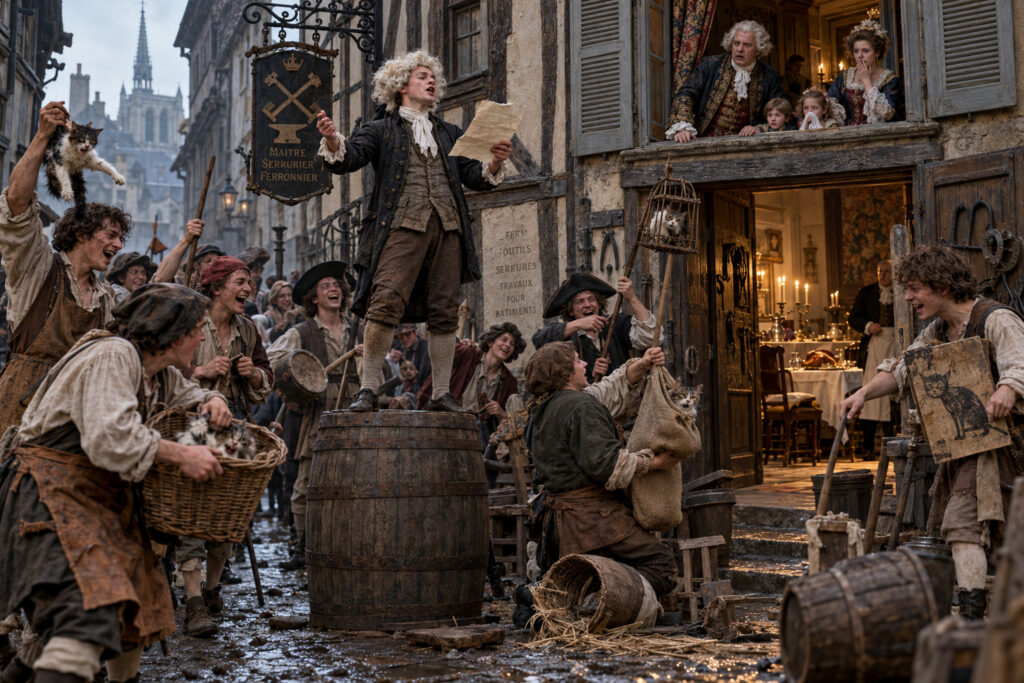
In mid-18th-century Paris a curious episode unfolded that has puzzled and intrigued historians ever since: journeymen and apprentices rounded up dozens of cats, paraded them through the streets, and put many of them to a gruesome end. It was not a simple act of cruelty. The event, often called the Great Cat Massacre, read like a satirical skit and a riot at once—part workplace pun, part political statement, and wholly of its time.
Who did it—and why it wasn’t just about felines
The perpetrators were young male workers in urban trades: apprentices whose daily lives were regulated by masters, who slept in cramped rooms, and who had little control over wages, meals, or discipline. Their targets were not only the cats but what the cats represented. In households where masters and their families dined well, cats enjoyed comfortable lives—symbols of bourgeois ease and domestic authority. By staging a mock trial and execution for the animals, the apprentices inverted the household hierarchy, turning ritualized cruelty into a grotesque kind of satire.
Ritual, jest, and language of resistance
The spectacle mixed mock-judicial language with carnival-like play. Apprentices reportedly assigned roles, read out charges, and performed the whole business with what the participants treated as earnest absurdity. That mixture of humor and violence mattered. For the apprentices it was a way to articulate grievances that could not be safely spoken aloud: about poverty, humiliation, and the unequal terms of apprenticeship. The event also drew attention because it was not aimed at political elites directly; instead it used domestic symbols to critique social order, in a form of popular expression that was both inventive and dangerous.
Why the story still matters
At first glance the Great Cat Massacre reads like an odd anecdote from a past full of peculiar entertainments. Look closer and it becomes a vivid window into urban working life before modern labor politics—how those with the least voice turned ritual and ridicule into a language of complaint. The incident forces us to listen to laughter that bites and jokes that burn, to see mockery as a form of moral argument.
Conclusion
Today the episode survives mostly in historians’ reconstructions and the uneasy appeal it holds for readers: repellent in detail, fascinating in meaning. It reminds us that ordinary people in history found creative, often transgressive ways to register hurt and to mock power—sometimes by making mischief of the things closest to home, even the household cat.