Uncover History’s Secrets with Daily Updates!
Daily News Entertainment
  • Home
  • History
  • Biographies
  • Eras
  • Regions
  • Timeline
No Result
View All Result
History Ours
  • Home
  • History
  • Biographies
  • Eras
  • Regions
  • Timeline
No Result
View All Result
History Ours
No Result
View All Result
Home History

The Rise of Cities: From Settlements to Superpowers

in History
The Rise of Cities: From Settlements to Superpowers

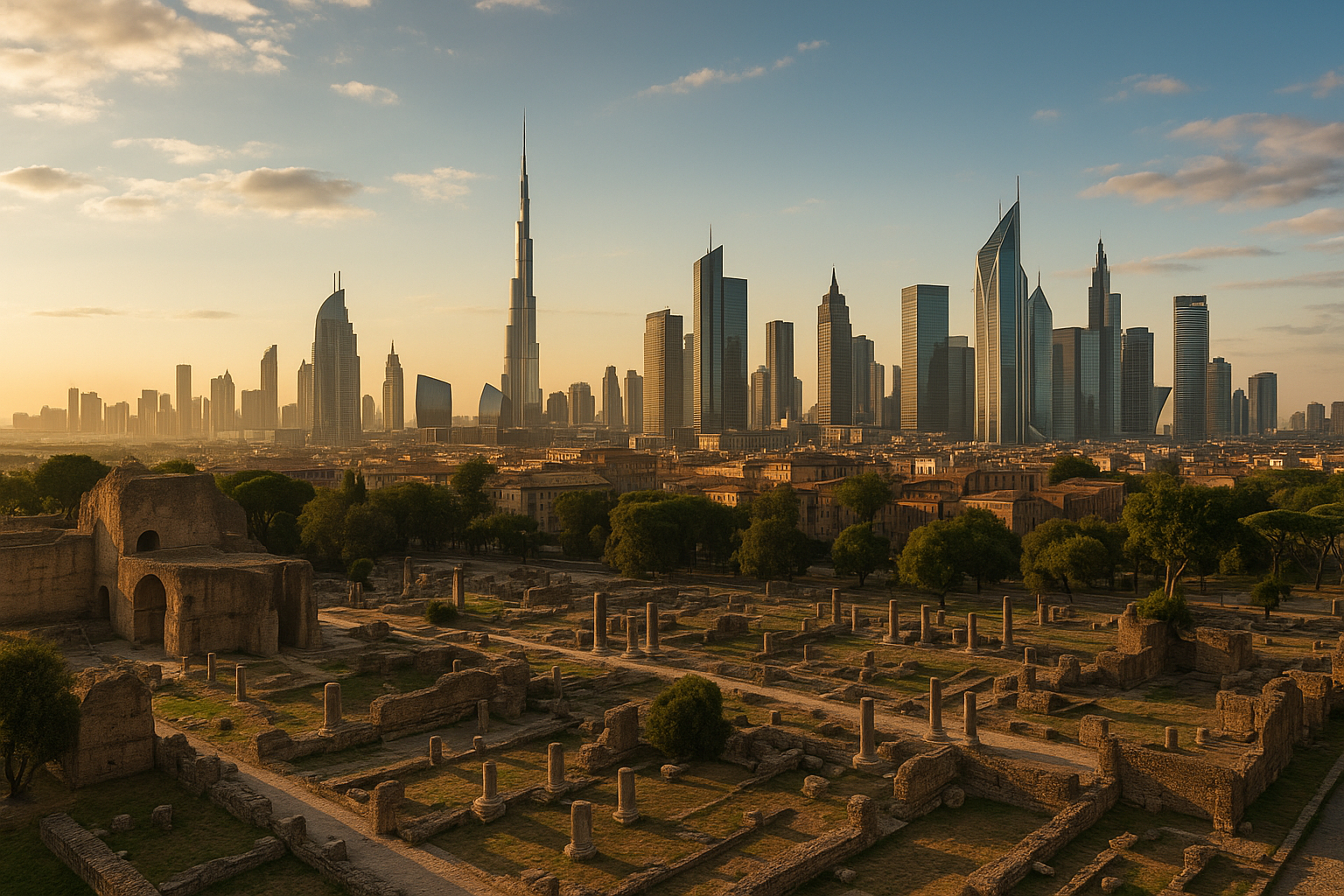
Cities are among humanity’s greatest achievements — living reflections of our ambition, creativity, and adaptability. From the first river-valley settlements to today’s global megacities, urban spaces have shaped civilizations and driven progress for thousands of years. What began as small clusters of homes for trade and protection has transformed into vast ecosystems of culture, technology, and power. The story of cities is, in many ways, the story of human civilization itself — one of innovation, cooperation, and constant reinvention.

From Villages to Civilizations

The earliest cities emerged around fertile river valleys like the Tigris, Nile, and Indus, where agriculture created food surpluses that supported permanent communities. These settlements soon became centers of trade, governance, and culture. Cities like Uruk, Mohenjo-Daro, and Thebes were more than population hubs — they were engines of progress that fostered writing, architecture, and social organization. The concept of the city gave humanity a blueprint for cooperation on a scale never seen before, laying the foundation for the modern world.

The Power of Trade and Innovation

As centuries passed, cities grew into vital networks of commerce and innovation. Ports like Athens, Alexandria, and Venice thrived on trade, connecting continents and cultures. Markets and workshops became incubators for invention — from tools and textiles to art and philosophy. Cities were also centers of exchange, not just for goods but for ideas. This constant flow of knowledge transformed them into intellectual and cultural superpowers long before the term “globalization” existed.

Industrialization and the Urban Boom

The Industrial Revolution marked a turning point in urban history. As factories emerged, people migrated from rural areas to cities in search of opportunity. The skyline began to change — chimneys, railways, and later skyscrapers redefined the urban landscape. Cities like London, New York, and Tokyo became symbols of progress and possibility, embodying the promise — and challenges — of modernization. With growth came issues of housing, sanitation, and inequality, but also breakthroughs in engineering, infrastructure, and public health.

The Modern Metropolis: Engines of the Global Economy

In today’s interconnected world, cities are the command centers of the global economy. They generate most of the world’s GDP and serve as hubs for technology, finance, and innovation. Urbanization continues at a rapid pace — by 2050, nearly 70% of the global population is expected to live in cities. Smart cities are now emerging, integrating data, artificial intelligence, and sustainability to create efficient, livable environments. From renewable transport systems to digital governance, the city of the future is as much about intelligence as infrastructure.

The Challenges of Urban Growth

With opportunity comes complexity. Modern cities face pressing challenges — from overcrowding and pollution to housing affordability and climate resilience. The rise of megacities has sparked debates about quality of life and environmental sustainability. Yet, these challenges are also opportunities for innovation. Urban planners, architects, and policymakers are reimagining city living through green spaces, renewable energy, and inclusive design — ensuring cities remain not just powerful but sustainable.

Conclusion
The journey from ancient settlements to global superpowers reveals one simple truth: cities are where humanity’s dreams take shape. They are places of ambition, diversity, and reinvention — constantly evolving to meet the needs of their people. As we look toward the future, the next era of cities will not be defined by their size, but by their ability to balance progress with purpose. The rise of cities is far from over — it’s entering its most exciting chapter yet.
Previous Post

How Maritime Trade Connected the Ancient World

Next Post

Abraham Lincoln’s Legacy: Lessons in Leadership

Related Posts

John Snow, the Broad Street Pump, and Cholera’s Fall
History

John Snow, the Broad Street Pump, and Cholera’s Fall

October 29, 2026
The Vasa: Sweden’s Giant Ship That Couldn’t Sail
History

The Vasa: Sweden’s Giant Ship That Couldn’t Sail

October 29, 2026
The Ghost Army: How Artists Fooled Hitler’s Front
History

The Ghost Army: How Artists Fooled Hitler’s Front

October 24, 2026
How Iceland’s 1783 Laki Fissure Eruption Chilled an Age
History

How Iceland’s 1783 Laki Fissure Eruption Chilled an Age

October 24, 2026
Next Post
Abraham Lincoln’s Legacy: Lessons in Leadership

Abraham Lincoln’s Legacy: Lessons in Leadership

Search..

No Result
View All Result

Recent Articles

Mary Seacole: The Jamaican Nurse Who Went to War

Mary Seacole: The Jamaican Nurse Who Went to War

October 30, 2026
Ada Lovelace: The Poet Who Helped Imagine Modern Computers

Ada Lovelace: The Poet Who Helped Imagine Modern Computers

October 30, 2026
John Snow, the Broad Street Pump, and Cholera’s Fall

John Snow, the Broad Street Pump, and Cholera’s Fall

October 29, 2026
The Vasa: Sweden’s Giant Ship That Couldn’t Sail

The Vasa: Sweden’s Giant Ship That Couldn’t Sail

October 29, 2026
How the Black Death Spread Across Europe, 1347–1351

How the Black Death Spread Across Europe, 1347–1351

October 28, 2026

Subscribe Us

By clicking submit, I authorize History Ours and its affiliated companies to: (1) use, sell, and share my information for marketing purposes, including cross-context behavioral advertising, as described in our Terms of Service and Privacy Policy, (2) supplement the information that I provide with additional information lawfully obtained from other sources, like demographic data from public sources, interests inferred from web page views, or other data relevant to what might interest me, like past purchase or location data, (3) contact me or enable others to contact me by email with offers for goods and services from any category at the email address provided, and (4) retain my information while I am engaging with marketing messages that I receive and for a reasonable amount of time thereafter. I understand I can opt out at any time through an email that I receive, or by clicking here

Subscribe To Our Newsletter

By clicking submit, I authorize History Ours and its affiliated companies to: (1) use, sell, and share my information for marketing purposes, including cross-context behavioral advertising, as described in our Terms of Service and Privacy Policy, (2) supplement the information that I provide with additional information lawfully obtained from other sources, like demographic data from public sources, interests inferred from web page views, or other data relevant to what might interest me, like past purchase or location data, (3) contact me or enable others to contact me by email with offers for goods and services from any category at the email address provided, and (4) retain my information while I am engaging with marketing messages that I receive and for a reasonable amount of time thereafter. I understand I can opt out at any time through an email that I receive, or by clicking here.

© 2026 History Ours | All Rights Reserved

  • Contact Us
  • Privacy Policy
  • Terms of Service
  • Unsubscribe
  • Privacy Choices
  • Contact Us
  • Privacy Policy
  • Terms of Service
  • Unsubscribe
  • Privacy Choices

© 2026 History Ours | All Rights Reserved

No Result
View All Result
  • Home
  • History
  • Biographies
  • Eras
  • Regions
  • Timeline

© 2026 History Ours | All Rights Reserved

Skip to content
Open toolbar Accessibility Tools

Accessibility Tools

  • Increase TextIncrease Text
  • Decrease TextDecrease Text
  • GrayscaleGrayscale
  • High ContrastHigh Contrast
  • Negative ContrastNegative Contrast
  • Light BackgroundLight Background
  • Links UnderlineLinks Underline
  • Readable FontReadable Font
  • Reset Reset