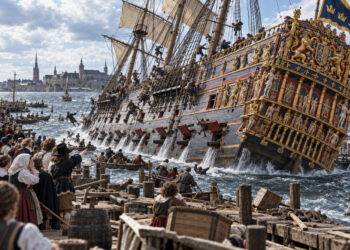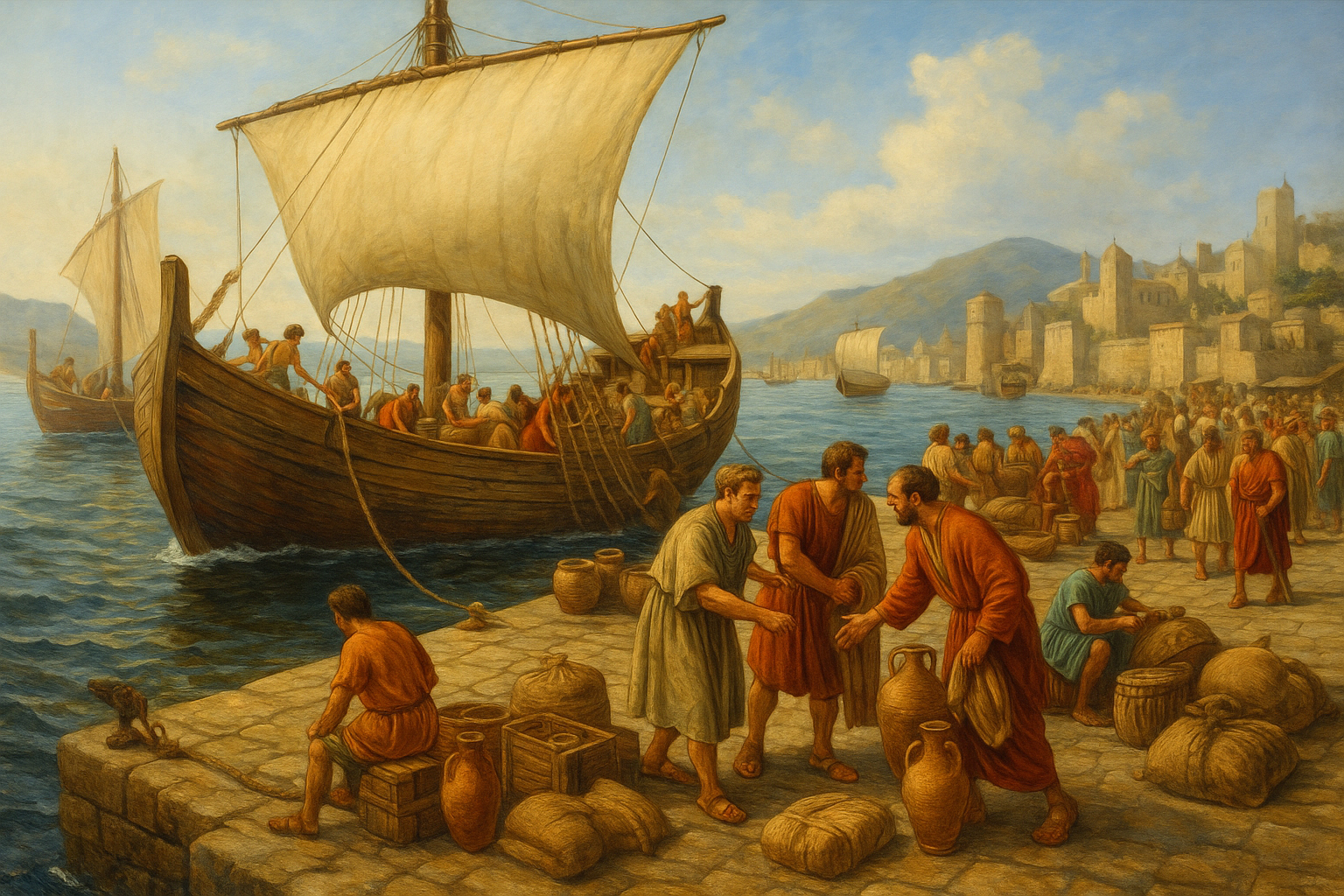
Before planes and digital communication, the seas were the arteries of civilization. Maritime trade not only moved goods but also carried ideas, cultures, and technologies that shaped human history. Across ancient empires, sailors and merchants turned vast oceans into networks of exchange that connected distant peoples and laid the foundation for global trade as we know it today.
The Birth of Oceanic Commerce
The earliest maritime routes emerged in Mesopotamia, Egypt, and the Indus Valley, where wooden ships carried grain, textiles, and spices along rivers and coastlines. As shipbuilding advanced, trade expanded across the Red Sea, Mediterranean, and Indian Ocean—linking Africa, Asia, and Europe in a thriving web of exchange.
Cultural and Economic Exchange
Beyond material goods like gold, silk, and ivory, maritime trade spread religion, language, and scientific knowledge. Greek philosophy reached new audiences, Indian mathematics traveled westward, and Chinese inventions like paper and gunpowder crossed oceans. Ports such as Alexandria, Carthage, and Guangzhou became melting pots of commerce and culture.
Navigating Challenges
Ancient sailors braved unpredictable weather, piracy, and long voyages guided only by stars and primitive maps. Yet, their courage and innovation—like the invention of the lateen sail and magnetic compass—pushed exploration to new frontiers. These maritime achievements paved the way for the great age of discovery centuries later.
Conclusion
Maritime trade was more than an economic force—it was the original form of globalization. By connecting distant civilizations, it transformed isolated cultures into an interconnected world. The waves that once carried cargo also carried ideas, shaping the course of human progress across millennia.