
The bang, the wall, and the porter pour
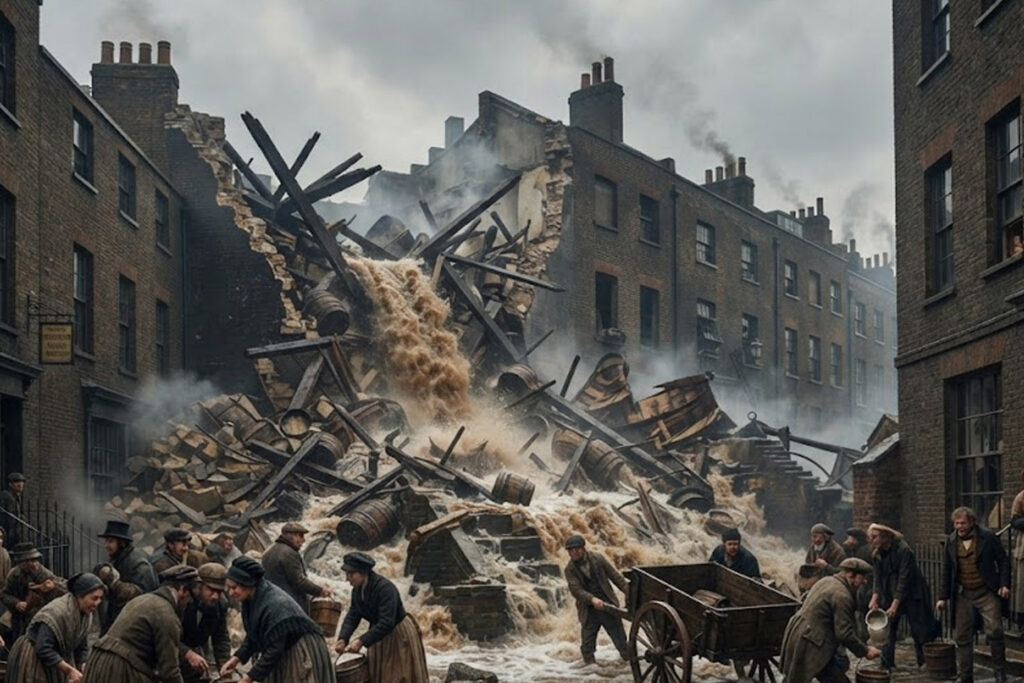
On an October afternoon in 1814 a wooden vat at Meux’s Horse Shoe Brewery on Tottenham Court Road gave way with a terrifying roar. Contemporary reports describe a wall collapsing as a vast column of porter swept through the brewery yard and down surrounding streets. Cellars flooded, houses were smashed, and in the immediate confusion several people lost their lives—most accounts record eight dead. For a city used to cholera scares and building collapses, the image of whole neighborhoods knee-deep in beer was grotesque and oddly specific.
How a storage vat became a public hazard
Brewers stored porter in enormous wooden vats, bound by iron hoops much like giant barrels. These vats were an economical way to hold beer while it matured. But the combination of heavy, fermented liquid and the pressure of trapped gas made the wooden staves vulnerable. One vat failed; the surge that followed ruptured adjacent vats in a chain reaction. The building’s back wall, already under strain, gave way and turned what might have been a contained industrial accident into a sudden urban flood.
Neighbors, salvage, and the awkward inquest
The scene that followed has a surreal edge. Locals rushed with buckets, jugs, and anything that would hold liquid, scooping porter from the streets. Some accounts note people carrying their finds toward taverns; others record concern that scavenged beer might be contaminated. The brewery faced an inquest. Investigators treated the collapse as an accident caused by structural failure and the forces at work in large-scale brewing; Meux was not found criminally liable. The company repaired the damage and the brewery continued to operate, a reminder that industrial London often absorbed disasters without wholesale change.
Conclusion
The 1814 beer flood lives on because it bundles the ordinary and the absurd: routine industrial practice, catastrophic failure, and neighbors dipping cups into the street. It also highlights the hazards of early industrial cities, where storage methods and urban density could turn a technical defect into a public tragedy. Today the story is told more for its peculiar imagery than as an engineering case study, but for the people who walked those beer-slicked streets it was neither comic nor quaint. It was a moment when daily life and a vat’s failure collided in the most unexpected way.