
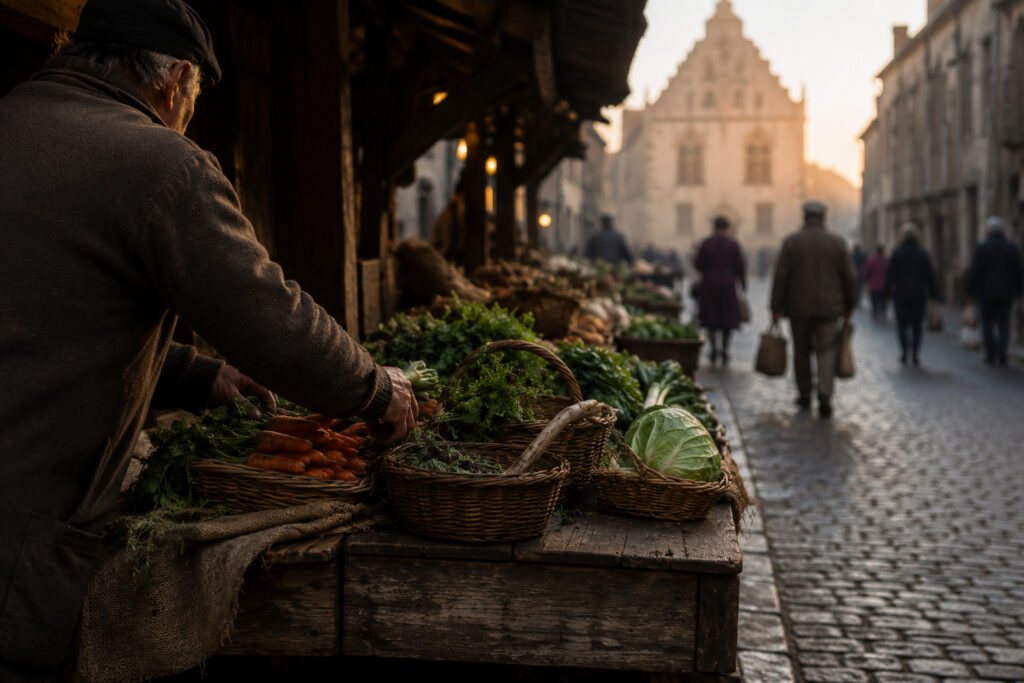
Every region is made less by dramatic events than by repeated, anchored routines that shape how people use space and remember the past. Historians who look at markets, paths, workplaces, and ritual sites often find durable patterns that outlast political boundaries. These routines accumulate material traces — buildings, informal rules, seasonal cycles — that help communities tell coherent stories about place. Paying attention to everyday practices reveals the slow mechanisms through which regions acquire meaning and identity.
Routines and the Texture of Daily Life
Daily practices—commuting routes, market habits, festival rhythms—structure experience in ways that are easy to overlook but powerful in shaping local attachment. Over time these routines produce expectations about how space should be used and who belongs, creating informal norms that guide behavior. For historians, mapping these routines helps recover continuities across apparent change and exposes how social life is organized on a micro scale. Such granular attention makes explicit the ordinary processes that sustain a region’s character.
Small acts repeated by many people become collective repertoires that anchor memory in place. When routines shift, those changes often signal deeper economic or social transformations that are worth tracing. Observing how routines persist or adapt gives insight into regional resilience and reinvention.
Material Traces and Institutional Anchors
Physical infrastructures and small institutions convert routine practice into durable presence: market stalls, guild halls, irrigation works, and local schools all record repeated use. These material traces act as repositories of knowledge and habit, shaping subsequent generations’ expectations of place. Institutions formalize routines, turning improvisation into regulated practice and embedding local norms in built form. Together, artifacts and institutions tie time to place, enabling regions to speak with continuity despite intermittent upheavals.
Studying these anchors reveals how the built environment mediates social memory and regional identity. It also highlights opportunities for preservation or reinterpretation when communities seek to rework their pasts for new purposes.
Reading Landscape Through Networks and Time
Regions are not isolated islands: mobility, trade, and kinship connect sites into broader networks that shape local routines. Roads and rivers channel movement, markets redistribute goods and ideas, and seasonal labor cycles link distant communities into shared temporal frameworks. Understanding these connections helps historians situate local practices within larger circulations of people, objects, and meanings. Networks therefore transform scattered routines into recognizable regional patterns.
Bringing a temporal lens to networked landscapes exposes how regions emerge through layered interactions across years and generations. It also offers methods for integrating oral histories, material evidence, and institutional records into coherent narratives.
Conclusion
Regions form slowly where people repeat patterns and build durable supports for everyday life. Tracing those anchored routines reveals how landscapes become repositories of shared memory and practice. For historians, this perspective opens rich pathways to understand continuity and change in regional life.