Uncover History’s Secrets with Daily Updates!
Daily News Entertainment
  • Home
  • History
  • Biographies
  • Eras
  • Regions
  • Timeline
No Result
View All Result
History Ours
  • Home
  • History
  • Biographies
  • Eras
  • Regions
  • Timeline
No Result
View All Result
History Ours
No Result
View All Result
Home Regions

Levadas and the Making of Madeira’s Island Region

in Regions
Levadas and the Making of Madeira’s Island Region

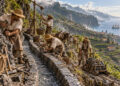
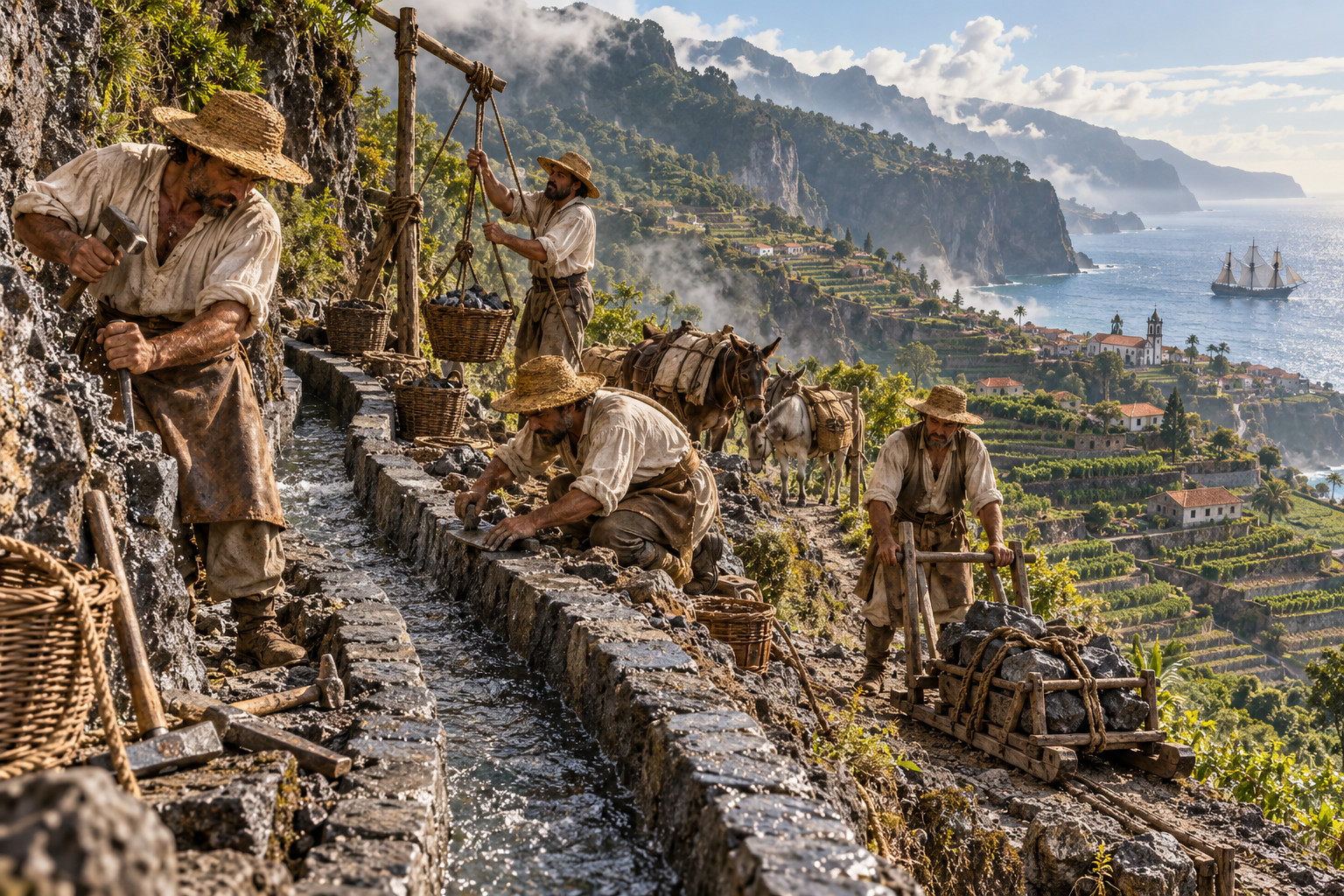
On the steep north flank of Madeira, rain falls hard and often. On the sunnier south coast, settlers needed that water to grow export crops. Beginning in the 16th century, colonists and local craftsmen cut narrow canals—levadas—into cliffs and through mountains to carry water from wet ravines to parched fields. The name itself comes from the Portuguese levar, “to carry.” What started as practical irrigation for sugar then wine, and later banana and vegetable plots, quietly reshaped where people lived and how the island worked.

Engineering, labor, and everyday ritual

Levadas are deceptively simple: an open channel, a shallow gradient, and a handful of tunnels and aqueducts where the rock demanded it. Yet building them meant hauling stone by hand, chiseling through basalt, and running tiny ledges along sheer drops. The network clipped into hidden corners—the sides of laurel forests, the rims of volcanic calderas—and linked tiny terraces and hamlets that would otherwise have been cut off.

Water became a form of local currency. Families kept to strict irrigation turns; maintenance was communal and seasonal; paths alongside the levadas were the island’s arteries for foot traffic and for moving fodder and tools. Those maintenance practices, and disputes over who got water when, are as much a part of Madeira’s history as the ships that carried its wine abroad.

From working infrastructure to wandering attraction

Through the 19th and 20th centuries the island’s economy shifted and roads and pipes changed some patterns of life, but the levadas endured. Walkers today follow routes that were first carved by farmers. Tunnels that once smelled of earth and sweat are now lit and signed for visitors, and the tiny walkways have become one of Madeira’s most distinctive kinds of slow tourism. That transition has not been purely romantic: tourists bring revenue and new pressures—erosion, safety upgrades, and debates about who controls access to the paths and the water they channel.

At the same time, many levadas remain working infrastructure. Farmers still rely on them in more remote valleys, and their continued upkeep ties a modern island back to older rhythms of communal labor and landscape knowledge.

Conclusion

Levadas are more than quaint hiking routes. They are visible records of how geology, crops, and human labor combined to make Madeira what it is: an island whose life depended on carrying water against steep odds. Walk one and you follow a map of decisions—and of daily work—made over centuries, where every narrow ledge still holds a story about place, survival, and shifting economies.
Previous Post

Black Hills: Paha Sapa, Gold Fever, and a Stolen Range

Related Posts

Black Hills: Paha Sapa, Gold Fever, and a Stolen Range
Regions

Black Hills: Paha Sapa, Gold Fever, and a Stolen Range

October 27, 2026
Aksum: The Ancient Ethiopian Empire That Linked Rome and India
Regions

Aksum: The Ancient Ethiopian Empire That Linked Rome and India

October 22, 2026
Timbuktu: How a Sahara Outpost Became a City of Books
Regions

Timbuktu: How a Sahara Outpost Became a City of Books

October 22, 2026
Silk and Revolt: How Lyon’s Weavers Made a Region
Regions

Silk and Revolt: How Lyon’s Weavers Made a Region

October 17, 2026

Search..

No Result
View All Result

Recent Articles

Levadas and the Making of Madeira’s Island Region

Levadas and the Making of Madeira’s Island Region

October 27, 2026
Black Hills: Paha Sapa, Gold Fever, and a Stolen Range

Black Hills: Paha Sapa, Gold Fever, and a Stolen Range

October 27, 2026
Song China: Paper Money, Canals, and an Urban Boom

Song China: Paper Money, Canals, and an Urban Boom

October 26, 2026
The Coffeehouse Century: How Conversation Fueled Early Modern Change

The Coffeehouse Century: How Conversation Fueled Early Modern Change

October 26, 2026
Katherine Johnson: The Numbers Behind America’s First Orbits

Katherine Johnson: The Numbers Behind America’s First Orbits

October 25, 2026

Subscribe Us

By clicking submit, I authorize History Ours and its affiliated companies to: (1) use, sell, and share my information for marketing purposes, including cross-context behavioral advertising, as described in our Terms of Service and Privacy Policy, (2) supplement the information that I provide with additional information lawfully obtained from other sources, like demographic data from public sources, interests inferred from web page views, or other data relevant to what might interest me, like past purchase or location data, (3) contact me or enable others to contact me by email with offers for goods and services from any category at the email address provided, and (4) retain my information while I am engaging with marketing messages that I receive and for a reasonable amount of time thereafter. I understand I can opt out at any time through an email that I receive, or by clicking here

Subscribe To Our Newsletter

By clicking submit, I authorize History Ours and its affiliated companies to: (1) use, sell, and share my information for marketing purposes, including cross-context behavioral advertising, as described in our Terms of Service and Privacy Policy, (2) supplement the information that I provide with additional information lawfully obtained from other sources, like demographic data from public sources, interests inferred from web page views, or other data relevant to what might interest me, like past purchase or location data, (3) contact me or enable others to contact me by email with offers for goods and services from any category at the email address provided, and (4) retain my information while I am engaging with marketing messages that I receive and for a reasonable amount of time thereafter. I understand I can opt out at any time through an email that I receive, or by clicking here.

© 2026 History Ours | All Rights Reserved

  • Contact Us
  • Privacy Policy
  • Terms of Service
  • Unsubscribe
  • Privacy Choices
  • Contact Us
  • Privacy Policy
  • Terms of Service
  • Unsubscribe
  • Privacy Choices

© 2026 History Ours | All Rights Reserved

No Result
View All Result
  • Home
  • History
  • Biographies
  • Eras
  • Regions
  • Timeline

© 2026 History Ours | All Rights Reserved

Skip to content
Open toolbar Accessibility Tools

Accessibility Tools

  • Increase TextIncrease Text
  • Decrease TextDecrease Text
  • GrayscaleGrayscale
  • High ContrastHigh Contrast
  • Negative ContrastNegative Contrast
  • Light BackgroundLight Background
  • Links UnderlineLinks Underline
  • Readable FontReadable Font
  • Reset Reset