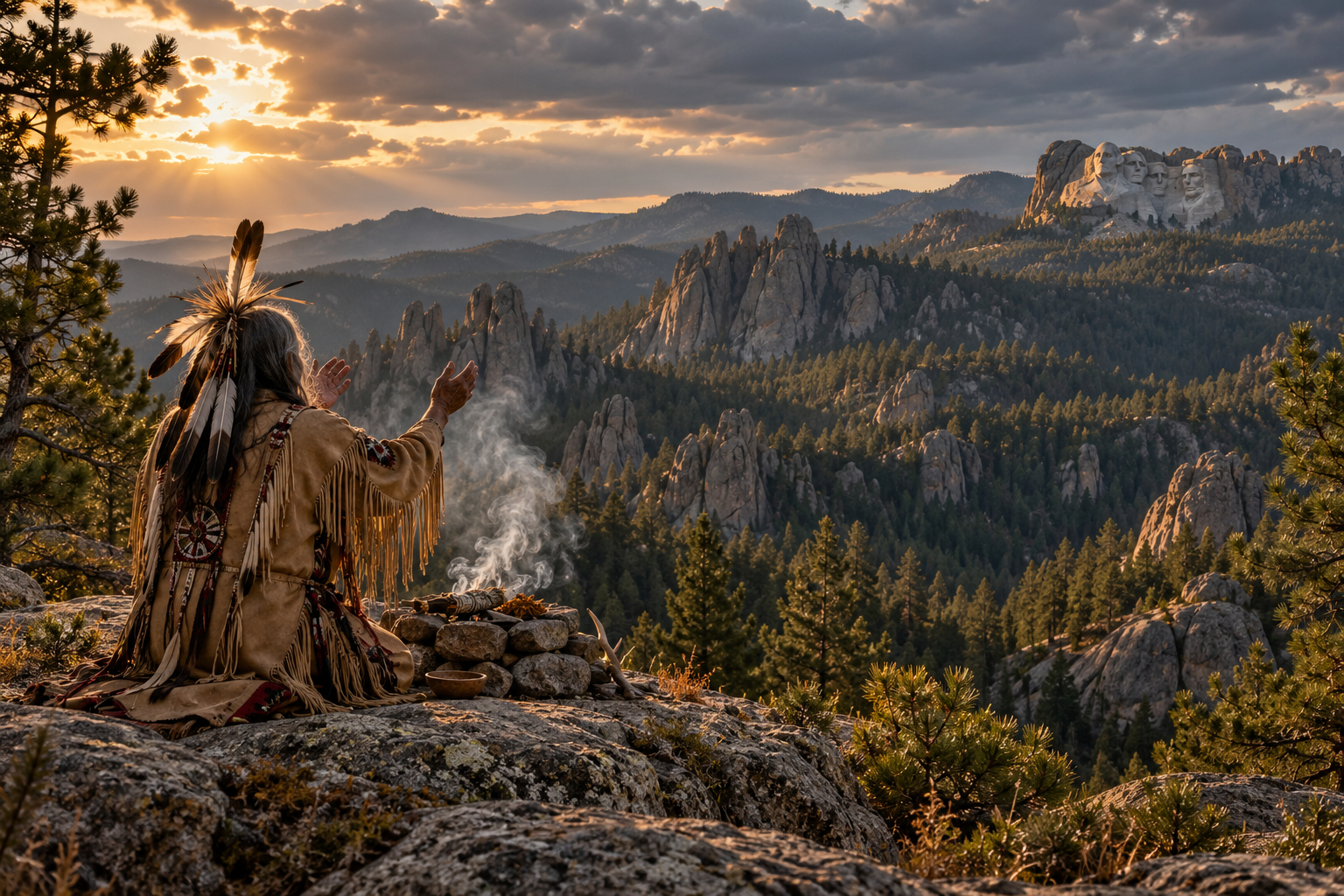
The Lakota and other Plains tribes have long called the Black Hills Paha Sapa—”black hills” in the Sioux language—and treated its granite spires, caves, and pine-clad valleys as the center of spiritual life. The 1868 Treaty of Fort Laramie explicitly recognized the Black Hills as part of the Great Sioux Reservation. That promise shaped seasons of pilgrimage, hunting, and ceremony for generations.
Those ties were practical as well as spiritual: particular peaks, springs, and buffalo-gathering places anchored stories, kinship ties, and seasonal movement. For the Lakota, the Black Hills were not empty land to be parceled and sold; they were a living map woven into identity.
Gold, War, and a Quiet Unmaking of Law
Everything changed in 1874 after an expedition led by Lt. Col. George Armstrong Custer reported gold in the hills. News traveled fast. Prospectors surged in, towns sprouted overnight, and the federal government moved to accommodate settlers rather than to protect the treaty it had signed.
Fighting followed. The Great Sioux War of 1876–77 is best known for the Lakota and Cheyenne victory at Little Bighorn, but it also ended with Congress effectively abrogating the 1868 treaty. In 1877 the United States took control of the Black Hills, opening them fully to mining, logging, and railheads. Lead and Homestake became boom towns—Homestake would go on to become one of North America’s largest gold mines, shaping local economies for well over a century.
Granite Faces, Legal Battles, and a Continuing Claim
In the 20th century the Black Hills acquired a new, contested monument: Mount Rushmore. Sculpted between 1927 and 1941, the four presidential faces were carved into a peak within a landscape the federal government had long since claimed. For many Lakota, the monument sits atop land taken in violation of a treaty, a daily reminder of dispossession.
The legal record eventually echoed that injustice. In 1980 the U.S. Supreme Court ruled in United States v. Sioux Nation that the Black Hills had been taken illegally and awarded monetary compensation. Many Sioux leaders refused the settlement, insisting that money could not replace a sacred place; the award remains largely untouched and continues to grow in interest, a legal claim left in limbo.
Conclusion
The Black Hills are both a tourist landscape—forests, hiking trails, and carved presidents—and a patchwork of unresolved histories: treaties ignored, mines opened, and religious sites that survive despite pressure. Paha Sapa still shapes Lakota ceremony and memory, and the question the nation has never fully answered remains: how do you return a mountain? The debate over that answer continues to shape politics, law, and daily life around this small but fiercely important range.