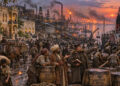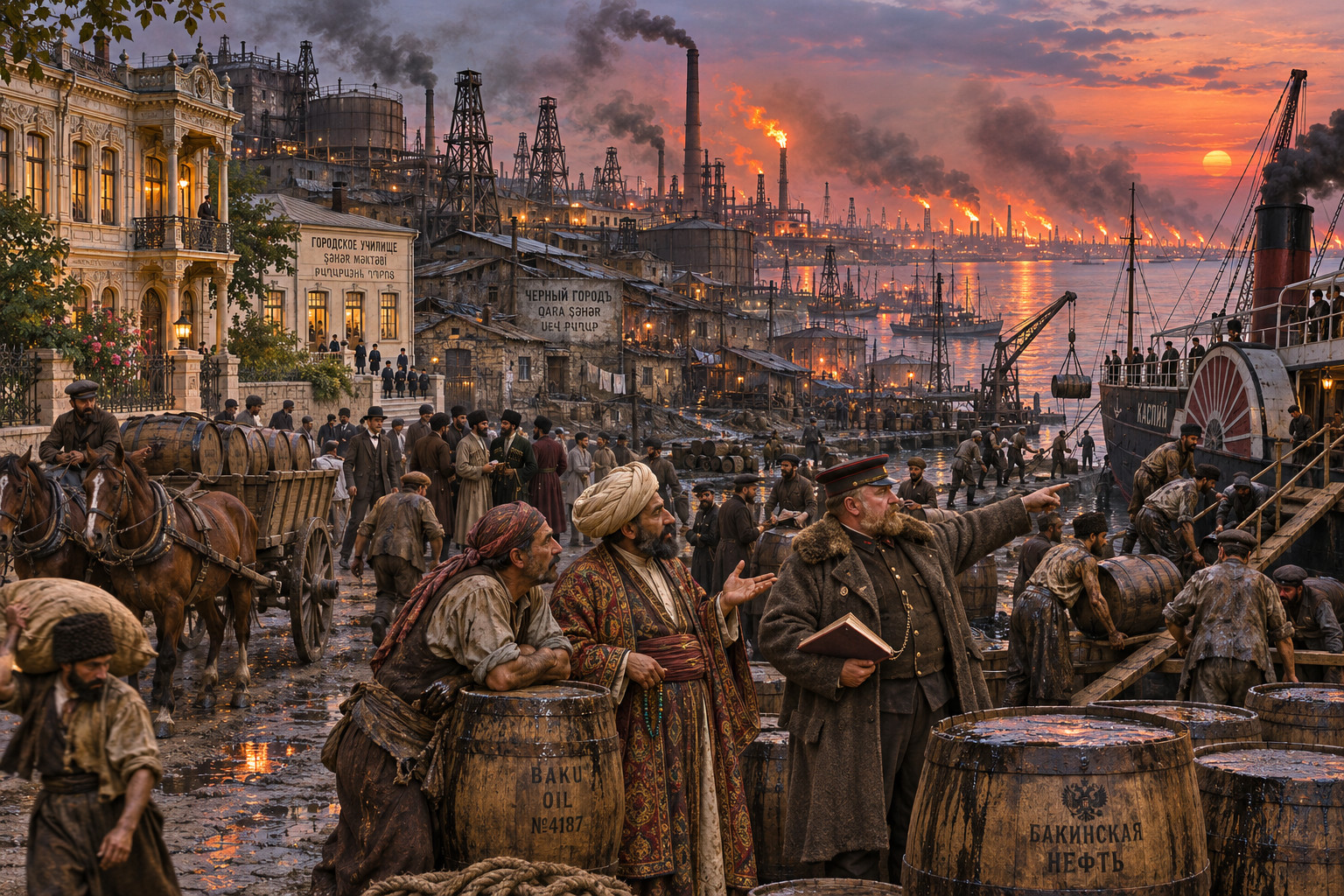
For most of the 19th century Baku was a string of fishing villages on the Caspian’s wind-scoured shore. Then oil stopped being something people skimmed from seepages and became an industry. In the later 1800s entrepreneurs and engineers sank wells, built refineries and lit score after score of gas flares that turned the night sky into a line of bonfires. The fields around Baku produced so much petroleum that, by the turn of the 20th century, the city ranked among the world’s great oil centers.
A city of oil barons and migrants
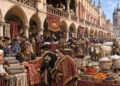
Wealth arrived fast and uneven. Foreign firms — most famously the Nobel family’s Branobel enterprise — introduced new drilling techniques, pumps and pipelines. Local magnates emerged as well: Azerbaijani businessmen invested in refineries, housing and schools. Their mansions and philanthropies sat cheek by jowl with wooden barracks for seasonal laborers and the cramped lanes of the city’s port quarter.
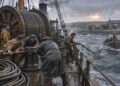
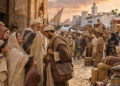
That contrast shaped daily life. Tankers and teams of roustabouts worked the wharves, languages jostled on the docks, and Baku became a crossroads for Russians, Persians, Armenians, Turks, Europeans and people from across the Caucasus. Oil’s demand for hands pulled migrants into the region; its fortunes created a cosmopolitan, sometimes volatile, urban culture.
Industry, unrest, and strategic value
With rapid growth came conflict. The smoke and noise of refineries bred a long list of labor grievances. The early decades of the 20th century saw strikes, political agitation and episodes of communal violence that echoed larger imperial ruptures across the region. At the same time, imperial and later national governments realized Baku’s oil was not merely local wealth but a strategic resource.
That strategic quality only deepened. In two world wars and through revolution, Baku’s wells were more than economic assets; they were military prizes. Control of its oil shaped campaigns and diplomacy, and the city’s industrial zones — the so-called “Black City” of refineries and storage tanks — remained visible signs of how energy and geopolitics had fused on the Caspian coast.
Conclusion
Walk Baku today and the story is legible in contrasts. Sleek towers and seaside promenades sit beside rows of oil derricks and brickworks from another century. The hum of pipelines and the memory of flares are stitched into the city’s identity: a place whose modern growth was devised and defined by the extraction and export of petroleum. In a few decades that process turned fishing hamlets into a global port, made fortunes and sparked conflicts, and left a landscape where industry and urban life remain inseparable.