Uncover History’s Secrets with Daily Updates!
Daily News Entertainment
  • Home
  • History
  • Biographies
  • Eras
  • Regions
  • Timeline
No Result
View All Result
History Ours
  • Home
  • History
  • Biographies
  • Eras
  • Regions
  • Timeline
No Result
View All Result
History Ours
No Result
View All Result
Home Regions

How Kraków’s Cloth Hall Knit a Central European Region

in Regions
How Kraków’s Cloth Hall Knit a Central European Region

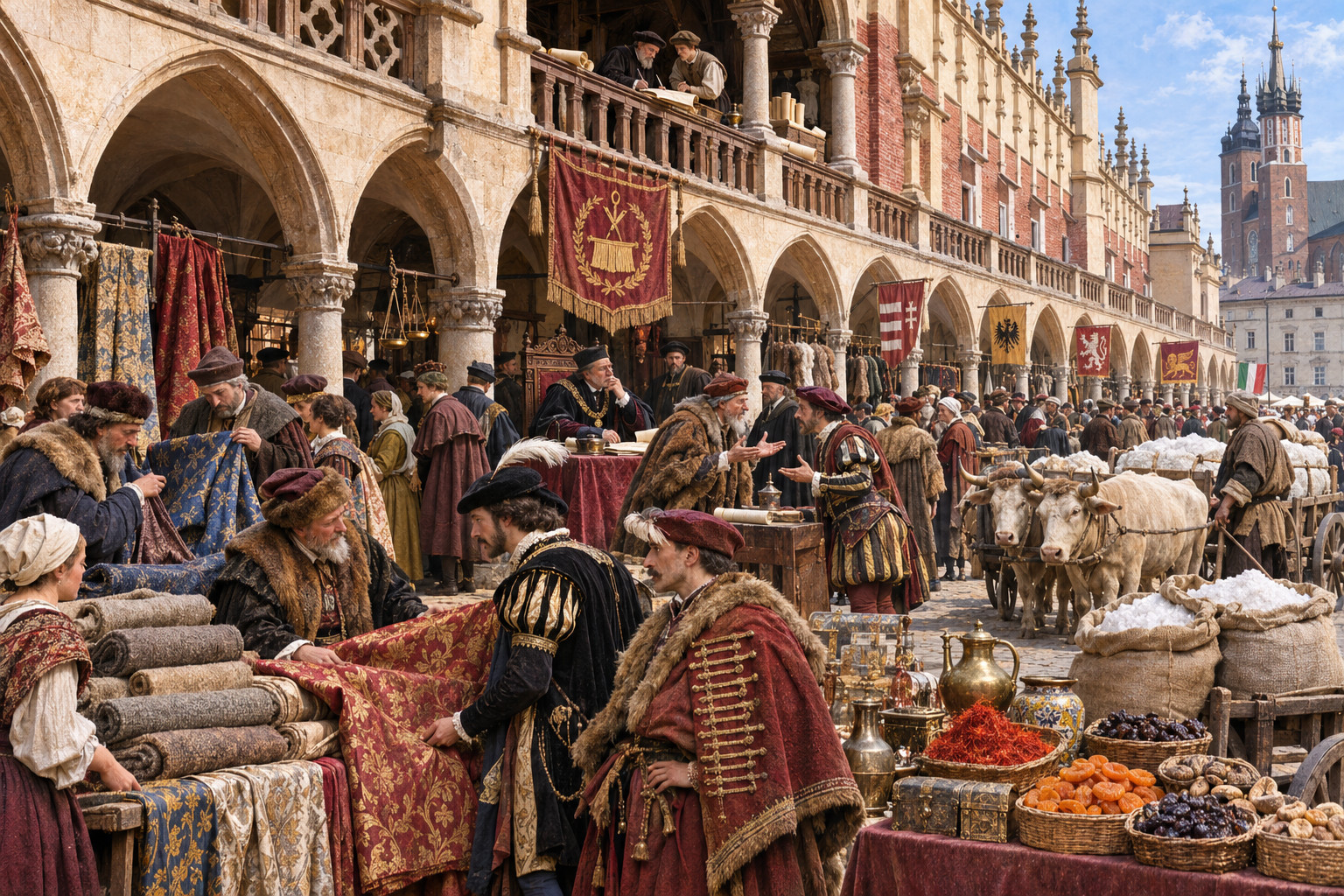
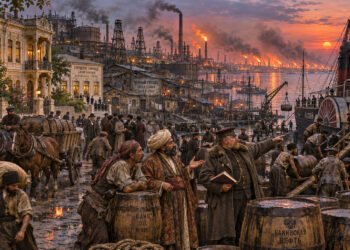
In the wide, sun-baked square at the center of Kraków stands the Sukiennice, the Cloth Hall — a long, arcaded building whose shape still reads like a ledger of trade. For centuries this was not a single shop but a procession of stalls: Polish wool and linen, Flemish and Italian cloth, saffron and dried fruit, furs from the east and salt from nearby Wieliczka. Merchants arrived on ox-cart caravans and river barges, and the hall stitched them together into a regional economy that reached from the Baltic to the Danube.

More than goods: institutions, law, and craft

The Cloth Hall did practical work beyond buying and selling. It concentrated workshops and guilds, which regulated quality, trained apprentices, and policed prices. When merchants bickered, Kraków’s market courts or the city council adjudicated disputes — a public architecture that turned trade into trust. The hall’s very layout encouraged oversight: long galleries where buyers could compare bolts of cloth, an upper floor for records and contracts. Those everyday structures helped anchor wider networks of credit and reputation, allowing merchants from Bohemia, Hungary, and the Baltic to do business under shared expectations.

A stage for regional culture and connection

Fairs at the Cloth Hall were social as much as commercial. They timed with religious festivals and royal processions; they brought entertainers, languages, fashions and recipes into the square as quickly as cloth. Travelers returned home with new fashions and stories, and those currents shaped taste and identity across the region. Kraków’s position on the Royal Road and its proximity to the Wieliczka saltworks amplified the hall’s pull: salt paid for grain, grain fed merchants and armies, and the textiles and luxuries traded in the Sukiennice signaled who belonged to the emergent market culture of Central Europe.

Conclusion

Look at the Cloth Hall today — tourists browsing souvenir stalls beneath its ornate cornices — and you see a late echo of an older order. The building is still a meeting place, and its long history explains why Kraków mattered beyond its city walls. The Sukiennice did what few monuments do: it turned routine transactions into durable ties. Through architecture, regulation, and daily exchange it helped define a region, making commerce a common language that knitted together distant towns, languages, and livelihoods into a recognizably Central European pattern.
Previous Post

Night Before Neon: How Cities Lived by Moonlight

Next Post

Baku: Oil, Ports, and the Birth of a Caspian Metropolis

Related Posts

Baku: Oil, Ports, and the Birth of a Caspian Metropolis
Regions

Baku: Oil, Ports, and the Birth of a Caspian Metropolis

November 16, 2026
How Cotton Turned the Aral Sea into a Desert
Regions

How Cotton Turned the Aral Sea into a Desert

November 11, 2026
When the Zuiderzee Became the IJsselmeer and Remade Holland
Regions

When the Zuiderzee Became the IJsselmeer and Remade Holland

November 11, 2026
How the Via Egnatia Bound the Balkans to Two Worlds
Regions

How the Via Egnatia Bound the Balkans to Two Worlds

November 6, 2026
Next Post
Baku: Oil, Ports, and the Birth of a Caspian Metropolis

Baku: Oil, Ports, and the Birth of a Caspian Metropolis

Search..

No Result
View All Result

Recent Articles

Baku: Oil, Ports, and the Birth of a Caspian Metropolis

Baku: Oil, Ports, and the Birth of a Caspian Metropolis

November 16, 2026
How Kraków’s Cloth Hall Knit a Central European Region

How Kraków’s Cloth Hall Knit a Central European Region

November 16, 2026
Night Before Neon: How Cities Lived by Moonlight

Night Before Neon: How Cities Lived by Moonlight

November 15, 2026
The Cable-Laying Era: How Submarine Cables Shrank the World

The Cable-Laying Era: How Submarine Cables Shrank the World

November 15, 2026
Ibn Battuta: Journeys That Sketched a Fourteenth‑Century World

Ibn Battuta: Journeys That Sketched a Fourteenth‑Century World

November 14, 2026

Subscribe Us

By clicking submit, I authorize History Ours and its affiliated companies to: (1) use, sell, and share my information for marketing purposes, including cross-context behavioral advertising, as described in our Terms of Service and Privacy Policy, (2) supplement the information that I provide with additional information lawfully obtained from other sources, like demographic data from public sources, interests inferred from web page views, or other data relevant to what might interest me, like past purchase or location data, (3) contact me or enable others to contact me by email with offers for goods and services from any category at the email address provided, and (4) retain my information while I am engaging with marketing messages that I receive and for a reasonable amount of time thereafter. I understand I can opt out at any time through an email that I receive, or by clicking here

Subscribe To Our Newsletter

By clicking submit, I authorize History Ours and its affiliated companies to: (1) use, sell, and share my information for marketing purposes, including cross-context behavioral advertising, as described in our Terms of Service and Privacy Policy, (2) supplement the information that I provide with additional information lawfully obtained from other sources, like demographic data from public sources, interests inferred from web page views, or other data relevant to what might interest me, like past purchase or location data, (3) contact me or enable others to contact me by email with offers for goods and services from any category at the email address provided, and (4) retain my information while I am engaging with marketing messages that I receive and for a reasonable amount of time thereafter. I understand I can opt out at any time through an email that I receive, or by clicking here.

© 2026 History Ours | All Rights Reserved

  • Contact Us
  • Privacy Policy
  • Terms of Service
  • Unsubscribe
  • Privacy Choices
  • Contact Us
  • Privacy Policy
  • Terms of Service
  • Unsubscribe
  • Privacy Choices

© 2026 History Ours | All Rights Reserved

No Result
View All Result
  • Home
  • History
  • Biographies
  • Eras
  • Regions
  • Timeline

© 2026 History Ours | All Rights Reserved

Skip to content
Open toolbar Accessibility Tools

Accessibility Tools

  • Increase TextIncrease Text
  • Decrease TextDecrease Text
  • GrayscaleGrayscale
  • High ContrastHigh Contrast
  • Negative ContrastNegative Contrast
  • Light BackgroundLight Background
  • Links UnderlineLinks Underline
  • Readable FontReadable Font
  • Reset Reset