Uncover History’s Secrets with Daily Updates!
Daily News Entertainment
  • Home
  • History
  • Biographies
  • Eras
  • Regions
  • Timeline
No Result
View All Result
History Ours
  • Home
  • History
  • Biographies
  • Eras
  • Regions
  • Timeline
No Result
View All Result
History Ours
No Result
View All Result
Home Regions

How the Via Egnatia Bound the Balkans to Two Worlds

in Regions
How the Via Egnatia Bound the Balkans to Two Worlds

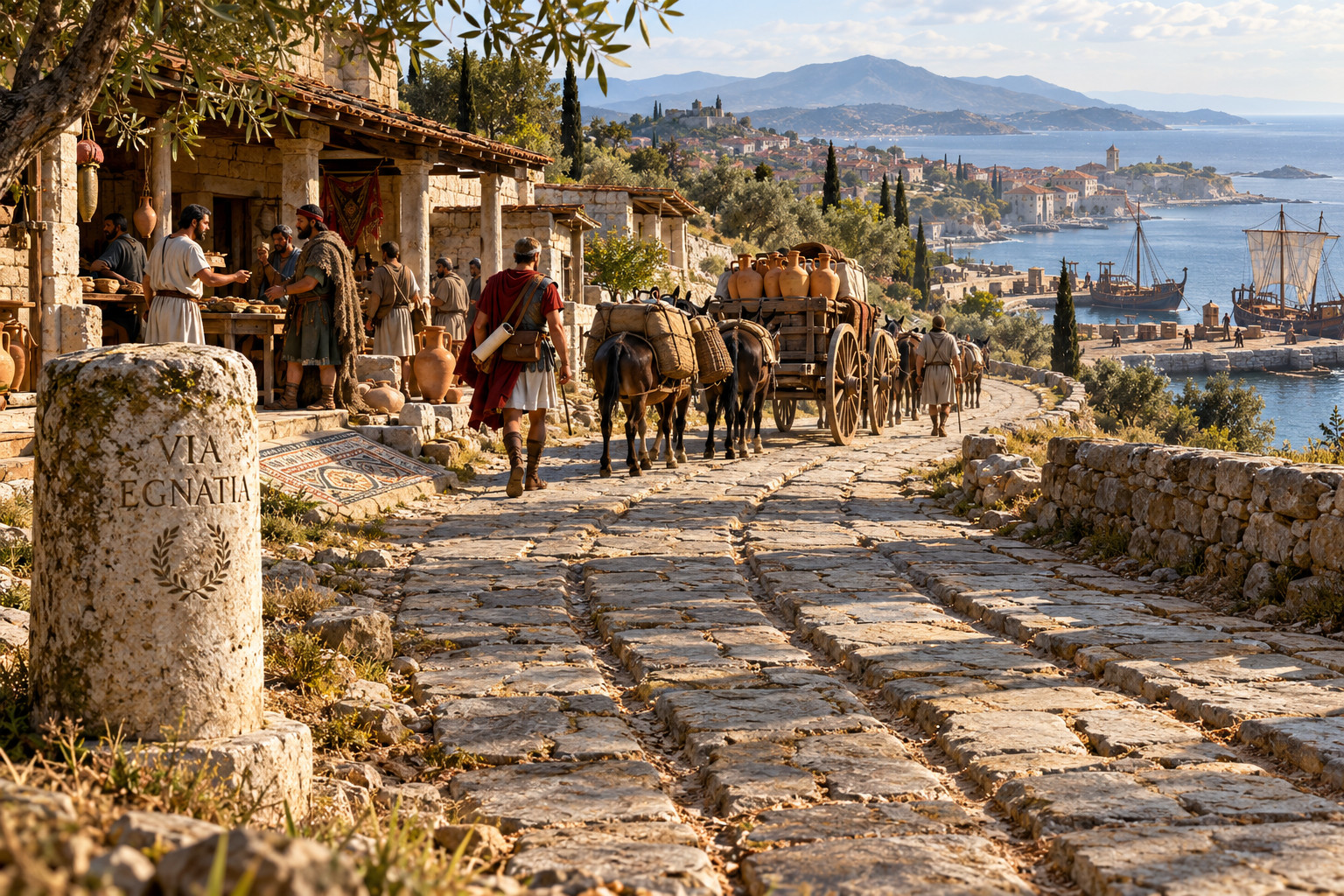
Stretching from the Adriatic coast to the gateway of Byzantium, the Via Egnatia looks modest on a map. In life, however, it was an artery: a paved, maintained Roman highway that began in the 2nd century BCE and ran through towns that are today in Albania, North Macedonia, and Greece. Where the road passed, stones and milestones marked Rome’s reach; where it met the sea at Dyrrachium (modern Durrës) and Brundisium across the water, the peninsula met the wider Mediterranean world.

Merchants, milestones, and the smell of trade

Romans laid the road to speed troops, but commerce seized it just as quickly. Small ports and market towns along the route became magnets for traders moving olive oil, wine, timber, and lacquered goods east and west. Milestones—cylindrical stone markers with distances and imperial names—kept travellers honest and helped administrators measure the empire. Inns and waystations provided shelter, and local economies adapted: a village on a quiet hill could wake up and become a customs point overnight when a new trade wave passed through.

A corridor for culture and conflict

The Via Egnatia was more than commerce. Armies marched it; emperors and usurpers used it; pilgrims and envoys followed it. Its route threaded through regions with Greek, Illyrian, Thracian, and later Slavic populations, producing a series of towns that mixed languages, rites, and crafts. When Constantinople rose into prominence, the road became a direct line to the imperial capital. Centuries later, Crusader armies and Ottoman administrators still relied on its course. That continuity—one engineered route crossing ages of stone, saddle, and wheel—made the corridor itself a durable regional identity.

Remnants and modern echoes

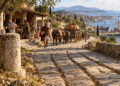
You can still find stretches of Roman paving, set in curves that follow the same ridge-lines as modern highways. Archaeologists have unearthed stations, graveyards, and fragments of mosaics beside the route; in many towns the street layout preserves the road’s imprint. And culturally, the road’s legacy lives on in the layered languages and cuisine of the Balkans: markets that once handled amphorae now serve centuries-old recipes that combine Mediterranean and inland tastes. The Via Egnatia didn’t create the Balkans single-handedly, but by channeling movement it helped make the region what it became—crossroads rather than periphery.

Conclusion

Think of the Via Egnatia as a runner in a relay: Roman engineers passed a baton to Byzantine officials, later to Ottoman governors, and finally to modern states. Each handoff left marks—stones, towns, stories—that remain visible if you know where to look. The road reminds us that geography matters less than the routes people use; a single engineered line can shape trade, culture, and power for millennia.
Previous Post

The Tōkaidō Road: How Japan’s Coast Became a Living Network

Related Posts

The Tōkaidō Road: How Japan’s Coast Became a Living Network
Regions

The Tōkaidō Road: How Japan’s Coast Became a Living Network

November 6, 2026
How Carrara’s Marble Carved a Peculiar Mountain Region
Regions

How Carrara’s Marble Carved a Peculiar Mountain Region

November 1, 2026
The Great Dismal Swamp: Refuge, Labor, and a Hidden Region
Regions

The Great Dismal Swamp: Refuge, Labor, and a Hidden Region

November 1, 2026
Levadas and the Making of Madeira’s Island Region
Regions

Levadas and the Making of Madeira’s Island Region

October 27, 2026

Search..

No Result
View All Result

Recent Articles

How the Via Egnatia Bound the Balkans to Two Worlds

How the Via Egnatia Bound the Balkans to Two Worlds

November 6, 2026
The Tōkaidō Road: How Japan’s Coast Became a Living Network

The Tōkaidō Road: How Japan’s Coast Became a Living Network

November 6, 2026
The Dreadnought Era: How One Ship Changed Navies

The Dreadnought Era: How One Ship Changed Navies

November 5, 2026
The Telegraph Age: How Wires Rewired the Nineteenth Century

The Telegraph Age: How Wires Rewired the Nineteenth Century

November 5, 2026
Rosalind Franklin and Photo 51: The X‑Ray That Changed Genetics

Rosalind Franklin and Photo 51: The X‑Ray That Changed Genetics

November 4, 2026

Subscribe Us

By clicking submit, I authorize History Ours and its affiliated companies to: (1) use, sell, and share my information for marketing purposes, including cross-context behavioral advertising, as described in our Terms of Service and Privacy Policy, (2) supplement the information that I provide with additional information lawfully obtained from other sources, like demographic data from public sources, interests inferred from web page views, or other data relevant to what might interest me, like past purchase or location data, (3) contact me or enable others to contact me by email with offers for goods and services from any category at the email address provided, and (4) retain my information while I am engaging with marketing messages that I receive and for a reasonable amount of time thereafter. I understand I can opt out at any time through an email that I receive, or by clicking here

Subscribe To Our Newsletter

By clicking submit, I authorize History Ours and its affiliated companies to: (1) use, sell, and share my information for marketing purposes, including cross-context behavioral advertising, as described in our Terms of Service and Privacy Policy, (2) supplement the information that I provide with additional information lawfully obtained from other sources, like demographic data from public sources, interests inferred from web page views, or other data relevant to what might interest me, like past purchase or location data, (3) contact me or enable others to contact me by email with offers for goods and services from any category at the email address provided, and (4) retain my information while I am engaging with marketing messages that I receive and for a reasonable amount of time thereafter. I understand I can opt out at any time through an email that I receive, or by clicking here.

© 2026 History Ours | All Rights Reserved

  • Contact Us
  • Privacy Policy
  • Terms of Service
  • Unsubscribe
  • Privacy Choices
  • Contact Us
  • Privacy Policy
  • Terms of Service
  • Unsubscribe
  • Privacy Choices

© 2026 History Ours | All Rights Reserved

No Result
View All Result
  • Home
  • History
  • Biographies
  • Eras
  • Regions
  • Timeline

© 2026 History Ours | All Rights Reserved

Skip to content
Open toolbar Accessibility Tools

Accessibility Tools

  • Increase TextIncrease Text
  • Decrease TextDecrease Text
  • GrayscaleGrayscale
  • High ContrastHigh Contrast
  • Negative ContrastNegative Contrast
  • Light BackgroundLight Background
  • Links UnderlineLinks Underline
  • Readable FontReadable Font
  • Reset Reset