
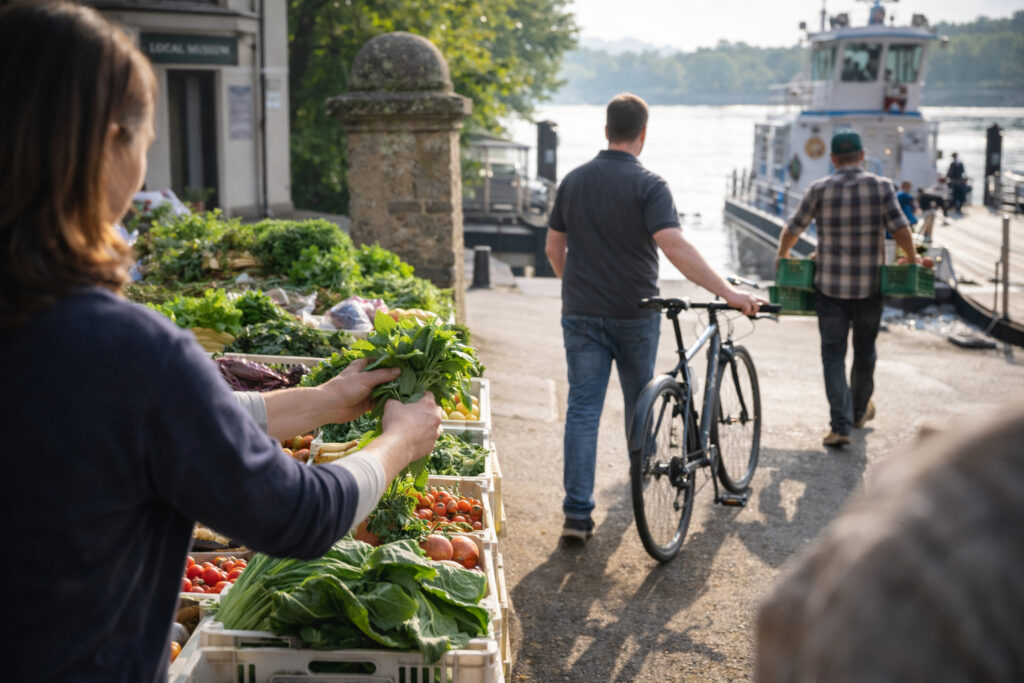
Regional identity emerges where people live, move, and make meaning across landscapes that shift over time. Everyday routines, rituals, and practical choices weave a sense of place as much as formal borders do. Studying those mundane practices reveals how communities negotiate change, assert continuity, and rework belonging. This piece outlines key dimensions for thinking about how regions are built from ordinary life.
In short, regions are lived and argued into being through action and memory, not only through maps.
Everyday Practices and Place
Daily activities such as market exchanges, seasonal work, religious observance, and neighborhood gatherings anchor people to particular places. These practices produce recurrent rhythms that people use to orient themselves and others, creating tacit knowledge about where things belong and who belongs where. Over generations, repetitive actions turn spaces into meaningful sites that carry social expectations and emotional attachments. Paying attention to habit and routine helps historians see how regional identities are reproduced and contested on an everyday level.
Identifying these practices often requires microhistorical work and attention to personal testimony. Such close study reveals how small acts aggregate into durable cultural patterns.
Institutions, Memory, and Authority
Institutions from schools and courts to local associations formalize and circulate regional norms, anchoring identity in rules, records, and rituals. Memory institutions such as museums, archives, and commemorative events select which pasts become prominent, shaping collective understanding of a region. Authority is negotiated as institutions interact with informal networks, and conflicts over who writes the past are frequent in contested regions. Examining institutional archives alongside oral histories uncovers tensions between official narratives and lived experience.
Researchers should balance documentary sources with community voices to capture the full texture of regional life. This helps prevent a single institutional narrative from defining a whole region.
Material Landscapes and Mobility
Physical infrastructures—roads, waterways, farms, and marketplaces—structure movement and opportunity, making certain places central to daily life. Mobility, whether seasonal migration or daily commuting, connects disparate locales and spreads cultural practices across distances. Material artifacts, from building styles to tools, carry evidence of exchange, adaptation, and cross-border influence that shape regional character. Understanding how people move and use material resources clarifies why some identities persist while others transform.
Combining spatial analysis with ethnography reveals how material conditions and movement patterns produce varied regional experiences. This approach shows how boundaries are lived rather than merely drawn.
Conclusion
Regions are dynamic constructs forged through routine practices, institutional arrangements, and material conditions. To study regional identity is to trace the interplay of everyday life and larger structures over time. Looking carefully at both ordinary acts and public narratives yields a richer account of how places and people come to belong together.